




 DE
DE  EN
EN  FR
FR  ES
ES  RU
RU  JA
JA  KO
KO 
Abstract
The seemingly simple implement used to mix coffee, often dismissed as a mere 'stir stick,' possesses a surprisingly complex identity in both language and function. An inquiry into what this object is called reveals a variety of terms, including 'beverage stirrer,' 'swizzle stick,' and 'agitator,' each with contextual nuances. The selection of a coffee stirrer represents a significant decision for hospitality businesses, reflecting considerations of cost, customer experience, environmental responsibility, and brand identity. This analysis examines the material composition of common stirrers—wood, bamboo, and various plastics—evaluating their properties in relation to performance, sustainability, and economic viability. By deconstructing the lifecycle, regulatory landscape, and sensory impact of these items, this guide provides a comprehensive framework for cafe owners and procurement managers. The choice of a stirrer in 2025 is not merely operational but a statement of values, intersecting with global supply chains, evolving environmental legislation, and the sophisticated expectations of a global consumer base.
Key Takeaways
- The name for a coffee stirrer varies by context; 'stir stick' and 'swizzle stick' are common terms.
- Material choice (wood, bamboo, plastic) directly impacts cost, sustainability, and customer perception.
- Understanding the difference between biodegradable and compostable is vital for eco-conscious branding.
- Global regulations on single-use plastics are increasingly strict, affecting sourcing decisions.
- A thoughtful answer to "what is a coffee stirrer called" and used in your cafe reflects your brand's values.
- Bulk purchasing of items like eco disposable cutlery can offer significant cost advantages for high-volume businesses.
- The tactile experience of a stirrer can subtly enhance or detract from the perceived quality of a beverage.
Table of Contents
- A Material World: A Practical 2025 Buyer's Guide for Cafes
- For the High-Volume Urban Cafe: Balancing Cost, Speed, and Perception
- For the Artisan Coffee Shop: Curating the Customer Experience
- For the Eco-Conscious Eatery: Leading with Sustainability
- For the Multi-National Chain: Navigating Global Regulations and Supply Chains
- For the Hotel and Hospitality Sector: Elegance, Function, and Hygiene
- The Broader Context: Stirrers, Straws, and the Future of Disposable Tableware
- Frequently Asked Questions (FAQ)
- Schlussfolgerung
- References
A Material World: A Practical 2025 Buyer's Guide for Cafes
The question of what to call a coffee stirrer opens a door to a much larger inquiry about the materials that shape our daily, often fleeting, interactions. Is it a stir stick? A swizzle stick? An agitator? While the nomenclature varies, the material substance of the object carries the most significant weight. For a cafe owner or a hospitality manager in 2025, the decision of which type of stirrer to stock is a complex calculation involving economics, ethics, and aesthetics. The choice is a microcosm of the business's entire operational philosophy. It speaks to its priorities, its brand identity, and its response to a world grappling with the consequences of consumption. Let us examine the primary materials from which these ubiquitous tools are crafted, evaluating their inherent strengths and weaknesses from a practical, business-oriented perspective.
The Traditional Choice: Wooden Stirrers
Wooden stirrers are perhaps the most classic and recognizable form. Typically made from birchwood, they evoke a sense of naturalness and simplicity. Their primary appeal lies in their perceived eco-friendliness. As a renewable resource, wood presents a stark contrast to petroleum-based plastics. When sourced from responsibly managed forests, certified by bodies like the Forest Stewardship Council (FSC), they offer a story of sustainability that can be passed on to the customer.
From a functional standpoint, wood is quite effective. It is rigid enough to stir through hot liquids without bending or breaking, and it does not impart any significant flavor to the beverage, a critical factor for any coffee purist. The tactile experience is also noteworthy; the feeling of wood, with its subtle grain, can feel more substantial and satisfying than flimsy plastic.
Yet, the wooden stirrer is not without its complications. The cost per unit is generally higher than that of its plastic counterpart, a factor that can become substantial when purchasing in bulk for a high-traffic establishment. The manufacturing process, while drawing from a renewable resource, is energy and water-intensive. There is also the matter of splintering. A poorly manufactured wooden stirrer can leave small fragments in a drink, a rare but serious failure of quality control that can ruin a customer's experience. Businesses must therefore vet their suppliers carefully to ensure a consistently smooth and safe product.
The Eco-Conscious Contender: Bamboo Stirrers
Bamboo has emerged as a powerful contender in the world of disposable goods, and for good reason. Technically a type of grass, bamboo is one of the fastest-growing plants on Earth, capable of regenerating from its own root system without the need for replanting. It requires no pesticides or fertilizers and grows in a wide range of climates, making it a highly renewable and resilient resource (Kaur et al., 2022). These characteristics position bamboo stirrers as a premier choice for businesses aiming to project a strong environmental commitment.
In terms of performance, bamboo shares many of the positive attributes of wood. It is strong, heat-resistant, and flavor-neutral. Many users find the finish of bamboo to be smoother and more refined than that of birchwood, lending it a slightly more premium feel. This can be an important distinction for an artisan coffee shop or an upscale cafe where every detail of the presentation matters.
The primary challenge for bamboo, much like high-quality wood, is cost. It is often the most expensive single-use stirrer option. Furthermore, while bamboo itself is highly sustainable, the supply chain requires scrutiny. The processing of bamboo into a finished product can involve chemical treatments and significant transportation distances, as the majority of commercial bamboo is grown in Asia. A truly eco-conscious business will need to investigate the practices of its supplier to ensure that the environmental benefits of the raw material are not negated by an irresponsible manufacturing and logistics chain. When considering your options, exploring a wide range of coffee stirrers from a reputable supplier is a crucial step.
The Ubiquitous Option: Plastic Stirrers
The plastic stirrer, most often made from polystyrene, was for decades the undisputed king of the condiment station. Its reign was built on one overwhelmingly powerful advantage: cost. Plastic stirrers are exceptionally cheap to produce, making them the default choice for businesses where minimizing overhead is the highest priority. They are also lightweight, easy to package and dispense, and perfectly functional for the simple task of mixing a liquid.
However, the tide has turned dramatically against single-use plastics. Growing public awareness and stringent government regulations have made the plastic stirrer a symbol of environmental irresponsibility. The ecological cost is immense. Derived from fossil fuels, their production contributes to carbon emissions. Their disposal is the greater problem; they are rarely recycled and persist in the environment for hundreds of years, breaking down into microplastics that contaminate oceans, soil, and even the air we breathe (Thompson et al., 2004).
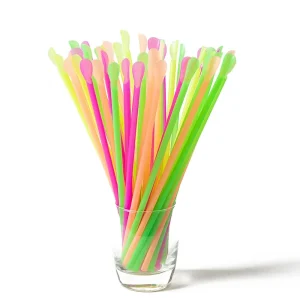
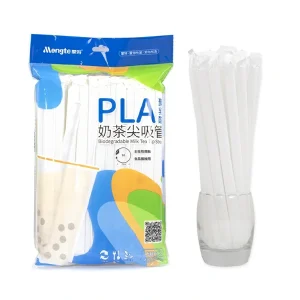
In 2025, offering a traditional plastic stirrer is a significant brand risk in many markets, particularly in Europe and parts of Asia. It signals a disregard for environmental issues that can alienate a large and growing segment of the customer base. Some businesses have pivoted to using a Plastikstroh with a small spoon-like end, but these face the same environmental scrutiny. The conversation has shifted towards alternatives like recycled plastic tableware and biodegradable plastics. Recycled options can reduce virgin plastic production, but they still pose a disposal problem and can face regulatory hurdles for food-contact items. Biodegradable plastics (like PLA, or polylactic acid) are derived from plant starches and can break down under specific industrial composting conditions. While an improvement, they often fail to biodegrade in a landfill or marine environment, leading to confusion and potential greenwashing.
| Feature | Wooden Stirrers | Bamboo Stirrers | Traditional Plastic Stirrers |
|---|---|---|---|
| Primary Material | Birchwood | Bamboo Grass | Polystyrene |
| Nachhaltigkeit | Good (if FSC certified) | Excellent (highly renewable) | Poor (fossil fuel-based) |
| Performance | Rigid, heat-resistant, neutral taste | Very rigid, smooth, neutral taste | Functional, can bend in heat |
| Cost Per Unit | Moderate | High | Very Low |
| Customer Perception | Natural, positive, traditional | Premium, eco-conscious | Negative, cheap, wasteful |
| Disposability | Biodegradable, compostable | Biodegradable, compostable | Landfill, persistent pollutant |
For the High-Volume Urban Cafe: Balancing Cost, Speed, and Perception
Imagine a bustling cafe in the heart of a major city like Berlin or Seoul during the morning rush. Hundreds of customers cycle through in a matter of hours, each one grabbing a coffee on their way to work. For the manager of this establishment, every second and every cent counts. The operational philosophy is one of efficiency. In this context, the choice of a coffee stirrer is not an aesthetic indulgence but a critical component of a finely tuned system.
The Economics of Bulk Straws and Stirrers
In a high-volume setting, procurement is a numbers game. The difference of a fraction of a cent per unit, when multiplied by hundreds of thousands or even millions of units per year, becomes a significant line item on the budget. This is where the allure of traditional plastic stirrers once held sway. The economic argument was simple and powerful. However, by 2025, this calculation has become far more complex. The direct cost of the item must be weighed against indirect costs. These include the potential loss of customers who are environmentally conscious and the risk of fines or penalties in regions with plastic bans.
The solution for many such cafes is to purchase bulk straws and stirrers made from more acceptable materials. Sourcing wooden or even PLA stirrers in massive quantities can help bring the per-unit cost down to a more manageable level. A business owner must engage in careful financial modeling, comparing the slightly higher cost of a wooden stirrer against the potential revenue loss from negative brand perception associated with plastic. For many, the calculation now favors the sustainable option, not just for ethical reasons, but for sound business reasons. The question is no longer just "What is a coffee stirrer called?" but "What does our choice of stirrer say about us, and what is the economic impact of that message?"
Durability Under Pressure: Preventing Breakage During Morning Rush
Efficiency in a high-volume cafe also relates to product reliability. A flimsy stirrer that snaps when a customer is trying to mix in sugar is more than a minor annoyance. It slows down the line, creates waste, and reflects poorly on the quality of the cafe's offerings. A customer who has just spent a significant amount on a specialty coffee will not be pleased if the accompanying accessories are subpar.
This is an area where both wood and bamboo excel over the cheapest forms of plastic. Their natural rigidity ensures they can handle vigorous stirring in a hot beverage without fail. Plastic stirrers, especially the very thin "sip stick" variety, can easily bend or deform in high heat, leading to a frustrating user experience. While it may seem like a trivial detail, the consistent performance of a simple wooden or bamboo stirrer contributes to the overall sense of quality and reliability that a busy customer appreciates. It is a small but tangible way of demonstrating that the cafe does not cut corners, even on the smallest items.
Customer Perception in a Fast-Paced Environment
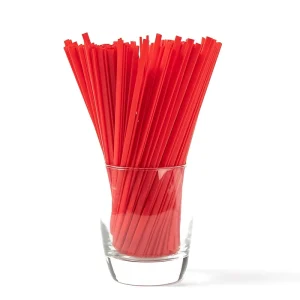
In a fast-paced urban environment, customers make snap judgments. The design of the cup, the efficiency of the barista, the cleanliness of the condiment station—it all feeds into a subconscious evaluation of the brand. The coffee stirrer is a part of this landscape. A dispenser filled with bright red plastic stirrers sends a different message than a container of neatly stacked wooden or bamboo sticks.
The former can feel dated, cheap, and out of touch with contemporary values. The latter suggests a more modern, thoughtful, and health-conscious approach. Even if the customer is in a hurry and only interacts with the stirrer for a few seconds, that brief tactile and visual experience registers. It aligns the cafe with a sense of natural quality. For the international traveler in Paris or Tokyo, who may be accustomed to high standards of presentation, these details matter. They contribute to a feeling of comfort and quality, reinforcing the decision to choose that particular cafe over the one next door.
For the Artisan Coffee Shop: Curating the Customer Experience
Now, let us shift our focus to a different kind of establishment: the artisan coffee shop. Here, the pace is slower, the focus is on craft, and the product is the star. This is a place where customers come not just for a caffeine fix, but for an experience. The origin of the beans is known, the brewing method is precise, and the presentation is meticulous. In this environment, every single element must be in harmony with the overall brand narrative of quality and craftsmanship. The coffee stirrer is no exception; it is an accessory to the main event and must be chosen with the same care as the ceramic mugs and the latte art.
The Stirrer as a Sensory Object: Texture, Feel, and Aesthetics
For the patron of an artisan shop, the coffee experience is a sensory one. It involves the aroma of the freshly ground beans, the visual appeal of the perfectly poured drink, the warmth of the cup, and the taste of the carefully crafted beverage. The stirrer, therefore, cannot be a mere functional tool. It becomes a sensory object in its own right.
Think about the difference in feel between a thin, hollow plastic stick and a solid, smooth-planed piece of bamboo. The plastic is weightless, anonymous, and disposable in the most negative sense of the word. The bamboo has a pleasant weight, a natural texture, and a visual warmth. It feels like an object of substance. When a customer uses it, the tactile feedback is one of quality. It complements the premium nature of the coffee itself. Some high-end shops might even opt for custom-branded wooden or bamboo stirrers, turning a disposable item into a subtle piece of marketing. The goal is to ensure that no part of the experience feels cheap or thoughtless.
Aligning Disposables with a Premium Brand Identity
An artisan brand is built on a promise of superiority. The coffee is better, the ingredients are fresher, the service is more knowledgeable. Any element that contradicts this promise weakens the brand. Providing a flimsy plastic stirrer alongside a $7 single-origin pour-over creates a moment of cognitive dissonance for the customer. It silently communicates that while the coffee is important, the details are not.
Conversely, choosing a high-quality wooden or bamboo stirrer reinforces the brand promise. It communicates that the cafe's commitment to quality extends to every corner of its operation. This philosophy should extend to all disposable items. If the shop offers takeaway food, using eco disposable cutlery made from wood or cornstarch is essential. If it serves iced drinks, a high-quality paper or PLA biodegradable straw is a must. Consistency across all customer touchpoints is what transforms a simple coffee shop into a powerful and respected brand. The customer should feel that the same level of care that went into sourcing the coffee beans also went into choosing the napkin, the cup, and the stirrer.
Communicating Sustainability Values to a Discerning Clientele
The clientele of an artisan coffee shop is often educated, discerning, and value-driven. They are likely to be aware of and concerned about environmental issues. For them, a cafe's sustainability practices are not a bonus feature but a core expectation. This audience is not easily fooled by "greenwashing." They understand the nuances between different types of materials and appreciate genuine efforts towards sustainability.
Choosing bamboo or FSC-certified wooden stirrers provides a clear and honest story to tell. It is a tangible demonstration of the cafe's values. This choice can be actively communicated—perhaps with a small sign at the condiment station explaining why a particular material was chosen. It opens a dialogue with customers and builds a deeper sense of community and shared values. It says, "We care about the same things you do." In a competitive market, this alignment of values can be a powerful driver of customer loyalty, turning casual visitors into dedicated regulars who feel good about where they spend their money.
| Cafe Type | Primary Concern | Recommended Stirrer Material | Rationale |
|---|---|---|---|
| High-Volume Urban Cafe | Cost & Efficiency | Wood (in bulk) | Balances low cost of bulk purchasing with positive customer perception and reliability. |
| Artisan Coffee Shop | Brand & Experience | Bamboo | Premium feel, smooth texture, and strong sustainability story align with a high-end brand. |
| Eco-Conscious Eatery | Sustainability & Ethics | Bamboo or FSC-Certified Wood | Highest environmental credentials and clear, verifiable sourcing. |
| Hotel (In-Room) | Hygiene & Elegance | Individually Wrapped Wood/Bamboo | Ensures sanitation and provides a touch of quality for a premium in-room experience. |
| Corporate Cafeteria | Cost & Compliance | PLA (if composting is available) | Low cost, meets plastic ban regulations, but requires proper disposal infrastructure. |
For the Eco-Conscious Eatery: Leading with Sustainability
There exists a category of food service establishment where the commitment to sustainability is not just a part of the brand, but the very foundation of its existence. This is the eco-conscious eatery, the zero-waste cafe, the plant-based restaurant. Here, every operational decision is filtered through the lens of environmental impact. For these businesses, the choice of a coffee stirrer is a profound statement of principle. It must not only be functional and aesthetically pleasing, but it must also hold up to the highest standards of ecological scrutiny.
Deconstructing 'Eco-Friendly': Biodegradability vs. Compostability
The term "eco-friendly" is broad and often misused. A truly sustainable business must understand the critical distinctions between related concepts, particularly biodegradability and compostability. This knowledge is crucial when selecting any disposable item, from stirrers to premium plastic tableware alternatives.
An item that is biodegradable will, over time, be broken down by microorganisms into its natural components. Wood and bamboo are excellent examples; left in the soil, they will eventually decompose. However, the timeframe for this process can be long, and the conditions are not always guaranteed in a modern, oxygen-deprived landfill.
Compostability is a more specific and rigorous standard. A certified compostable item is guaranteed to break down into non-toxic components within a specific timeframe (usually 90-180 days) but only under the conditions of an industrial composting facility, which involves high heat, humidity, and oxygen (Yates & Barlow, 2023). Many "biodegradable plastics" like PLA fall into this category. They are a significant improvement over traditional plastic but pose a problem if the local municipality lacks the necessary composting infrastructure. If these items end up in a landfill or the ocean, they can persist for a very long time, behaving much like a conventional Plastikstroh.
For the truly eco-conscious eatery, the ideal choice is a material that is both biodegradable and home-compostable, such as untreated wood or bamboo. This ensures that the product can return to the earth safely, even without access to specialized facilities.
The Role of Eco Disposable Cutlery in a Circular Economy Model
The most forward-thinking sustainable businesses operate on the principles of a circular economy. This model moves away from the traditional linear "take-make-dispose" system and aims to create a closed loop where resources are kept in use for as long as possible. Waste is designed out of the system.
In this context, the coffee stirrer is not seen as garbage but as a biological nutrient that can be returned to the soil. The eatery might partner with a local composting service to ensure all of its food scraps and disposable tableware are processed correctly. The choice of stirrer, fork, and knife—the entire suite of eco disposable cutlery—is made with its end-of-life journey in mind. The business takes responsibility not just for serving the customer, but for the entire lifecycle of the products it uses. This commitment to circularity is the gold standard of sustainability and a powerful story to share with a community that values environmental stewardship. A supplier like Mengte Commodities, which specializes in these products, becomes a key partner in achieving such a vision.
Certifications to Look For: FSC, BPI, and Others
To avoid greenwashing and ensure that their choices are genuinely sustainable, business owners must become familiar with third-party certifications. These labels provide independent verification of a product's environmental claims.
For wood and paper products, the most important certification is from the Forest Stewardship Council (FSC). This label guarantees that the material comes from a forest that is managed responsibly, protecting biodiversity, indigenous peoples' rights, and ecological integrity. It ensures that the sourcing of the wooden stirrer did not contribute to deforestation.
For compostable products, particularly bioplastics like PLA, the key certification in North America comes from the Biodegradable Products Institute (BPI). The BPI logo confirms that an item has been tested and proven to break down safely in a commercial composting facility. In Europe, a similar standard is provided by TÜV AUSTRIA's "OK compost" certification.
By prioritizing products with these certifications, a business owner can be confident that their procurement decisions are aligned with their environmental values. It shifts the burden of proof from the cafe to the manufacturer and provides a clear, trustworthy signal to customers that the commitment to sustainability is real and verifiable.
For the Multi-National Chain: Navigating Global Regulations and Supply Chains
The challenges of selecting a coffee stirrer are magnified exponentially for a multi-national corporation operating cafes or restaurants across dozens of countries. A decision that is simple for a single independent shop becomes a monumental logistical, legal, and financial puzzle. The procurement team for a global chain must be masters of international law, supply chain management, and cultural nuance. Their choice of a coffee stirrer must be compliant everywhere, available at a massive scale, and consistent with a global brand identity.
The Patchwork of Plastic Bans: A 2025 Global Overview
As of 2025, the world is a complex patchwork of regulations regarding single-use plastics. There is no single global standard. A company operating in the European Union must comply with the Single-Use Plastics Directive, which effectively bans many common plastic items, including plastic stirrers and straws. Countries like France and Spain have their own robust national laws that may go even further. A cafe in Paris simply cannot offer a traditional plastic stirrer without facing legal penalties.
Meanwhile, the situation in Asia is varied. Japan has a strong focus on recycling and has implemented policies to reduce plastic waste, encouraging businesses to switch to alternatives. South Korea has aggressive regulations, having banned disposable cups in cafes for sit-in customers and implemented other measures to curb single-use items. In other parts of the world, regulations may be less stringent or enforced at the local or state level rather than nationally.
This regulatory maze means that a one-size-fits-all approach is impossible. A global chain cannot simply choose one type of stirrer for all its locations. It must develop a nuanced strategy, perhaps using wooden stirrers in Europe, bamboo in certain Asian markets, and PLA bioplastics in North American cities with robust composting infrastructure. This requires a dedicated legal and compliance team to constantly monitor the evolving legislative landscape in every market of operation.
Sourcing at Scale: Vetting Suppliers for Consistency and Compliance
Sourcing millions, or even billions, of stirrers annually is a monumental task. A global chain needs a supplier who can not only provide the sheer volume required but also guarantee consistency in quality and compliance with all relevant regulations. A single bad batch of stirrers that are not properly certified could lead to legal trouble in multiple jurisdictions simultaneously.
The vetting process for suppliers is therefore incredibly rigorous. It involves factory audits, reviews of material sourcing documentation (like FSC certificates), and independent testing of the products. The supply chain must be transparent and robust, capable of weathering geopolitical disruptions or changes in trade policy. A large corporation will often work with multiple suppliers across different regions to mitigate risk. They might have one primary supplier for Europe specializing in birchwood and another for Asia specializing in bamboo. This diversification ensures a steady supply of compliant products to all their stores. The search for reliable partners capable of handling orders for bulk straws and stirrers on this scale is a constant and critical business function.
The Challenge of Recycled Plastic Tableware in Food Contact Applications
In an effort to find a middle ground, some have looked towards recycled plastic tableware. The idea is appealing: it keeps plastic out of landfills and reduces the need for virgin fossil fuels. However, this solution is fraught with challenges, especially for food-contact items.
The primary concern is safety. It is difficult to guarantee the purity of a recycled plastic stream. The plastic may have originally been used for non-food applications or could be contaminated with chemicals that could leach into a hot beverage. Regulatory bodies like the U.S. Food and Drug Administration (FDA) and the European Food Safety Authority (EFSA) have extremely strict standards for the use of recycled polymers in food-contact applications (Geueke, 2022). Meeting these standards can be a complex and expensive process, often making recycled plastic a non-viable option for items like stirrers or cutlery. While it may be suitable for non-food items like trays or menu holders, its application for direct food contact remains a significant hurdle for large-scale, risk-averse corporations.
For the Hotel and Hospitality Sector: Elegance, Function, and Hygiene
The hospitality sector, encompassing everything from luxury hotels to conference centers, has a unique set of requirements when it comes to disposable amenities. The choice of a coffee stirrer in this context is governed by a trio of concerns: maintaining an image of elegance and quality, ensuring flawless functionality, and guaranteeing absolute hygiene. The guest experience is paramount, and even the smallest details contribute to the overall impression of care and professionalism.
In-Room Coffee Service: Wrapped vs. Unwrapped Stirrers
Consider the in-room coffee and tea station, a standard feature in most hotels. Every item placed on that tray—the coffee pods, the sugar packets, the creamer—must be pristine. The coffee stirrer, in this setting, is almost always individually wrapped. This is not primarily for aesthetic reasons, but for hygiene. The guest needs absolute assurance that the stirrer is untouched and sanitary. The wrapper provides this psychological comfort.
The choice of material for the stirrer itself still matters. A luxury hotel that invests in high-thread-count sheets and premium toiletries would undermine its brand by providing a flimsy plastic stirrer, even if it is wrapped. A wrapped wooden or bamboo stirrer, however, maintains the sense of quality. The act of unwrapping it becomes a small ritual that reinforces the feeling of a fresh and personal service. The wrapper itself can be an opportunity for branding, perhaps with the hotel's logo, or it can be made of paper to align with sustainability goals. The decision between a paper or plastic wrapper becomes another calculation in the hotel's environmental and branding strategy.
The Crossover with Premium Plastic Tableware for Events
Hotels and conference centers are major venues for events, from weddings to corporate functions. These events often require large quantities of disposable tableware. While a hotel might use permanent silverware in its main restaurant, disposable options are often more practical for large-scale catering. This is where the concept of premium plastic tableware or its eco-friendly alternatives comes into play.
There is a growing market for high-quality, elegant disposable cutlery that mimics the look and feel of real silverware. These sets, often made from more robust plastics or polished bioplastics, are a step above standard picnic fare. A hotel might choose a line of such tableware for its event catering, and the coffee stirrer becomes part of this coordinated set. The stirrer might be designed with a similar aesthetic to the forks and spoons, creating a cohesive and polished look for the entire event. This ensures that the convenience of disposables does not come at the cost of elegance. The inquiry "What is a coffee stirrer called?" expands to "How does our stirrer fit into a complete, elegant, and disposable dining solution?"
Meeting the Expectations of International Guests from Russia, Spain, and Japan
A key challenge for the international hotel industry is catering to a diverse clientele with different cultural expectations. A guest from Japan, a culture with a deep appreciation for presentation and natural materials, might have a subconscious preference for a wooden or bamboo stirrer. The aesthetics of simplicity and naturalness are highly valued. A guest from France or Germany, who is likely very aware of the EU's strong stance against single-use plastics, might view a plastic stirrer negatively, seeing it as a sign that the hotel is not environmentally responsible. A guest from Russia or Spain might prioritize functionality and hygiene, but they are also part of a growing global consensus that values sustainable choices.
A successful international hotel brand must find a solution that satisfies these varied expectations. A high-quality, individually wrapped wooden or bamboo stirrer is often the safest and most universally positive choice. It signals quality, respects hygiene, aligns with global environmental trends, and appeals to a wide range of cultural aesthetics. It is a small but effective way of communicating a global standard of excellence and thoughtfulness to every guest, regardless of their country of origin.
The Broader Context: Stirrers, Straws, and the Future of Disposable Tableware
To fully grasp the significance of the coffee stirrer, we must place it within a broader philosophical and psychological context. It is more than a piece of wood or plastic; it is a symbol. It is an artifact of our culture of convenience, a focal point in our environmental debates, and a quiet participant in our daily rituals. Understanding this humble object requires us to reflect on our relationship with the things we use and discard.
The Psychological Impact of Small Choices on Consumer Behavior
Human behavior is shaped by habits and small, repeated actions. The act of grabbing a stirrer, using it for ten seconds, and then throwing it away is a microcosm of a much larger pattern of consumption. For decades, this action was performed without a second thought. The stirrer was functionally invisible. However, the global conversation around plastic pollution has changed this. The stirrer, like the plastic bag and the Plastikstroh, has become visible.
This new visibility has a psychological effect. When a customer is presented with a choice between a plastic stirrer and a wooden one, they are being asked to make a small ethical decision. Which choice do they make? Why? Even if the choice is made for them by the cafe, the object itself can trigger a chain of thought. A wooden stirrer can evoke a fleeting sense of satisfaction or virtue. A plastic stirrer might trigger a pang of guilt or a feeling of resignation.
These small emotional responses, repeated daily, can influence broader behaviors and attitudes. A cafe that consistently provides sustainable options is subtly training its customers to expect and value them. It normalizes the choice of biologisch abbaubare Strohhalme and wooden stirrers, making them the new default. In this way, businesses are not just responding to consumer demand; they are actively shaping it, contributing to a collective shift in consciousness, one coffee cup at a time. The question of what a coffee stirrer is called becomes less important than what it represents: a daily opportunity to reinforce a positive behavioral norm.
Innovation on the Horizon: Materials Science and the Next Generation of Stirrers
The search for the perfect disposable item—cheap, functional, and completely harmless to the environment—is a major driver of innovation in materials science. While wood, bamboo, and PLA are the dominant alternatives in 2025, researchers are constantly exploring new possibilities.
Imagine stirrers made from agricultural waste products, like wheat straw or sugarcane bagasse. These materials valorize what was once considered garbage, turning it into a useful product. There is research into algae-based bioplastics that can biodegrade in marine environments, offering a potential solution to ocean plastic pollution (Trivedi et al., 2021). Other innovations include edible stirrers, made from a hard, flavor-neutral biscuit or crystallized sugar, which generate no waste at all.
For a business owner, staying aware of these developments is key to staying ahead of the curve. The "best" material for a coffee stirrer is a moving target. What seems like a cutting-edge choice today may be standard tomorrow and obsolete the day after. By partnering with innovative suppliers and keeping an eye on materials science research, a business can continue to refine its choices, always striving for a more perfect alignment of cost, function, and sustainability.
A Philosophical Reflection on Transience and Utility in Everyday Objects
Let us take a final moment to consider the coffee stirrer as an object of philosophical contemplation. It is an object of profound transience. Its entire existence is designed to fulfill a single, brief purpose. It is born in a factory, travels hundreds or thousands of miles, and its moment of glory lasts for the few seconds it takes to swirl milk into espresso. Then, its purpose fulfilled, it is discarded.
There is a certain humility to such an object. It makes no claim to permanence. Yet, in its brief existence, it is essential to the completion of a ritual enjoyed by billions of people every day. It is a bridge between the separate elements of coffee and cream, creating a unified whole. In its disposability, it reflects a modern sensibility, a world of speed and convenience. But in our growing concern over its material and its fate, it also reflects a newfound awareness of consequence.
We are beginning to understand that even the most transient objects have a story and a future. The wood of the stirrer was once a living tree. The plastic was once oil deep within the earth. After its ten seconds of use, it will continue its journey, whether to a compost heap to become soil, or to a landfill to remain for centuries. To ask "What is a coffee stirrer called?" is to begin to see the object not as anonymous trash, but as part of a vast, interconnected system of nature, industry, and culture. It is a small key that unlocks very large doors of thought.
Frequently Asked Questions (FAQ)
What are the main names for a coffee stirrer?
While "coffee stirrer" is the most direct term, they are also commonly called "stir sticks," "swizzle sticks," or, more formally, "beverage agitators." The term "swizzle stick" often implies a more decorative or reusable design, but it is frequently used for disposable ones as well.
Are wooden stirrers really better for the environment than plastic?
Generally, yes. Wooden stirrers are made from a renewable resource (wood) and are biodegradable. Plastic stirrers are made from non-renewable fossil fuels and persist in the environment for hundreds of years. For the best environmental choice, look for wooden stirrers with an FSC (Forest Stewardship Council) certification, which ensures they come from responsibly managed forests.
What is the most cost-effective stirrer for a new cafe?
Traditional plastic stirrers are the cheapest per unit. However, considering potential negative customer perception and plastic bans in many regions, they represent a significant brand risk. A more balanced, cost-effective strategy for a new cafe is to purchase wooden stirrers in bulk. This keeps the per-unit cost low while aligning the brand with modern, sustainable values.
Do bamboo stirrers have a taste?
High-quality bamboo stirrers are flavor-neutral and will not impart any taste to your coffee or tea. They are processed in a way that removes any inherent flavors from the bamboo grass. Like wood, they are an excellent choice for preserving the pure taste of a beverage.
What is the difference between a coffee stirrer and a sip straw?
A coffee stirrer is typically a solid, flat stick designed purely for mixing. A "sip straw" or "sip stick" is a very thin, hollow tube. It is primarily intended to be used as a straw for slowly sipping very hot beverages, but it can also be used for stirring. Functionally, solid stirrers are often more rigid and effective for mixing, while sip straws offer the dual function of sipping. Both face similar scrutiny if made from traditional plastic.
Are bioplastic (PLA) stirrers a good alternative?
Bioplastic stirrers, made from materials like cornstarch (PLA), are a better alternative to petroleum-based plastic. However, they have a critical caveat: they only biodegrade in industrial composting facilities, not in landfills or the ocean. If your city or business does not have access to commercial composting, they can be just as problematic as regular plastic.
Why do some hotels use individually wrapped stirrers?
The primary reason is hygiene. In a hotel room or catering environment, an individually wrapped stirrer guarantees to the guest that the item is clean and has not been handled by anyone else. It provides a sense of sanitation and care that is crucial in the hospitality industry.
Schlussfolgerung
The inquiry into the name and nature of a coffee stirrer reveals a subject of unexpected depth. What may begin as a simple question of vocabulary—is it a stir stick, a swizzle stick, an agitator?—quickly evolves into a complex case study in material science, global economics, environmental ethics, and brand strategy. As we have seen, the choice of this small, transient object is a significant decision for any business in the food and beverage industry. It is a decision that reflects a company's core values, whether they prioritize minimal cost, customer experience, or ecological responsibility.
For the high-volume urban cafe, the stirrer is part of a calculation of efficiency and perception. For the artisan coffee shop, it is a sensory detail that must align with a narrative of premium quality. For the eco-conscious eatery, it is a testament to a principled stand on sustainability, requiring a deep understanding of terms like biodegradability and certifications like FSC. For global corporations and luxury hotels, the choice is governed by a complex web of international regulations, supply chain logistics, and the diverse expectations of a worldwide clientele.
In 2025, no business can afford to see the coffee stirrer as an afterthought. The growing awareness among consumers and the increasing pressure from regulators have transformed it into a potent symbol. The material it is made from—be it traditional plastic, FSC-certified wood, fast-growing bamboo, or innovative bioplastics—tells a story. It speaks to the company's awareness of its role in a larger system and its commitment to the future. Ultimately, the humble coffee stirrer serves as a powerful reminder that in a thoughtful business, there are no small details.
References
Geueke, B. (2022). Food contact materials and chemicals of concern: A comparison of regulations. Trends in Food Science & Technology, 129, 344–356.
Kaur, P. J., Satya, S., Pant, K. K., & Naik, S. N. (2022). Eco-friendly composites from bamboo and other lignocellulosic fibers. In Lignocellulosic Fibre and Biomass-Based Composite Materials (pp. 133-146). Woodhead Publishing.
Thompson, R. C., Olsen, Y., Mitchell, R. P., Davis, A., Rowland, S. J., John, A. W. G., McGonigle, D., & Russell, A. E. (2004). Lost at sea: Where is all the plastic? Science, 304(5672), 838.
Trivedi, J. H., Prajapati, D. A., & Vaghasiya, Y. K. (2021). Algae-based bioplastics: A sustainable and biodegradable solution for a greener future. In Current Research in Microbial Sciences, 2, 100061.
Yates, M. R., & Barlow, C. Y. (2023). Life cycle assessments of biodegradable, compostable, and biobased materials. The International Journal of Life Cycle Assessment, 28(2), 230–253.