




 ES
ES  EN
EN  FR
FR  RU
RU  DE
DE  JA
JA  KO
KO 
Abstract
The coffee stirrer, a seemingly minor utensil, possesses a significant function in the preparation and enjoyment of beverages. Its primary role extends beyond simple agitation; it is instrumental in achieving thermal equilibrium and ensuring the uniform dissolution of additives such as sugar and cream, thereby directly influencing the final sensory profile of the drink. An analysis of this tool reveals complexities in material science, fluid dynamics, and consumer psychology. The selection of a stirrer, whether wood, bamboo, plastic, or a reusable alternative, carries implications for operational efficiency, environmental responsibility, and brand perception within a commercial setting like a café. The physical dimensions of the stirrer, specifically its length and thickness, must be carefully calibrated to the volume and temperature of the beverage to ensure functionality without compromising user experience. Proper technique in how to use a coffee stirrer is also a determinant of its effectiveness. This exploration considers the multifaceted nature of the coffee stirrer, examining its historical development, material properties, and practical application to provide a comprehensive framework for its optimal use in both personal and professional contexts.
Key Takeaways
- Select stirrer materials like wood or bamboo for sustainability and a natural aesthetic.
- Match stirrer length to cup size; 6-inch for small cups, 7-inch or longer for larger drinks.
- Stir gently in a circular or figure-eight motion for even mixing without splashing.
- Understanding how to use a coffee stirrer properly enhances the customer's beverage experience.
- Consider the stirrer's thickness for durability, especially with very hot or thick beverages.
- Implement hygienic dispensing methods to maintain sanitation in a commercial setting.
- Choose stirrers that align with your brand’s commitment to quality and environmental values.
Table of Contents
- The Foundational Role of the Coffee Stirrer in Beverage Consumption
- Consideration 1: Mastering Material Selection for Optimal Performance and Sustainability
- Consideration 2: The Art and Science of Choosing the Right Stirrer Size
- Consideration 3: Perfecting the Stirring Technique for a Superior Beverage
- Beyond the Stir: Integrating Stirrers into a Cohesive Brand Experience
- Frequently Asked Questions (FAQ)
- Conclusión
- References
The Foundational Role of the Coffee Stirrer in Beverage Consumption
The act of preparing a cup of coffee is a ritual observed by millions, a quiet moment of creation before the day begins or a pause within its flow. Within this ritual, we find small, unassuming tools that play a disproportionately large part. The coffee stirrer is one such instrument. To dismiss it as a mere stick is to overlook its profound effect on the final character of the beverage. Its function is not just mechanical; it is chemical, physical, and even psychological, shaping the taste, temperature, and our very perception of the drink we are about to consume.
More Than a Stick: The Stirrer's Impact on Taste and Temperature
When you introduce milk, cream, or sugar into hot coffee, you create a system in a state of imbalance. The coffee is hot, while the milk is often cold. The sugar sits undissolved at the bottom. Without intervention, the drink would be inconsistent—scalding and bitter at the top, cool and overly sweet at the bottom. The stirrer is the agent that brings this system into harmony.
The motion of stirring introduces kinetic energy into the liquid. This creates convection currents, which are far more efficient at distributing heat than the slow process of conduction alone. The hot coffee circulates, transferring thermal energy to the cooler milk, bringing the entire beverage to a uniform, palatable temperature. Simultaneously, this agitation accelerates the process of dissolution. Sugar crystals, which would otherwise dissolve slowly, are broken apart and dispersed throughout the liquid, ensuring a consistent level of sweetness in every sip (Anzhucraft, 2025). The goal when you learn how to use a coffee stirrer is to create a homogenous mixture where taste and temperature are perfectly balanced.
A Brief History: From Twigs to Modern Utensils
The history of stirring coffee is intertwined with the history of coffee itself. When coffee consumption began to spread from Ethiopia in the 9th century, early drinkers likely used whatever was at hand—small twigs or rudimentary spoons—to mix their brews (eventableware.com, 2024). The tool was born of necessity. As coffee houses flourished in Europe during the 17th and 18th centuries, becoming centers of social and intellectual life, the implements used to prepare coffee evolved. Ornate metal spoons became common, reflecting the status of the beverage and the establishments that served it.
The 20th century, with its emphasis on convenience and disposability, saw the rise of the plastic stirrer. It was inexpensive, hygienic for single use, and perfectly suited to the fast-paced culture of takeaway coffee. Recently, a growing awareness of environmental concerns has prompted another shift. The industry is moving toward materials like wood, bamboo, and biodegradable plastics, reflecting a collective desire to reconcile convenience with sustainability (The Coffee Mondays, 2024). The humble stirrer, in its material evolution, tells a story about our changing societal values.
The Psychology of a Good Stir: Customer Perception and Satisfaction
The experience of a café patron is shaped by a thousand small details. The quality of the coffee beans is paramount, of course, but so is the cleanliness of the table, the comfort of the chair, and the quality of the utensils provided. A flimsy stirrer that bends or breaks in a hot drink can be a source of frustration, a minor but memorable annoyance that detracts from the overall experience. It communicates a lack of attention to detail.
Conversely, providing a sturdy, well-designed stirrer enhances the customer's sense of being cared for. A smooth wooden stirrer or a thoughtfully designed reusable one can elevate the act of preparing one's coffee, making it feel more deliberate and refined. The choice of stirrer sends a message about the brand's values. A café that provides biodegradable or wooden stirrers is signaling its commitment to environmental responsibility, a message that resonates strongly with many modern consumers. The stirrer is not just a tool; it is a touchpoint, an opportunity to reinforce a positive brand image and contribute to customer satisfaction (mtstraw.com, 2025).
Consideration 1: Mastering Material Selection for Optimal Performance and Sustainability
The choice of material for a coffee stirrer is a decision that balances practical considerations of performance with the ethical imperatives of sustainability. Each material brings its own set of properties concerning heat resistance, texture, reusability, and environmental impact. For a business owner, this choice is a reflection of their brand's identity and commitment to both customer experience and ecological stewardship. For the individual, it is a small but meaningful expression of personal values.
The Classic Choice: Wooden and Bamboo Stirrers
Wood, particularly birch, has long been a popular choice for disposable stirrers. Wooden stirrers possess a natural aesthetic that many people find appealing. They are sturdy enough for hot beverages and do not impart any unwanted flavors to the drink. From an environmental perspective, wood is a renewable resource, and wooden stirrers are biodegradable and compostable, meaning they can break down naturally without leaving behind persistent pollutants (Anzhucraft, 2025).
Bamboo has emerged as an even more compelling sustainable option. As a type of grass, bamboo grows exceptionally fast, making it a highly renewable resource. Bamboo stirrers share the strength and natural feel of wood but often come with a superior environmental profile due to the rapid regeneration of the plant (eventableware.com, 2024). They are strong, lightweight, and fully biodegradable. However, one must be mindful of potential downsides, such as the possibility of splintering if the quality is poor or a slight absorption of liquid, which is characteristic of porous natural materials.
The Plastic Dilemma: Traditional vs. Biodegradable and Recycled Options
Traditional plastic stirrers, typically made from polystyrene, became ubiquitous due to their low cost and high functionality. They are non-porous, so they do not absorb liquid or flavor, and they are effective for both hot and cold drinks. The primary and significant drawback of traditional plastic is its environmental impact. It is derived from fossil fuels and is not biodegradable, contributing to landfill waste and plastic pollution in oceans and natural landscapes.
In response to these concerns, the industry has developed alternatives. Recycled plastic tableware utilizes post-consumer or post-industrial plastic, giving a second life to materials that would otherwise be discarded. This reduces the demand for virgin plastic production. An even more advanced solution is the development of biodegradable plastics, such as PLA (polylactic acid), which is derived from plant starches. These materials are designed to break down under specific composting conditions, offering a path to reduce landfill burden. When considering a bulk straws or stirrers purchase, evaluating the end-of-life scenario for these materials is a responsible step.
Comparative Analysis of Stirrer Materials
To make an informed decision, a direct comparison is helpful. The following table outlines the key attributes of common stirrer materials, providing a clear basis for selection based on the priorities of the user or business.
| Material | Heat Resistance | Reusability | Impacto medioambiental | Typical User Experience |
|---|---|---|---|---|
| Wood (Birch) | Good | Single-use | Biodegradable, compostable | Natural feel, sturdy, can have a slight texture |
| Bamboo | Excellent | Single-use | Highly renewable, biodegradable | Smooth, strong, aesthetically pleasing |
| Traditional Plastic | Good | Single-use | Negative (landfill waste) | Smooth, non-absorbent, can feel flimsy |
| Biodegradable Plastic | Varies (PLA can deform in very high heat) | Single-use | Positive (compostable under right conditions) | Similar to traditional plastic, feels modern |
| Stainless Steel | Excellent | High (years) | Low (durable, recyclable) | Premium feel, easy to clean, requires washing |
Metal and Reusable Stirrers: A Niche for Quality
For home use or in high-end establishments that wish to eliminate disposable waste entirely, reusable stirrers are the ideal solution. Stainless steel is the most common material for this purpose. It is exceptionally durable, completely inert (imparting no taste), and easy to sanitize. While the initial cost is higher, a set of metal stirrers can last for years, making them economically and environmentally sound over the long term. Their use transforms the simple act of stirring coffee into a more deliberate and elegant ritual, aligning with a ethos of quality and permanence over disposability.
Consideration 2: The Art and Science of Choosing the Right Stirrer Size
Beyond material, the physical dimensions of a coffee stirrer—its length and thickness—are paramount to its function. An improperly sized stirrer can be an exercise in frustration, either disappearing into a large mug or proving too short to be used effectively. For a café owner, standardizing on the correct sizes is a matter of operational efficiency and customer satisfaction. Understanding the relationship between the stirrer, the cup, and the beverage is a subtle science that ensures a perfect stir every time.
Matching Stirrer Length to Cup Volume and Type
The fundamental principle is simple: the stirrer must be significantly taller than the cup it is used in. This allows the user to grip it comfortably without their fingers touching the beverage, which is both a matter of hygiene and comfort, especially with hot drinks.
A general guideline for length is as follows:
- 4-5 inch stirrers: These are suitable for small espresso cups or for serving alongside condiments.
- 6-inch stirrers: This is a versatile size, ideal for standard 8-12 ounce coffee cups and mugs, the most common size for takeaway service (mtstraw.com, 2025).
- 7-8 inch stirrers: These longer stirrers are necessary for larger 16-20 ounce travel mugs, tall latte glasses, and large iced coffee cups. They provide the leverage needed to mix a greater volume of liquid and ice.
When you consider how to use a coffee stirrer, the length dictates its utility. A stirrer that is too short will force the user into an awkward grip and fail to adequately mix the bottom of the drink.
The Significance of Thickness and Durability for Hot vs. Cold Drinks
The thickness of a stirrer correlates directly with its rigidity and durability. A thin, flimsy plastic straw or stirrer might suffice for a cold, thin liquid, but it will likely bend or even melt when used to stir a very hot coffee or a thick beverage like a mocha or a hot chocolate.
Wooden and bamboo stirrers generally offer excellent rigidity, making them a reliable choice for hot drinks. When selecting a plastic stirrer, it is important to choose one with sufficient thickness to prevent it from becoming pliable in heat. For iced drinks, a sturdier stirrer is also beneficial as it can be used to move ice cubes around to help chill the drink evenly. The physical integrity of the stirrer is a non-negotiable aspect of its performance.
A Sizing Guide for Common Beverage Containers
To simplify the selection process for a commercial establishment, a clear guide can prevent ordering errors and ensure staff always provide the appropriate utensil.
| Beverage Type | Typical Cup Size (oz) | Recommended Stirrer Length (inches) | Rationale |
|---|---|---|---|
| Espresso / Macchiato | 2-4 oz | 4.5" | Sufficient for small volume, prevents overwhelming the small cup. |
| Standard Coffee / Cappuccino | 8-12 oz | 6" | Industry standard for most takeaway cups and dine-in mugs. |
| Large Latte / Hot Chocolate | 16 oz | 7" | Needed for taller cups to ensure comfortable grip and full mixing. |
| Iced Coffee / Large Travel Mug | 16-24 oz | 7" – 8" | Required to clear the height of the cup and navigate ice. |
How Stirrer Dimensions Affect the Mixing Vortex
Thinking about the physics of the situation can be illuminating. When you stir a liquid, you are creating a vortex—a swirling mass of fluid. The efficiency of this mixing depends on the size and shape of the implement used. A very thin stirrer, like a simple round stick, creates a small vortex and may require more vigorous stirring to achieve a homogenous mixture.
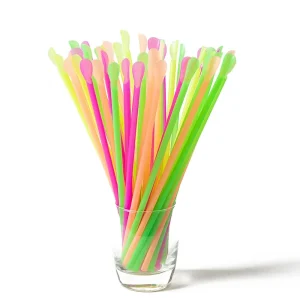
Some stirrers are designed with a small, flat paddle at the end. This design feature is not merely aesthetic; it increases the surface area interacting with the liquid. A paddle-ended stirrer creates a more turbulent and wider vortex, mixing the drink more quickly and efficiently. It is particularly effective at scraping the bottom of the cup to lift undissolved sugar crystals into the swirling liquid. The thoughtful design of a stirrer can significantly improve the process of how to use a coffee stirrer effectively.
Consideration 3: Perfecting the Stirring Technique for a Superior Beverage
Having selected the appropriate material and size, the final variable is the technique itself. The way in which one stirs the coffee can influence the final result, affecting everything from the evenness of the mixture to the texture of the foam on a latte. While it may seem intuitive, a mindful approach to stirring can elevate the quality of the beverage.
The Basic Mechanics: How to Use a Coffee Stirrer for Even Distribution
The primary goal is to create a consistent mixture. Hold the stirrer between your thumb and forefinger and insert it into the center of the cup. The most effective motion is a gentle, continuous stir in a circular pattern. Avoid overly rapid or frantic stirring, as this can cause the liquid to splash out of the cup and is generally less effective at creating a smooth, deep vortex.
An alternative and highly effective technique is a figure-eight motion. This pattern disrupts simple circular flow, creating more complex currents within the liquid that can be more efficient at distributing additives. For either method, stir for about 10-15 seconds, or until you can see that the color of the coffee is uniform and any added sugar has dissolved. A proper understanding of how to use a coffee stirrer focuses on control and efficiency rather than speed.
Advanced Techniques: Creating Microfoam and Enhancing Aroma
For beverages like cappuccinos or lattes that have a layer of steamed milk foam, the stirring technique requires more finesse. You want to mix the liquid coffee below without completely destroying the foam on top. The best approach is to insert the stirrer at an angle near the edge of the cup and use a gentle, lifting motion from the bottom up. This integrates the espresso with the steamed milk below the foam layer. A gentle swirl of the entire cup after stirring can then help to reintegrate the foam in a visually pleasing way.
Stirring also plays a role in releasing the volatile aromatic compounds trapped in the coffee. As you agitate the liquid, these compounds are released into the air, enhancing the olfactory experience that is so integral to enjoying coffee. A slow, deliberate stir allows you to appreciate these aromas as they are released.
Common Mistakes to Avoid in Beverage Preparation
Several common errors can detract from the experience. One is "tapping" the stirrer on the side of the cup after mixing. While a common habit, it is often noisy and can cause drips to fall onto the saucer or table. A better practice is to lift the stirrer straight out of the drink and let the last drop fall back into the cup before placing it on a napkin or saucer.
Another mistake is leaving the stirrer in the cup while drinking. It can be an obstruction and is generally considered poor etiquette. The stirrer has a specific, temporary function; once that function is complete, it should be removed. Finally, using a stirrer that is visibly dirty or has been used for another purpose is a significant breach of hygiene. In a commercial setting, stirrers should always be single-use and dispensed from a clean container.
The Hygienic Imperative: Proper Handling and Dispensing
In any food service environment, hygiene is non-negotiable. Coffee stirrers, especially those for communal use, must be handled with care to prevent the spread of germs. The best practice is to use a gravity-fed dispenser. These devices present one stirrer at a time, often by the end, so the customer only touches the stirrer they will use.
Avoid placing stirrers in an open cup or container where customers have to rummage through them, touching multiple stirrers in the process of taking one. If dispensers are not available, individually wrapped stirrers are a hygienic alternative, although they create more packaging waste. The commitment to a safe and clean customer experience extends to every item on the counter, including the humble stirrer.
Beyond the Stir: Integrating Stirrers into a Cohesive Brand Experience
The coffee stirrer, though small, is a component of a larger system of service. Its selection and presentation should not be an afterthought but rather an integrated part of a cohesive brand strategy. For a café, restaurant, or office, the choice of stirrers, cups, and other tableware speaks volumes about its values, its attention to detail, and its commitment to both its customers and the environment.
Sourcing Quality: Working with Suppliers of premium plastic tableware
A brand's reputation for quality is built on consistency. This extends to the disposable items it provides. Partnering with a reliable supplier who can provide high-quality, consistent products is essential. Whether the choice is wood, bamboo, or a form of plastic, the stirrers should be free of defects, uniform in size and shape, and strong enough for their intended purpose. For businesses looking to balance cost, performance, and aesthetics, sourcing from a specialist in premium plastic tableware and other disposables ensures access to a range of well-vetted options. A good supplier can offer guidance on the best products to meet a brand's specific needs and budget.
The Role of eco disposable cutlery in Building a Green Brand Image
In 2025, consumer consciousness around environmental issues is higher than ever. A brand's stance on sustainability can be a powerful differentiator. By choosing to provide eco disposable cutlery, including stirrers made from wood, bamboo, or compostable bioplastics, a business makes a tangible statement about its values. This choice does more than just reduce environmental impact; it builds a narrative of responsibility that can attract and retain customers who share those values. The stirrer becomes a small billboard for the brand’s green credentials, contributing to a positive and modern brand image.
Customization and Branding: Making the Stirrer Your Own
For brands looking to further enhance their identity, many suppliers offer customization options. A wooden or bamboo stirrer can be engraved or stamped with a company logo. Even individually wrapped stirrers can have the packaging printed with brand messaging. This transforms a generic disposable item into a unique piece of marketing collateral. It is a subtle but effective way to reinforce brand recognition and create a more memorable customer experience. Every detail, down to the stirrer, becomes an opportunity to communicate the brand's story and commitment to quality.
Frequently Asked Questions (FAQ)
What is the main purpose of a coffee stirrer? The main purpose is to mix additives like sugar, milk, or cream evenly into a beverage. This ensures a consistent taste and temperature throughout the drink by promoting the dissolution of solids and creating thermal equilibrium through convection.
Are wooden stirrers better for the environment than plastic ones? Generally, yes. Wooden stirrers are typically made from a renewable resource (like birch) and are biodegradable and compostable. Traditional plastic stirrers are made from fossil fuels and are not biodegradable, contributing to long-term landfill waste. However, biodegradable plastics offer a more eco-friendly alternative to traditional plastic (Anzhucraft, 2025).
Can I reuse a coffee stirrer? Most disposable stirrers, especially wood and plastic, are designed and intended for single use for hygienic reasons. Reusing them can harbor bacteria. The only stirrers suitable for reuse are those made from durable, non-porous materials like stainless steel, which can be properly washed and sanitized between uses.
Does the way I stir my coffee actually change the taste? Yes, indirectly. The technique used to stir determines how well sugar and cream are mixed into the coffee. Ineffective stirring can lead to an inconsistent drink that is bitter in one sip and overly sweet in another. Proper stirring creates a homogenous mixture, ensuring a balanced and consistent taste profile.
What size coffee stirrer should I use for a large iced coffee? For a large iced coffee, typically served in a 16 to 24-ounce cup, you should use a longer stirrer, around 7 to 8 inches. This length ensures the stirrer is tall enough to be gripped comfortably above the rim of the cup and long enough to reach the bottom to mix ingredients effectively, even with a large amount of ice.
Why do some coffee stirrers have a flat paddle at the end? The flat paddle increases the surface area of the stirrer. This design creates a more efficient mixing vortex in the liquid, helping to dissolve sugar and blend liquids more quickly than a simple, round stick-style stirrer. It is a functional design feature meant to improve performance.
Is it safe to use wooden stirrers in very hot drinks? Yes, it is generally safe. High-quality wooden stirrers, typically made from birchwood, are manufactured to be sturdy and resist breaking or splintering in hot liquids. They do not impart any harmful chemicals and are a very common and safe choice for stirring coffee, tea, and other hot beverages.
Conclusión
The coffee stirrer, an object of profound simplicity, reveals itself upon closer examination to be a nexus of material science, fluid dynamics, and social convention. The decision of how to use a coffee stirrer, which one to choose, and how to present it is not trivial. It is a choice that reverberates through the customer experience, the operational efficiency of a business, and our collective relationship with the environment. From the renewable forests that provide wood and bamboo to the innovative labs developing compostable bioplastics, the story of the stirrer is a microcosm of our broader search for solutions that are both functional and responsible. By understanding the material properties, the significance of size, and the proper technique of its use, we grant this humble tool the respect it deserves. We transform a mundane action into a mindful practice, ensuring that every cup of coffee we prepare or serve is not just mixed, but perfected.
References
Anzhucraft. (2025, May 29). What is a coffee stirrer? 2025. Anzhucraft. https://www.anzhucraft.com/what-is-a-coffee-stirrer/
eventableware.com. (2024, August 15). How to use coffee stirrer?
eventableware.com. (2024, December 27). Coffee stirrers: The ultimate guide.
Farr, R. S., & Groot, R. D. (2009). Mixing of a passive scalar in a two-dimensional vortex flow. Journal of Fluid Mechanics, 625, 267–290.
Guinard, J. X. (2001). The sensory science of coffee. Coffee: Recent Developments, 194-213.
Mtstraw.com. (2025, September 9). Best stirrer coffee size for your café. Yiwu Mengte Commodieies Co.,Ltd. https://www.mtstraw.com/as-a-cafe-how-do-i-choose-the-right-length-and-thickness-for-a-coffee-stirrer/
The Coffee Mondays. (2024, March 15). Swirling through history: Coffee stirrers evolution and importance in the industry. https://thecoffeemondays.com/swirling-through-history-coffee-stirrers-evolution-and-importance-in-the-industry/
Webb, H. K., Arnott, J., Crawford, R. J., & Ivanova, E. P. (2013). Plastic degradation and its environmental implications with special reference to poly(ethylene terephthalate). Polymers, 5(1), 1-18. https://doi.org/10.3390/polym5010001