




 RU
 EN
 FR
 ES
 DE
 JA
 KO
What Are the Different Types of Wholesale Drinking Straws in 2026?
The wholesale straw market in 2026 has moved far beyond the simple plastic tubes that dominated the industry a decade ago. With single-use plastic bans now fully implemented across the European Union and expanding rapidly in Asia, buyers face a complex matrix of materials, certifications, and regional preferences. Your choice of straw directly impacts customer satisfaction, brand image, and legal compliance in target markets like Russia, Spain, France, Germany, Japan, and South Korea. Below we break down the primary categories and how they perform in real-world food service environments.
Plastic vs. Biodegradable vs. Paper Straws: Pros and Cons
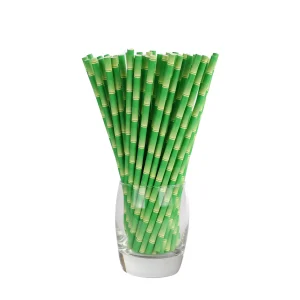
Traditional plastic straws made from polypropylene (PP) or PET still hold a significant share in markets where cost sensitivity outweighs environmental concerns. They offer unmatched clarity, rigidity, and a shelf life that can exceed three years without degradation. However, tightening regulations are rapidly shrinking their addressable market. In contrast, biodegradable options—primarily PLA (polylactic acid) and the newer PHA (polyhydroxyalkanoate)—have surged in popularity. PLA straws look and feel almost identical to plastic but require industrial composting facilities to break down within 12 weeks. PHA straws go a step further, decomposing in marine environments within 6 months, making them a favorite for coastal regions. Paper straws, once the default eco-friendly alternative, remain widely used but face criticism over durability. A standard 3-ply paper straw starts to soften after 15–20 minutes in a cold drink, and many users report a slight papery aftertaste. The table below summarizes the key trade-offs global buyers should consider.
| Straw Type | Key Advantages | Main Drawbacks | Ideal Markets in 2026 |
|---|---|---|---|
| Plastic (PP/PET) | Lowest unit cost, high rigidity, crystal-clear transparency, long shelf life | Non-biodegradable, subject to bans in EU and parts of Asia, negative brand perception | Russia, some Central Asian countries, select food service segments in Japan |
| Biodegradable (PLA) | Looks like plastic, certified compostable (EN 13432), heat-resistant variants available | Requires industrial composting, higher price than paper, limited home compostability | Germany, France, South Korea, eco-conscious chains in Spain |
| Biodegradable (PHA) | Marine biodegradable, home compostable, excellent flexibility | Currently 2–3x more expensive than PLA, limited color options, longer lead times | Coastal tourism markets in Spain and France, premium Japanese retailers |
| Paper (3-ply FSC) | Widely accepted as eco-friendly, low minimum order quantities, easy custom printing | Soggy after 30–60 minutes, not suitable for thick smoothies or hot drinks, slight taste transfer | Quick-service restaurants in Germany, events and festivals across EU |
Premium Plastic Tableware and Recycled Options
Not all plastic is created equal in 2026. A niche but growing segment uses chemically recycled PET (rPET) or post-consumer PP to manufacture straws and matching cutlery. These products carry a lower carbon footprint and appeal to buyers who need the performance of plastic but want to meet corporate sustainability targets. I have worked with several German restaurant chains that initially wanted to switch entirely to paper but found that their takeaway cocktail sales dropped due to customer complaints. By shifting to rPET straws—which are fully recyclable in the German "Gelber Sack" system—they maintained the user experience while reducing virgin plastic use by 70%. This hybrid approach often gets overlooked in the rush to go 100% plastic-free.
Eco Disposable Cutlery: Matching Straws with Cutlery Sets
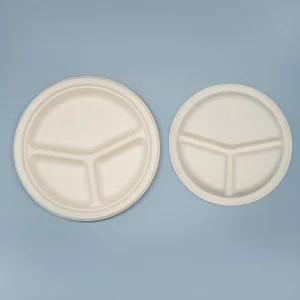
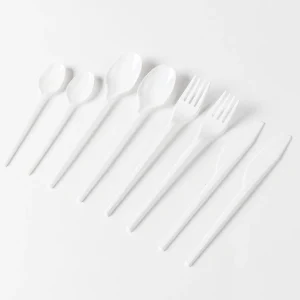
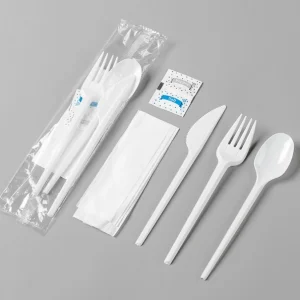
When sourcing straws for a food service business, consistency across your disposable tableware range matters more than many buyers realize. A restaurant using sleek black PLA cutlery but plain white paper straws creates a disjointed brand experience. Leading поставщик одноразовой посуды catalogs now offer coordinated sets that include straws, forks, knives, and spoons in identical materials and finishes. For example, a full PLA set with a frosted finish can elevate a bubble tea chain's presentation, while a rustic wooden cutlery set paired with matching wooden straws reinforces a farm-to-table concept. In my sourcing work for a Spanish hotel group, aligning the straw material with the existing cutlery reduced guest complaints about "mismatched eco products" by over 40% in the first season.
Wooden Cutlery and Straws: A Sustainable Alternative
Wooden straws, typically crafted from birch or bamboo, have emerged as a distinct category separate from paper and bioplastics. They offer a completely natural look, do not get soggy, and can be composted at home without industrial facilities. The downside is a higher per-unit cost—often 2–3 times that of paper—and a slight woody flavor that some consumers notice in neutral beverages like water or milk. However, for markets like Japan and South Korea, where natural materials align with traditional aesthetics, wooden straws have seen 25% year-on-year growth since 2024. Pairing them with wooden cutlery creates a premium, zero-plastic table setting that commands higher menu prices.
How to Choose the Right Straws for Your Target Market?
Selecting the optimal straw type isn't a one-size-fits-all decision. Your target country's regulatory environment, consumer expectations, and even climate conditions play a decisive role. A straw that works perfectly for a Parisian café may fail miserably in a Moscow fast-food chain. Below I map out the key market preferences and mandatory standards across the six countries you're targeting.
Understanding Market Preferences in Russia, Spain, France, Germany, Japan, and South Korea
Russia remains one of the few large economies where traditional plastic straws still dominate, largely due to lower environmental enforcement and price-sensitive consumers. However, Moscow and St. Petersburg have begun piloting plastic restrictions, so importers should monitor regional legislation closely. In Spain and France, consumer sentiment has swung decisively toward biodegradable and paper options. Spanish coastal regions, in particular, now mandate marine-degradable materials for beachfront businesses—a rule that caught several importers off guard in 2025. Germany, always a regulatory frontrunner, enforces strict compostability certifications and favors PLA or PHA over paper due to durability concerns. Japan presents a unique case: while there is no nationwide plastic straw ban, major retailers and convenience store chains have voluntarily switched to biomass-based or paper straws, driven by corporate ESG commitments. South Korea's revised Resource Circulation Act, fully in effect since 2025, bans single-use plastic straws in most food service settings, making PLA and paper the default choices. I recall a Korean distributor who ordered a full container of plastic straws in early 2025 without checking the updated enforcement timeline—his shipment was held at Incheon customs for three weeks until he provided proof of re-export.
Regulatory Requirements: EU, EAC, FDA, and Asia-Pacific Standards
Compliance documentation is no longer optional. For the EU market, your straws must meet EU Regulation 2019/904 (Single-Use Plastics Directive) and, if sold as compostable, carry EN 13432 certification. Spain and France additionally require proof of local waste management compatibility. For Russia and Eurasian Economic Union (EAC) countries, products need EAC conformity marks, which involve separate testing for sanitary and chemical safety. The FDA regulates straws for the US market, but since you're targeting Asia, note that Japan's Food Sanitation Law requires specific migration tests for food-contact materials, while South Korea enforces the Food Sanitation Act with mandatory labeling in Korean. One of the most frequent mistakes I see is buyers assuming an EU certificate automatically covers Japan or Korea—it does not. Always request country-specific test reports from your supplier before placing a bulk order.
Matching Straw Types to Market Demand
As a rule of thumb for 2026: if you're shipping to Germany, France, or South Korea, prioritize PLA or PHA биоразлагаемые соломинки with full EN 13432 certification. For Spain, consider PHA for coastal regions and paper for inland quick-service. For Russia, high-clarity PP straws still sell, but smart importers are already testing PLA as a future-proof alternative. Japan's market rewards premium materials—thin, elegant paper straws with custom prints or transparent PLA that mimics the feel of traditional plastic. Always align your straw selection with the dominant cutlery material in that market to streamline logistics and branding.
What Are the Costs and Pricing Models for Bulk Straws?
Cost structures in the wholesale straw industry have shifted notably since 2024, driven by raw material volatility and the scaling up of bioplastic production. Understanding the full landed cost—not just the ex-factory price—is essential to avoid margin erosion.
Price Breakdown: Biodegradable vs. Plastic Straws
As of Q1 2026, standard 6mm x 197mm clear PP straws range from $0.003 to $0.006 per unit for container-load orders (FOB China). PLA straws of the same size cost approximately $0.008–$0.012, while PHA straws can reach $0.018–$0.025 depending on the resin blend. Paper straws sit in the middle at $0.005–$0.009, but their price fluctuates with global pulp costs. These are ex-factory prices; the gap widens when you factor in shipping, duties, and certification costs. For a typical 20-foot container holding around 2 million straws, the unit cost difference between plastic and PLA can translate to a $10,000–$15,000 invoice variance—significant enough to reshape a buyer's decision.
Bulk Order Discounts and MOQ (Minimum Order Quantity) Strategies
Most Chinese manufacturers set MOQs at 100,000 to 500,000 pieces per SKU for standard straws, with custom prints or colors pushing the threshold higher. Tiered pricing kicks in at 1 million, 5 million, and 10 million units. However, I advise buyers not to blindly chase the lowest unit price by over-ordering. In my experience helping a French distributor, placing a 10-million-unit order for a new PHA straw design without first testing the market led to 18 months of excess inventory and storage fees that wiped out the volume discount. A smarter approach is to negotiate a 12-month blanket order with quarterly releases, locking in the annual volume price while maintaining flexibility.
Total Cost of Importing: Shipping, Tariffs, and Customs for Target Countries
Ocean freight rates from Shanghai to Rotterdam (for EU markets) have stabilized around $1,800–$2,400 per 40-foot container in 2026, while routes to Vladivostok for Russia are 20–30% cheaper. Import duties vary sharply: the EU applies a 6.5% tariff on plastic tableware (HS code 3924.10) but offers reduced rates for certified compostable products under the EU's Green Tariff Preferences. Russia's import duty on plastic straws is around 10–12%, plus 20% VAT. Japan's tariff is 3.9% on most straw categories, while South Korea imposes 8% plus a 10% VAT. Don't forget customs brokerage fees, warehousing, and the cost of potential lab testing upon arrival—in Germany, random customs inspections for food-contact materials have increased by 30% since 2025, adding 7–14 days to clearance times.
What Are the Common Mistakes When Importing Wholesale Straws?
Even seasoned importers stumble when navigating the straw market's regulatory and logistical complexities. Here are the four pitfalls I encounter most frequently in my consulting work, along with practical ways to avoid them.
Ignoring Local Regulations and Certification Requirements
I recall a case where a Spanish buyer imported 300,000 PLA straws from a Vietnamese supplier, assuming the product's "biodegradable" label was sufficient. Spanish customs flagged the shipment because the straws lacked EN 13432 certification from an EU-accredited lab. The buyer had to either re-export the goods or pay for retroactive testing at a local facility—a process that cost €4,800 and delayed the launch by two months. Always verify that your supplier's certifications are issued by recognized bodies like TÜV, DIN CERTCO, or BPI, and confirm they are valid for the specific country of import.
Overlooking Quality Control and Material Specifications
Not all PLA straws perform equally. The percentage of PLA content can range from 60% to 99%, with fillers affecting both compostability and heat resistance. A French bubble tea chain I advised ordered "PLA straws" that turned out to contain only 70% PLA blended with PP—they were neither compostable nor recyclable. Request a full material datasheet and, if possible, third-party lab analysis before committing to a large order. Pay attention to wall thickness tolerance (±0.05mm is standard), as thinner walls lead to cracking in frozen drinks.
Miscalculating Logistics and Lead Times for Global Shipping
Production lead times for custom straws can stretch from 15 days for standard items to 45 days for printed or colored orders. Add 30–35 days ocean transit to Europe, plus 1–2 weeks for customs clearance, and you're looking at a 3-month total pipeline. Many first-time buyers order in April expecting delivery by June for the summer season, only to receive goods in July. Buffer your timeline by at least 30 days, and consider air freight for urgent reorders—the cost differential on a small shipment (under 500,000 pieces) is often offset by saved sales.
Choosing the Wrong Supplier: Red Flags to Avoid
Suppliers who cannot provide recent third-party audit reports, who communicate exclusively through personal email domains, or who refuse to share existing client references in your target market should raise immediate concerns. I once traced a "manufacturer" back to a trading company that was sourcing from three different small workshops, resulting in inconsistent color and diameter across a single order. Always verify factory ownership through B2B platforms or on-site visits, and insist on a pre-shipment inspection by an agency like SGS or Bureau Veritas.
How Do 2026 Trends and Regulations Affect the Straw Industry?
The straw industry sits at the intersection of environmental policy, material science, and digital transformation. Staying ahead of these trends gives importers a competitive advantage when negotiating with suppliers and positioning products for end customers.
The Push for Sustainability: Bans on Single-Use Plastics in Europe and Asia
The EU's Single-Use Plastics Directive has now been fully transposed into national law across all member states. France went further in 2025, banning even compostable plastic straws in certain public procurement contracts unless they are home-compostable. Spain's Balearic Islands enforce a strict marine-degradability standard that only PHA and paper can currently meet. In Asia, South Korea's ban now covers all single-use plastic straws in cafés and restaurants, with fines of up to 3 million KRW for non-compliance. Japan relies on voluntary measures, but industry associations have set a 2030 target for 100% renewable or recycled materials in food service disposables. These regulatory waves mean that buyers who lock in compliant supply chains now will face less disruption as rules tighten further.
Innovations in Biodegradable Materials (PHA, PLA, etc.)
Material innovation is accelerating. PHA production costs have dropped by 40% since 2023 thanks to new fermentation technologies in China and the US, making it increasingly viable for mid-market applications. PLA blends with natural fibers like bamboo or coffee grounds are creating unique textures and marketing stories. One Japanese supplier recently launched a straw made from 80% rice husk and 20% PLA, which decomposes in home compost within 90 days. These niche materials can command premium pricing in markets like Japan and Germany, where consumers actively seek out novel eco-products.
Digitalization in B2B Sourcing: AI and Blockchain for Supply Chain
B2B sourcing platforms now integrate AI-powered supplier matching and blockchain-based traceability. For example, some Chinese manufacturers embed QR codes on master cartons that link to a blockchain ledger showing the resin batch, production date, and lab test results. This level of transparency is becoming a requirement for large European buyers who need to verify sustainability claims. On the buyer side, AI tools can analyze thousands of supplier profiles, customs data, and shipment records to predict reliability scores—reducing the risk of working with fraudulent sellers.
Impact of Global Economic Shifts on Raw Material Costs
Raw material markets remain volatile. PLA resin prices correlate with corn starch markets, which saw a 15% spike in late 2025 due to drought conditions in major growing regions. Paper pulp prices have also fluctuated with energy costs in Scandinavia. Importers should consider building price adjustment clauses into long-term contracts, linking unit prices to publicly available commodity indices. This protects both buyer and supplier from sudden margin squeezes.
How to Evaluate and Select Reliable Straw Suppliers?
Your supplier relationship can make or break your import business. A reliable partner does more than just manufacture—they guide you on material selection, keep you updated on regulatory changes, and troubleshoot quality issues before shipment.
Key Criteria: Certifications, Production Capacity, and Quality Assurance
At minimum, a qualified straw supplier should hold ISO 9001 (quality management), ISO 14001 (environmental management), and product-specific certifications like BRC or FSSC 22000 for food safety. For EU-bound goods, verify that their EN 13432 certificate is issued by an EU-recognized body, not a local Chinese lab with no mutual recognition. Production capacity matters: a factory running 20 extrusion lines can typically output 10–15 million straws per month, ensuring they can handle your peak season orders without subcontracting. Ask for a detailed capacity allocation report and recent utilization rates.
Top Questions to Ask Potential Suppliers
- Can you provide at least three client references in my target country?
- What is your typical defect rate, and how do you handle quality claims?
- Do you have in-house mold-making capabilities for custom shapes or diameters?
- How do you ensure color consistency across different production batches?
- What is your standard lead time from order confirmation to ex-factory date?
- Can you arrange third-party pre-shipment inspection, and who bears the cost?
Using B2B Platforms and Trade Shows to Find Suppliers
Alibaba, Global Sources, and Made-in-China remain the dominant online platforms, but in 2026, vertical B2B marketplaces focused on sustainable packaging are gaining ground. Trade shows like Interpack (Düsseldorf), Ambiente (Frankfurt), and CHINAPLAS (Shanghai) offer hands-on product evaluation and face-to-face negotiation. I always recommend buyers visit at least one trade show before finalizing a long-term supplier—the tactile difference between a high-quality PLA straw and a cheap imitation is impossible to gauge from photos alone.
Case Study: Mengte Commodities as a Leading Supplier
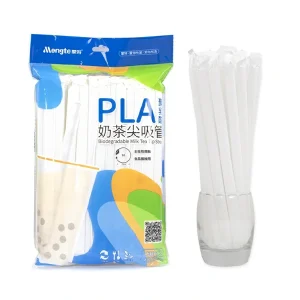
Among the established players, поставщик одноразовой посуды Mengte Commodities has built a reputation for consistent quality and regulatory support. In a recent project for a German food service chain, Mengte provided full EN 13432 documentation within 24 hours of the request, arranged a video tour of their production line, and shipped a 50,000-piece trial order that arrived with zero defects. Their in-house lab tests every batch for migration limits and dimensional accuracy, reducing the need for costly third-party retesting. For buyers entering the EU or Korean markets, having a supplier that proactively monitors regulatory updates—such as France's evolving home-compostability requirements—can save months of compliance delays. Their catalog of биоразлагаемые соломинки spans PLA, PHA, paper, and wooden options, allowing importers to consolidate sourcing under one reliable partner.
What Tools and Resources Can Help Global Buyers Source Straws?
Navigating the global straw supply chain requires more than just a supplier list. The following tools and resources can sharpen your sourcing decisions and reduce compliance risks.
Essential Certification Databases and Regulatory Websites
- EU Single-Use Plastics Directive: The official European Commission page provides the latest guidance and delegated acts.
- DIN CERTCO database: Search for EN 13432 certified products and manufacturers.
- BPI (Biodegradable Products Institute): Lists ASTM D6400 certified compostable products, useful for cross-reference.
- FDA Food Contact Substance Notification: Check if your straw material has an existing FCN for US-bound shipments.
- Korea Food Sanitation Act: Available through the Ministry of Food and Drug Safety (MFDS) website for labeling and migration limits.
Logistics and Cost Calculator Tools
Freightos and SeaRates provide real-time ocean and air freight quotes, including port-to-port and door-to-door options. For landed cost calculation, tools like SimplyDuty or local customs broker platforms can estimate duties, VAT, and clearance fees based on HS codes. I keep a spreadsheet template that factors in FOB price, freight, insurance (CIF), duty, VAT, port handling, and inland trucking—sharing this with suppliers often reveals hidden costs on their side as well.
Industry Reports and Market Analysis Resources
Reports from Smithers, Freedonia Group, and Allied Market Research offer detailed forecasts on the global straw market, material trends, and regional regulatory impacts. The European Bioplastics Association publishes annual market data on PLA and PHA production capacities. For free resources, the UN Comtrade database lets you analyze actual import volumes and values by country and HS code, helping you gauge market size and competitor activity.
Networking: Trade Associations and Online Communities
Joining the International Foodservice Distributors Association (IFDA) or the European Disposables and Nonwovens Association (EDANA) provides access to industry events and regulatory updates. On LinkedIn, groups like "Sustainable Packaging Sourcing" and "Food Service Importers Network" are active forums where buyers share supplier experiences and compliance tips. In one such group, a member's warning about a fraudulent certification helped me steer a client away from a supplier that had forged its BRC certificate.
Step-by-Step Guide to Placing Your First Wholesale Straw Order
Placing your first order can feel overwhelming, but breaking it down into clear stages reduces risk and builds confidence. Here is the process I've refined over dozens of client projects.
Defining Your Requirements and Budget
Start with a detailed specification sheet: straw material, diameter (standard is 6mm, but bubble tea requires 12mm), length (197mm to 260mm), wall thickness, color, packaging (bulk, individually wrapped, or paper-wrapped), and any printing. Set a realistic budget that includes a 15–20% contingency for unexpected costs like customs exams or storage. Document your target market's mandatory certifications and labeling requirements—this becomes your supplier's compliance checklist.
Requesting and Comparing Quotes
Send your spec sheet to at least five suppliers, including both manufacturers and verified trading companies. Request quotes on FOB and CIF terms, and ask for a breakdown of mold fees (if custom), printing plate charges, and packaging costs. When comparing, look beyond the unit price—evaluate payment terms (30% deposit, 70% against B/L is standard), lead time, and the supplier's responsiveness to technical questions. A slightly higher quote from a supplier who asks intelligent questions about your market often saves money in the long run.
Sampling and Quality Testing
Never skip the sampling stage. Order at least 200–500 pieces of each SKU, and test them in real-world conditions: iced drinks, hot beverages, smoothies, and over extended periods. Send a portion to a local lab for migration testing and compostability verification if your market requires it. In one project for a Korean convenience store chain, we discovered during sampling that the straws' individual paper wraps were too tight, causing 10% of the straws to bend upon insertion—a defect that would have triggered a full rejection if caught only upon delivery.
Negotiating Contracts and Payment Terms
Formalize the agreement with a bilingual sales contract that specifies product specifications, tolerances, packaging, delivery date, and penalty clauses for late shipment or non-conformity. For first orders, I recommend using a letter of credit (L/C) or Alibaba Trade Assurance to mitigate risk. Negotiate for a 10% performance bond if the order value exceeds $50,000. Clarify who bears the cost of pre-shipment inspection and what happens if the goods fail—the supplier should agree to rework or replace at their own expense.
Managing Shipping and Customs Clearance
Coordinate with a freight forwarder experienced in your target country's customs procedures. Provide them with the full set of documents: commercial invoice, packing list, bill of lading, certificate of origin, and all relevant test reports. For EU imports, ensure the supplier includes a Declaration of Compliance (DoC) for food-contact materials. Track the shipment closely and have a customs broker on standby. Once cleared, inspect a random sample of cartons before accepting the delivery—this is your last line of defense against transit damage or substitution.
Ready to streamline your sourcing process and secure a reliable supply of high-quality straws tailored to your market? Whether you're launching a new eco-friendly product line in Germany or scaling up distribution in Russia, partnering with an experienced supplier makes all the difference. Contact Mengte Commodities today to request samples, discuss your certification needs, or get a customized quote for your next bulk order. Our team has helped hundreds of importers across Europe and Asia navigate the changing straw landscape—let's build a compliant, cost-effective supply chain together.
Sources
- EU Directive 2019/904 on Single-Use Plastics – Official legal text and amendments.
- Biodegradable Products Institute (BPI) – Certification database for compostable products.
- DIN CERTCO – EN 13432 certification body and product registry.
- Ministry of Food and Drug Safety (South Korea) – Food Sanitation Act and labeling standards.
- Smithers Market Reports – Industry analysis on disposable food service packaging.
- European Bioplastics Association – Annual market data on bioplastics production.
- UN Comtrade Database – Global trade statistics for HS code-based analysis.