




 DE
DE  EN
EN  FR
FR  ES
ES  RU
RU  JA
JA  KO
KO How to Identify a Reliable Drinking Straw Manufacturer for Bulk Orders?
Sourcing disposable tableware from overseas can feel like navigating a minefield. The stakes are high: a single subpar shipment can damage your brand's reputation in markets like France or Japan, where consumers expect flawless quality. At Mengte Commodities, we've spent years refining a vetting process that eliminates guesswork. Whether you're importing biologisch abbaubare Strohhalme for an EU hotel chain or plastic tableware for Russian fast-food outlets, these steps will help you separate legitimate manufacturers from middlemen and frauds.
I've personally audited factories across China and Southeast Asia, and I've learned that a supplier's willingness to share information is often the first indicator of reliability. Let's walk through the exact framework we use before placing any bulk order.
Step-by-Step Process for Vetting International Straw Suppliers
Start with a broad list of potential suppliers from B2B platforms like Alibaba or Global Sources, but don't stop there. Cross-reference their company profiles with government business registries. Many countries have online databases where you can verify a manufacturer's legal status, registration date, and export history. A supplier that has been in business for less than two years and claims to serve dozens of countries is a red flag—I've seen this pattern in several scams.
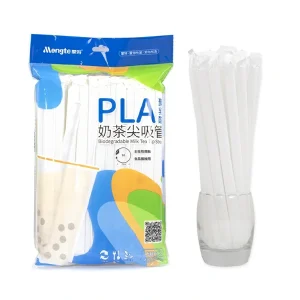
Next, request at least three references from clients in your target region. A genuine Lieferant für Einweggeschirr will gladly connect you with existing buyers. When I was vetting a new PLA straw producer last year, one reference in Spain revealed that the factory had consistent quality issues during summer months due to humidity—information we used to adjust our packaging requirements.
Always order samples before signing a contract, and don't just evaluate them in your office. Test them under real-world conditions: put paper straws in various beverages for 2+ hours, freeze biodegradable straws, and check for deformation. We once rejected a supplier because their "compostable" straws started disintegrating in hot coffee within 15 minutes—a disaster waiting to happen for any café owner.
If the order value exceeds $10,000, invest in a third-party factory audit. Companies like SGS or Bureau Veritas will inspect production lines, hygiene standards, and raw material storage. The $500–$1,000 audit fee is negligible compared to the cost of a rejected container. During one audit, we discovered that a factory was using recycled PLA pellets instead of virgin material, despite their certifications claiming otherwise.
Key Questions to Ask Potential Manufacturers Before Placing Bulk Orders
Before you negotiate pricing, drill down into operational details. Here are the questions that have saved us from costly mistakes:
- "What is your monthly production capacity for this specific straw type, and what is your current utilization rate?" A factory running at 95% capacity will likely delay your order.
- "Can you provide batch-level traceability for raw materials?" This is critical for EU and Japanese markets, where documentation requirements are stringent.
- "What is your defect rate, and how do you handle quality claims?" If they can't give you a straight number, walk away.
- "Do you have in-house mold design and maintenance capabilities?" For custom shapes, this determines lead time and consistency.
- "How do you package bulk straws to prevent damage during ocean freight?" We learned the hard way that shrink-wrapping alone isn't enough for humid routes.
These questions often reveal whether a manufacturer is truly in control of their process or merely a trading company with a factory facade. In one negotiation, a supplier hesitated when we asked about mold maintenance—it turned out they outsourced all tooling, which explained their erratic delivery schedules.
Red Flags and Common Mistakes to Avoid When Choosing a Straw Supplier
The most dangerous mistake is chasing the lowest price without understanding the cost drivers. I recall a buyer from Germany who switched to a new supplier offering PLA straws at 40% below market rate. The shipment arrived with inconsistent diameters and a strange odor. Lab tests found melamine contamination—the factory had been cutting costs with industrial fillers. The buyer lost his biggest client and faced a recall.
Other red flags include: reluctance to provide a detailed material safety data sheet (MSDS), inability to explain their certifications, and communication that suddenly shifts from sales to a different person after the deposit is paid. Always maintain a single point of contact who has technical knowledge. If a supplier avoids video calls or factory tours, assume they have something to hide.
A common oversight is ignoring local import regulations. For instance, Russia's EAC certification and South Korea's MFDS requirements are non-negotiable. Before you place a bulk order, confirm that the manufacturer's existing certifications cover your specific product and destination. We've seen EU-bound shipments held at customs because the LFGB test report was for a different straw material.
What Are the Different Types of Bulk Drinking Straws and Their Applications?
The disposable straw market has fragmented dramatically since 2020. Today, a buyer in Japan might demand individually wrapped paper straws with custom prints, while a Spanish distributor could be looking for heavy-duty PLA straws for smoothies. Understanding the material options and their regional fit is essential to avoid dead stock.
Biodegradable Plastic Straws vs. Paper Straws vs. Wooden Cutlery: A Comprehensive Comparison
While straws are our focus, many buyers also source complementary wooden cutlery from the same supplier to streamline logistics. Here's a breakdown of the most common eco-friendly options:
| Type | Material & Degradation | Pros | Cons | Ideal Application |
|---|---|---|---|---|
| PLA Biodegradable Straws | Polylactic acid derived from corn starch; industrially compostable (EN 13432) | Looks and feels like plastic; heat-resistant up to 50°C; clear or colored options | Requires industrial composting facilities; not home-compostable; higher cost than paper | Bars, restaurants, and events in EU markets with composting infrastructure |
| Papierstrohhalme | FSC-certified paper with food-grade adhesive; biodegradable in any environment | Low cost; customizable prints; wide consumer acceptance; home compostable | Soggy after 30–60 minutes; can affect beverage taste; not suitable for thick drinks | Quick-service restaurants, cafes, and single-use events; popular in Japan and Korea |
| Sugarcane/Bagasse Straws | Byproduct of sugarcane processing; fully biodegradable and home-compostable | Sturdy, no sogginess; neutral taste; premium eco-friendly image | Limited color options; higher minimum order quantities; still niche | High-end cafes and eco-conscious brands in Germany and France |
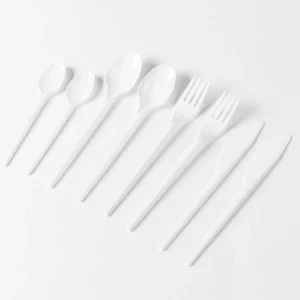
| Wooden Cutlery (for reference) | Birch or bamboo wood; naturally biodegradable | Sturdy, heat-resistant, no chemical additives; complements straw orders | Splintering risk if poorly finished; heavier shipping weight | Full eco-friendly tableware sets for airlines, catering, and events |
Note: While wooden cutlery isn't a straw, many of our clients bundle orders to save on freight. When sourcing biologisch abbaubare Strohhalme , ask if the manufacturer also produces complementary items like wooden stirrers or cutlery—it can simplify your supply chain.
Premium Plastic Tableware vs. Recycled Plastic Options: Which Is Right for Your Market?
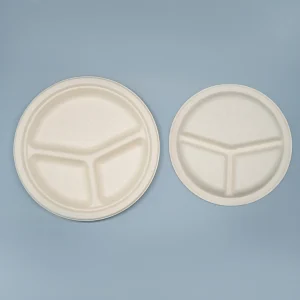
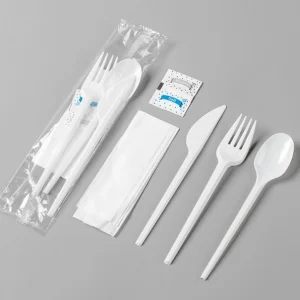
Despite the sustainability push, traditional plastic straws still hold significant market share in regions like Russia, where cost sensitivity is high and composting infrastructure is limited. However, the type of plastic matters. Virgin polypropylene (PP) straws offer the best clarity and strength, making them suitable for premium cocktails and presentation-focused venues. Recycled plastic straws, while cheaper and more sustainable on paper, often have a grayish tint and may carry a slight odor—a dealbreaker for foodservice.
In the EU, recycled content is increasingly mandated by law, but for food-contact items, the safety requirements are strict. Only food-grade recycled plastics (rPET, rPP) from approved processes can be used. We've seen Spanish buyers successfully market recycled plastic tableware by emphasizing the circular economy angle, but they had to invest in consumer education. For most of our clients in Germany and France, the trend is clear: move away from conventional plastics entirely toward PLA or paper.
Matching Straw Types to Regional Preferences in Russia, EU, and Asia
Regional preferences are shaped by regulations, culture, and climate. In Russia, price remains the dominant factor; many buyers still opt for standard PP straws, though interest in paper straws is growing in Moscow and St. Petersburg due to Western brand influence. France and Spain lead the EU in paper straw adoption, driven by strict single-use plastic bans and high consumer awareness. Germany, meanwhile, shows a strong preference for PLA straws because of its advanced industrial composting network.
In Asia, Japan demands the highest quality standards—individually wrapped, odorless paper straws with precise dimensions are the norm. South Korea's market is similar but more price-competitive; hybrid materials like PLA-coated paper are gaining traction. When exporting to these countries, packaging presentation is almost as important as the product itself. I've seen a Korean distributor reject an entire shipment because the individual wrapping had a misalignment of less than 1mm—a reminder that regional expectations vary enormously.
How to Ensure Quality and Compliance When Importing Straws into Your Country?
Quality failures in disposable tableware don't just cost money—they can trigger legal liabilities. In 2025, a French importer faced a €50,000 fine because their paper straws contained trace levels of primary aromatic amines above the EU migration limit. The supplier had switched ink suppliers without notification. This section outlines the non-negotiables for keeping your shipments compliant.
Essential International Certifications: FDA, LFGB, EU Standards, and More
Certifications are your first line of defense, but only if they're current and product-specific. Here are the key ones:
- FDA 21 CFR (USA): Required for any straw entering the U.S. market, but often requested by global buyers as a quality benchmark.
- LFGB (Germany): The German Food and Feed Code, stricter than EU general regulations. Many EU buyers insist on LFGB for paper and plastic straws.
- EU Regulation (EC) No. 1935/2004 : Framework regulation for all food-contact materials. Requires Declaration of Compliance (DoC) for each batch.
- EN 13432 : The standard for industrial compostability, essential for biodegradable straws sold in the EU.
- EAC (Eurasian Conformity): Mandatory for Russia and the Eurasian Economic Union.
- MFDS (South Korea): Ministry of Food and Drug Safety approval for food-contact items.
Always verify the certificate's scope. A factory might have LFGB for PLA straws but not for paper straws. I learned this when a German client's lab tested our paper straw shipment and found it non-compliant—the supplier had assumed the LFGB covered all materials. Now we require material-specific certificates before production begins.
Common Quality Defects in Bulk Straw Shipments and How to Prevent Them
Over the years, we've cataloged recurring defects that plague straw imports. The top five are: dimensional inconsistency (diameter or length off by > 2%), poor sealing on individually wrapped straws, ink migration from printed designs, brittleness in cold temperatures, and off-gassing odors in plastic straws. Each of these can be prevented with clear specifications and inline inspections.
For example, paper straws often arrive with loose glue seams if the manufacturer uses inadequate adhesive or rushes the drying process. We now specify a minimum 3-ply spiral winding and require samples from every production batch before shipment. In one case, a container of PLA straws destined for Spain developed cracks during transit because the material wasn't properly annealed. The supplier had skipped the annealing step to save energy costs. We only discovered this after a third-party inspector reviewed the production logs.
Third-Party Inspection and Testing Procedures for Disposable Tableware
Don't rely solely on the manufacturer's in-house QC. Engage an independent inspection company like SGS, Intertek, or TÜV Rheinland to perform pre-shipment inspections. The standard protocol includes visual checks, dimensional measurements, functional tests (e.g., soak tests for paper straws), and lab testing for migration and heavy metals.
We typically use the AQL (Acceptable Quality Limit) 2.5 level for major defects and 0.65 for critical defects. For a 100,000-unit order, this means inspecting 500 pieces randomly. The cost ranges from $300 to $800 depending on the factory location, and it's the best money you'll spend. I recall a shipment where the inspector found that 8% of the straws had sharp burrs at the cut end—a serious injury risk. The entire batch was reworked before shipping, saving us from a recall in Japan.
What Is the True Cost of Bulk Straw Orders and How to Maximize ROI?
Straw pricing is deceptively simple. The unit price a supplier quotes is just the tip of the iceberg. To calculate true landed cost and ROI, you must factor in a dozen variables that can swing your margins by 20% or more.
Detailed Breakdown of Manufacturing, Shipping, and Import Costs for Straws
Let's break down a typical order of 1 million PLA straws from China to Germany:
- Ex-factory price: $0.008–$0.015 per straw, depending on thickness and customization.
- Packaging: $0.001–$0.003 per straw for bulk or individual wrapping.
- Inland transport to port: $300–$600 per container.
- Ocean freight (2026 rates): $2,500–$4,000 for a 40ft container (rates have stabilized post-pandemic but remain volatile).
- Insurance: 0.3%–0.5% of cargo value.
- Customs duties: EU tariff for straws is 6.5% on the CIF value, but biodegradable straws may qualify for reduced rates under environmental tariff lines.
- VAT: 19% in Germany, 21% in Spain—recoverable but impacts cash flow.
- Port handling and delivery: $500–$1,200.
All in, your landed cost per straw can be 50–100% higher than the ex-factory price. Many first-time importers forget about customs brokerage fees, demurrage risks, and the cost of quality inspections. I've seen a Spanish buyer's profit evaporate because their container was held for three weeks at Valencia port due to missing documentation, incurring €200/day in storage fees.
Negotiation Strategies to Get the Best Pricing from Straw Manufacturers
The best time to negotiate is during the industry's off-season—typically November to January for straws, when factories are hungry for orders to keep lines running. Instead of just haggling on unit price, focus on total value: ask for free custom mold development, extended payment terms, or consignment stock arrangements.
Another effective tactic is consolidating multiple product lines with one supplier. When we shifted all our wooden cutlery, paper straws, and PLA straws to a single factory, our blended cost dropped by 12% because the manufacturer could optimize production runs and share packaging materials. We also negotiated a quarterly review clause that adjusts pricing based on raw material indexes, protecting both parties from commodity swings.
Don't be afraid to walk away if the terms don't meet your risk profile. I once let a promising supplier go because they refused to include a penalty clause for late delivery. Three months later, a competitor who signed with them faced 8-week delays and lost a key retail contract.
Calculating ROI for Different Straw Types: Biodegradable vs. Plastic vs. Paper
ROI isn't just about unit margin; it's about market positioning and regulatory risk. A simple comparison for a German foodservice distributor:
- PP plastic straws: Landed cost $0.01/unit, selling price $0.02, margin 50%. But with plastic bans tightening, the product may become unsellable within two years, leaving you with stranded inventory.
- Paper straws: Landed cost $0.015/unit, selling price $0.035, margin 57%. Higher margin and growing demand, but customer complaints about sogginess can erode repeat business if quality isn't top-tier.
- PLA biodegradable straws: Landed cost $0.018/unit, selling price $0.04–$0.05, margin 55–60%. Premium positioning, strong regulatory tailwinds, and better user experience than paper. The main risk is consumer confusion about composting.
From a pure ROI perspective, PLA straws often win for EU markets, while paper dominates in quick-service restaurants where price sensitivity is higher. In Russia, plastic still offers the best short-term ROI, but smart buyers are already transitioning to paper for their premium clients to future-proof their business.
What Are the Emerging Trends in the Disposable Straw Industry for 2026?
The straw industry is evolving faster than most buyers realize. Regulations that were proposals in 2024 are now enforceable laws, and material science breakthroughs are creating entirely new categories. Staying ahead of these trends is how you turn a commodity product into a differentiated brand.
New Sustainability Regulations and Their Impact on Straw Materials in Europe and Asia
In the EU, the Single-Use Plastics Directive (SUPD) has been fully implemented, but 2026 brings additional restrictions on plastic-lined paper and oxo-degradable additives. France's AGEC law now requires clear labeling on compostability claims, and Germany's packaging act (VerpackG) has increased recycling quotas that indirectly affect straw packaging. In Asia, South Korea's revised Resource Circulation Act imposes stricter EPR (Extended Producer Responsibility) fees on plastic straws, making paper and PLA more cost-competitive. Japan has introduced a plastic resource circulation law that encourages biobased materials, though enforcement is gradual.
For importers, the key takeaway is that the regulatory trend is unidirectional: more restrictions on conventional plastics, more documentation requirements for all materials. A shipment that was compliant in 2025 may not be in 2026. We now assign a regulatory compliance officer to each major market we serve, tracking changes in real-time.
Innovations in Biodegradable, Edible, and Reusable Straw Technologies
R&D departments are pushing boundaries. PHA (polyhydroxyalkanoate) straws, made by bacterial fermentation, are emerging as a true home-compostable alternative that performs like plastic—no industrial composting needed. Several manufacturers in China and Italy are scaling production, though costs remain 3–5x higher than PLA. Edible straws made from rice, seaweed, or even pasta are gaining traction in the event and hospitality sector, particularly in Japan and South Korea, where novelty and zero-waste concepts appeal to consumers.
Reusable straws (silicone, stainless steel, glass) are also influencing the disposable market. Many cafes now offer a discount for customers who bring their own, reducing overall disposable straw demand in some segments. However, hygiene concerns post-pandemic have sustained demand for individually wrapped single-use straws. The smart money is on hybrid models: a durable reusable straw with a disposable, compostable sleeve for hygiene.
Market Demand Shifts: What Buyers in Russia, Spain, France, Germany, Japan, and South Korea Are Looking For
In 2026, Russian buyers are increasingly requesting paper straws with moisture-resistant coatings, driven by Moscow's ban on plastic in government-funded events. Spanish and French buyers are prioritizing carbon footprint transparency; they want suppliers who can provide lifecycle assessment (LCA) data for their straws. German buyers are leading the charge on chemical safety, often requiring additional testing beyond LFGB, such as for NIAS (non-intentionally added substances).
Japanese importers are focusing on ultra-thin, high-rigidity paper straws that don't alter the taste of delicate beverages like sake. South Korean buyers are demanding faster customization turnaround—5-day sample production instead of the traditional 15 days—to keep up with K-pop themed café promotions. Across all markets, the common thread is that buyers expect their Lieferant für Einweggeschirr to act as a compliance partner, not just a manufacturer.
What Tools and Resources Can Help You Find and Evaluate Straw Suppliers?
Even experienced buyers need reliable tools to filter the noise. The right platforms, inspection partners, and market intelligence can compress your sourcing cycle from months to weeks.
Top B2B Platforms and Trade Shows for Sourcing Drinking Straws in 2026
For online sourcing, Alibaba remains the largest database, but its sheer volume makes vetting crucial. Global Sources offers a more curated selection with verified supplier badges that are harder to fake. For European buyers, Europages and Kompass are useful for finding regional distributors who can handle smaller orders. In 2026, we're also seeing niche platforms like EcoVadis-linked directories that pre-screen suppliers for sustainability practices.
Trade shows are irreplaceable for hands-on evaluation. The Canton Fair (Guangzhou, April/October) still draws the largest concentration of straw manufacturers. Ambiente in Frankfurt (February) is the premier European show for tableware trends. For the Asian market, the Seoul Food & Hotel Show and Tokyo's FOODEX offer direct access to local buyers and regulatory updates. I always schedule factory visits around these shows to maximize the trip's value.
Recommended Third-Party Inspection and Certification Services for Disposable Tableware
We've already mentioned SGS, Intertek, and Bureau Veritas for inspections. For lab testing, specific certifications require accredited labs: TÜV Rheinland for LFGB, NSF International for FDA, and the Korean Testing & Research Institute (KTR) for MFDS. Don't use the manufacturer's suggested lab; independent labs ensure no conflict of interest. A list of ISO 17025 accredited labs is available on each country's accreditation body website.
For ongoing supplier monitoring, we use platforms like QIMA and Inspectorio that digitize inspection reports and track factory performance over time. This data is invaluable when deciding whether to renew a contract.
Industry Reports and Market Analysis Tools to Stay Ahead in the Straw Business
Grand View Research and Mordor Intelligence publish annual disposable straw market reports with regional breakdowns, pricing trends, and material forecasts. Euromonitor's Passport database offers consumer behavior data that can inform your product mix. For regulatory tracking, the European Bioplastics Association and the Food Packaging Forum provide free newsletters with updates on material approvals and restrictions.
I also recommend setting up Google Alerts for "straw ban [country]" and "biodegradable straw regulation" to catch local policy shifts before they become mainstream news. In this industry, a two-month head start on a regulatory change can mean the difference between clearing customs and having your goods destroyed.
Ready to secure a reliable supply chain for your straw and disposable tableware needs? At Mengte Commodities, we don't just manufacture—we partner with you to navigate certifications, optimize costs, and predict market shifts. Kontaktieren Sie uns heute to request samples, discuss your bulk order requirements, or schedule a factory tour. Let's build a sustainable, profitable future for your business.
- FDA Food Contact Substances
- EU Single-Use Plastics Directive
- German Federal Office of Consumer Protection and Food Safety (LFGB)
- Grand View Research: Disposable Straws Market Report
- European Bioplastics Association
- Intertek Food Contact Testing Services