




 ES
ES  EN
EN  FR
FR  RU
RU  DE
DE  JA
JA  KO
KO 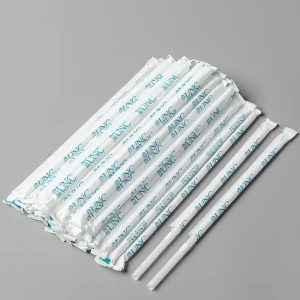
Abstract
An examination of the global manufacturing landscape for plastic straws in 2026 reveals a significant concentration of production within Asia, particularly in China. This analysis explores the economic, logistical, and historical factors contributing to this dominance, with a focus on industrial clusters like Yiwu. The primary raw material, polypropylene, is discussed in relation to its properties and the extrusion manufacturing process. For international procurement managers and business owners, understanding where plastic straws are made is intrinsically linked to navigating supply chain complexities, quality assurance protocols, and evolving global regulations. The paper investigates critical supplier vetting criteria, including certifications, production capacity, and customization capabilities. It also considers the market’s trajectory, looking at the growth of alternatives such as biodegradable straws and recycled plastic tableware, which reflect a shifting consumer and regulatory consciousness. Strategic sourcing requires a deep comprehension of this multifaceted production ecosystem to ensure quality, compliance, and supply chain stability.
Key Takeaways
- Asia, especially China, is the primary region where plastic straws are made due to its manufacturing infrastructure.
- Polypropylene (PP) is the dominant material, chosen for its durability, flexibility, and low cost.
- Vetting suppliers involves checking certifications, production capacity, and quality control protocols.
- Logistical planning and understanding trade policies are vital for sourcing bulk straws internationally.
- The market is seeing growth in eco disposable cutlery and other sustainable alternatives.
- Customization (OEM/ODM) is a key service offered by leading international manufacturers.
- Knowing your supplier’s capabilities ensures a resilient and reliable supply chain for your business.
Table of Contents
- The Global Epicenter of Plastic Straw Production
- The Anatomy of a Plastic Straw: From Polymer to Product
- Navigating the Complexities of International Sourcing
- Vetting Your Supplier: Five Foundational Factors for Global Buyers
- The Future of Straws: Beyond the Conventional Plastic Straw
- Frequently Asked Questions (FAQ)
- Conclusión
- References
The Global Epicenter of Plastic Straw Production
To ask where plastic straws are made is to ask a question about the very heart of modern globalized manufacturing. The answer is not a simple geographical point but a complex network of factories, supply chains, and economic forces. As of 2026, the world’s production of these seemingly simple items is overwhelmingly concentrated in one part of the world: Asia. Within that continent, China stands as the undisputed leader, a position it has cultivated over decades. Understanding why this is the case requires a look not just at factory locations, but at the entire ecosystem that enables such large-scale production.
Why Asia, and Specifically China, Dominates the Market
The story of China’s manufacturing dominance is a story of deliberate industrial policy, massive investment in infrastructure, and the development of a skilled labor force. Beginning in the late 20th century, the nation transformed itself into the “world’s factory.” This was not accidental. The establishment of Special Economic Zones (SEZs) created environments with favorable tax laws and reduced regulations, attracting immense foreign investment and technology transfer. Over time, a powerful synergy emerged. Factories producing raw materials, like polypropylene pellets, were often located near factories that would process them. These processing plants were, in turn, surrounded by companies specializing in packaging, logistics, and international shipping.
This creates an economy of scale that is nearly impossible for other nations to replicate. The cost per unit for a single plastic straw can be reduced to a fraction of a cent precisely because the entire supply chain is so tightly integrated and geographically condensed. A manufacturer does not need to import raw materials from across an ocean; they are often available from a supplier in a neighboring province or even the same industrial park. The web of highways, high-speed rail, and some of the world’s largest container ports ensures that finished goods can be moved from the factory floor to a ship destined for Europe, the Americas, or other parts of Asia with remarkable efficiency. This integrated system is a fundamental part of the answer to the question of where plastic straws are made.
The Role of Manufacturing Hubs like Yiwu
Within China, certain cities have become synonymous with specific types of production. When it comes to small commodities—a category that perfectly describes the plastic straw—the city of Yiwu in Zhejiang province is a name that resonates with procurement managers globally. Yiwu is not just a city with factories; it is a city that functions as a colossal, year-round trade fair. The Yiwu International Trade Market (also known as Futian Market) is a sprawling complex covering millions of square meters, where tens of thousands of individual shops display goods ranging from toys to textiles to, of course, tableware.
Companies like Yiwu Mengte Commodities Co., Ltd. are emblematic of this ecosystem . Established in the mid-1990s, such firms grew in tandem with Yiwu itself. They are not merely production facilities; they are deeply embedded in a network that includes raw material suppliers, mold designers, packaging specialists, and international freight forwarders. A buyer visiting Yiwu can meet with a manufacturer, discuss specifications for a custom order of bulk straws, approve a sample, and arrange for shipping all within a few days and often within a small geographical area. This concentration of expertise and services provides a level of convenience and speed that is a powerful competitive advantage. The city represents a microcosm of China’s larger manufacturing prowess and is a key location when considering where plastic straws are made.
Production Shifts and Emerging Regions in 2026
While China remains the dominant force, the global manufacturing landscape is not static. Over the past decade, several factors have begun to subtly reshape the map. Rising labor costs within China, coupled with a strategic governmental push towards higher-tech and higher-value manufacturing, have led some companies to explore production in other parts of Asia. Nations like Vietnam, Indonesia, and India have become increasingly attractive for certain types of manufacturing. They offer lower labor costs and are actively seeking to build their own industrial capacity through favorable government policies.
However, shifting the production of an item like a plastic straw is not as simple as just opening a new factory. It requires recreating, at least in part, the dense supply chain ecosystem that makes Chinese production so efficient. Access to a steady and affordable supply of high-quality polypropylene, a reliable power grid, and efficient port infrastructure are all prerequisites. As of 2026, while these emerging regions are growing in importance, they have not yet managed to challenge China’s supremacy in the high-volume, low-margin world of disposable goods. For most international buyers, particularly those in Europe and East Asia, China remains the most logical and reliable answer to the question of where to source these products.
The Anatomy of a Plastic Straw: From Polymer to Product
To truly understand the industry, one must look beyond geography and into the object itself. The humble plastic straw is a product of sophisticated material science and a highly refined manufacturing process. Its design is a delicate balance of cost, functionality, and safety. The choice of material is paramount, as it dictates not only the final properties of the straw but also the efficiency with which it can be produced in the billions.
Polypropylene (PP): The Material of Choice
The vast majority of conventional plastic straws are made from a thermoplastic polymer called polypropylene, often abbreviated as PP. If you were to look at the bottom of many plastic containers, from yogurt cups to medicine bottles, you would likely find the recycling symbol with the number “5” inside—this denotes polypropylene. Its ubiquity is a testament to its remarkable versatility.
Polypropylene is a hydrocarbon polymer, meaning its molecular structure is a long chain of carbon and hydrogen atoms. Its popularity in food-contact applications, including the manufacturing of a plastic straw, stems from several key properties. First, it has a high melting point compared to many other common plastics, meaning a straw will not deform or leach chemicals when placed in a hot beverage like coffee or tea. Second, it is chemically resistant to acids and bases, so it does not react with acidic fruit juices or sodas. Third, it is strong and fatigue-resistant. A polypropylene straw can be bent or twisted without easily breaking, a quality that is particularly important for flexible or “bendy” straws. Finally, and perhaps most importantly from a manufacturing perspective, it is a low-cost commodity plastic that is readily available worldwide. These characteristics make it the ideal candidate for producing everything from standard drinking straws to specialized recycled plastic tableware.
| Característica | Polypropylene (PP) Straws | Pajitas de papel | Polylactic Acid (PLA) Straws | Stainless Steel Straws |
|---|---|---|---|---|
| Primary Material | Fossil-fuel-based polymer | Wood pulp / Paper | Plant-based polymer (corn, sugarcane) | Metal alloy |
| Durability in Liquid | Excellent; does not soften or degrade | Poor; can become soggy and collapse | Good; holds up well in cold drinks | Excellent; completely inert |
| Heat Resistance | High (up to 130°C / 266°F) | Low; not suitable for hot liquids | Low (softens above 40°C / 104°F) | Excellent; suitable for all temperatures |
| Reusability | Single-use | Single-use | Single-use | Reusable (hundreds of times) |
| Cost per Unit | Very Low | Low to Medium | Medium | Very High |
| End-of-Life | Recyclable (where facilities exist) | Compostable / Biodegradable | Commercially Compostable | Reusable / Recyclable |
The Extrusion Process: A Step-by-Step Explanation
The transformation of polypropylene pellets into a finished plastic straw happens through a manufacturing process called extrusion. It is an incredibly efficient method for creating continuous lengths of a product with a fixed cross-sectional profile. Imagine squeezing toothpaste from a tube—extrusion works on a similar principle, but with molten plastic and much greater precision.
- Feeding and Melting: The process begins with small, solid plastic pellets of polypropylene being fed from a large hopper into a long, heated barrel. Inside the barrel is a large rotating screw. As the screw turns, it propels the pellets forward.
- Heating and Compression: The barrel is surrounded by several heating zones, which gradually increase the temperature of the plastic. The friction generated by the screw’s rotation also contributes to the heating. As the plastic moves along the barrel, it melts into a thick, homogenous liquid. The screw’s design also compresses the molten plastic, removing any air bubbles.
- Extrusion through a Die: At the end of the barrel, the molten plastic is forced through a small, circular metal plate called a die. The shape of the hole in the die determines the shape of the final product. For a straw, it is a simple circle with a pin in the center to create the hollow tube. The plastic emerges from the die as a continuous, hot, and soft tube.
- Cooling and Sizing: The newly formed plastic tube, called the extrudate, is immediately pulled through a cooling bath, typically filled with water. This rapidly solidifies the plastic, locking it into its final shape and size. Sizing plates or vacuum chambers may be used during this stage to ensure the straw’s diameter is perfectly uniform.
- Cutting: Finally, the long, continuous tube of solidified plastic passes through a cutting machine. A high-speed blade or a rotary knife cuts the tube into individual straw lengths with extreme precision. For flexible straws, an additional step is required where a specialized machine creates the corrugated bellows that allow the straw to bend.
This entire process is continuous and highly automated, allowing a single production line to produce thousands of straws per minute. It is this efficiency that has made the plastic straw so inexpensive and widespread.
Quality Control in High-Volume Manufacturing
In a process that moves so quickly, quality control is not an afterthought; it is an integral part of every step. For a reputable manufacturer, ensuring the safety and consistency of their product is paramount. This begins with the raw materials. The polypropylene pellets must be “food grade,” meaning they meet strict international standards, such as those set by the U.S. Food and Drug Administration (FDA) or equivalent European Union regulations, ensuring no harmful substances will leach into a beverage.
During production, sensors constantly monitor temperatures, pressures, and the speed of the extrusion line. The dimensions of the straws—their diameter, wall thickness, and length—are regularly checked using precision instruments like calipers. Visual inspections are also conducted to check for any defects, such as cracks, rough edges, or color inconsistencies. For wrapped straws, the sealing of the paper or plastic wrapper is also tested to ensure it remains hygienic until use. These rigorous checks are what separate a high-quality product from a substandard one and are a key indicator of a reliable supplier.
Navigating the Complexities of International Sourcing
For a procurement manager in Germany, a restaurant owner in Japan, or a distributor in Spain, knowing where plastic straws are made is only the first step. The more significant challenge lies in successfully and consistently getting those products from the factory in Asia to their warehouse. International sourcing is a discipline that blends economics, logistics, and cross-cultural communication. In 2026, the global environment for trade is more dynamic and complex than ever before, requiring careful planning and strategic partnerships.
Understanding Trade Policies and Tariffs in 2026
The era of straightforward, predictable global trade has been replaced by a more fluid situation. Trade agreements, tariffs, and customs regulations can change with political and economic shifts. A buyer in the European Union, for example, must be aware of the EU’s Single-Use Plastics Directive, which has placed restrictions on certain types of plastic products. While many common plastic straws are still permissible, there are stringent regulations and reporting requirements. Likewise, buyers in other regions must contend with their own national or regional trade policies.
Tariffs, which are taxes on imported goods, can have a significant impact on the final landed cost of a shipment of bulk straws. These can vary based on the product’s specific classification code (HS code) and the trade relationship between the exporting and importing countries. A knowledgeable supplier can be an invaluable partner in this regard. They are often well-versed in the documentation required for customs clearance in major markets and can help ensure that shipments are properly classified to avoid delays or unexpected fees. It is incumbent upon the buyer to work with their customs broker and their supplier to stay abreast of the latest policies affecting their specific import corridor.
Logistics and Supply Chain Resilience
The journey of a plastic straw from a factory in Yiwu to a café in Paris is a marvel of modern logistics. The process typically involves several stages:
- Inland Transport: A truck carries the finished, packaged straws from the factory to a major port, such as Shanghai or Ningbo.
- Ocean Freight: The goods are loaded into a standard shipping container, which is then loaded onto a massive container ship. This is the most cost-effective method for moving large quantities of goods across continents.
- Customs and Port Operations: Upon arrival at the destination port (e.g., Rotterdam, Hamburg, or Valencia), the container is unloaded and must clear customs.
- Final Delivery: Once cleared, the container is transported by truck or rail to the buyer’s final destination.
In recent years, global supply chains have been tested by everything from public health crises to geopolitical conflicts and weather events. These disruptions have highlighted the importance of building resilience into the sourcing process. For a buyer, this might mean diversifying their supplier base, although for a commodity like plastic straws, it often makes more sense to build a strong, long-term relationship with a large, well-established manufacturer. A larger manufacturer often has more leverage with shipping lines, better access to container space, and more experience navigating logistical bottlenecks. Planning for longer lead times and maintaining a larger safety stock of inventory have also become standard practices for prudent buyers in 2026.
The Importance of Cultural and Linguistic Competence
Business is ultimately conducted between people, not just companies. When sourcing from a different country, especially one with a distinct culture like China, developing a degree of cross-cultural competence can significantly smooth the process. While English is the common language of international business, misunderstandings can still arise from different communication styles.
For example, directness and indirectness in communication can vary. Building a relationship, or “guanxi” in the Chinese context, is often seen as a prerequisite for good business. It is about establishing mutual trust and understanding over time. A reliable manufacturer will often have a dedicated international sales team that is fluent in English and experienced in working with clients from Russia, Germany, Korea, and other nations. These teams act as a crucial bridge, translating not just language but also business expectations. They can help navigate negotiations, clarify technical specifications, and provide after-sales support in a way that is clear and effective for the international client. Choosing a supplier with this capability is just as important as choosing one with the right machinery.
Vetting Your Supplier: Five Foundational Factors for Global Buyers
Once you have decided on a region and potentially a specific manufacturing hub, the most consequential decision is selecting a specific supplier. This choice will influence the quality of your product, the reliability of your supply, and ultimately, your bottom line. For a procurement professional tasked with sourcing a product like a pajita de plástico, a systematic vetting process is not just recommended; it is fundamental to mitigating risk and ensuring a successful partnership. The following five factors provide a robust framework for evaluating potential suppliers in 2026.
Factor 1: Verifying Certifications and Compliance
In a globalized market, certifications are the language of trust and quality. They provide third-party verification that a manufacturer adheres to internationally recognized standards. For any product that comes into contact with food, this is non-negotiable.
- ISO 9001: This is a standard for Quality Management Systems. A supplier with ISO 9001 certification has demonstrated that they have robust processes in place for ensuring consistent product quality, from raw material inspection to final delivery. It shows a commitment to process and continual improvement.
- Food-Grade Compliance: The supplier must be able to provide documentation proving their products comply with the food safety regulations of the target market. For the United States, this is FDA compliance. For Europe, it is compliance with EU regulations, often indicated by the “glass and fork” symbol. These regulations govern the types of plastics and colorants that can be used and set limits for any substances that could potentially migrate from the plastic into the food.
- Social and Environmental Audits: Increasingly, large retailers and brands require their suppliers to undergo social compliance audits, such as BSCI (Business Social Compliance Initiative) or Sedex. These audits assess factors like workplace safety, fair labor practices, and environmental management. While not always mandatory, a supplier who voluntarily undergoes these audits shows a commitment to ethical operations.
Always request copies of these certificates and verify their authenticity and expiration dates. A transparent supplier will provide this information readily.
Factor 2: Assessing Production Capacity and Scalability
You need a supplier who can meet your current demand and also grow with your business. Understanding their true production capacity is key.
- Factory Size and Equipment: Inquire about the size of their facility (in square meters), the number of production lines they operate, and the age and type of their machinery. A company like Yiwu Mengte, for instance, openly states it has over 60 straw production lines and dozens of injection lines . This level of detail provides a concrete sense of their scale.
- Annual Output and Lead Times: Ask for their annual output in units or containers. This gives you a clear picture of their overall volume. Discuss their standard lead times for production, from order confirmation to readiness for shipping. A typical lead time might be 10-30 days, but this can vary based on order size and complexity.
- Scalability: Pose a hypothetical question: “If our order volume were to double next year, would you have the capacity to handle it?” A capable supplier will be able to explain how they would scale production, whether by adding shifts, dedicating more lines, or investing in new equipment.
Factor 3: Evaluating Customization and OEM/ODM Capabilities
Your product is part of your brand. The ability to customize it is a significant competitive advantage. You are not just buying a generic plastic straw; you are sourcing a component of your customer’s experience.
- OEM (Original Equipment Manufacturer): This is where the supplier manufactures a product based on your design and specifications. For straws, this could involve a specific Pantone color, a precise length or diameter, or printing your logo on the wrapper.
- ODM (Original Design Manufacturer): This is where the supplier offers their own product designs, which you can then brand as your own. Many suppliers have a catalog of hundreds of existing designs for straws, stirrers, and cutlery that can be quickly produced.
A strong supplier will have an experienced R&D (Research and Development) team and a clear process for handling custom orders. They should be able to create samples for your approval before commencing mass production. The ability to offer one-stop OEM & ODM services is a hallmark of a sophisticated and customer-focused manufacturer.
| Vetting Aspect | Key Questions to Ask | Red Flags to Watch For |
|---|---|---|
| 1. Certifications | Can you provide current copies of your ISO 9001, FDA, and EU compliance certificates? Do you have any social compliance audits (e.g., BSCI, Sedex)? | Hesitation to provide certificates; expired or unverified documents; lack of awareness of target market regulations. |
| 2. Capacity | How many production lines do you have? What is your monthly output in containers? What is your standard lead time for an order of our size? | Vague answers about capacity; consistently long lead times; inability to explain how they would handle a sudden increase in orders. |
| 3. Customization | Do you offer OEM/ODM services? What is the process for developing a custom product? Can you provide samples? What are the minimum order quantities (MOQs) for custom designs? | No in-house R&D team; unwillingness to produce samples before a large order; extremely high MOQs for minor customizations. |
| 4. Quality Control | What is your quality control process from raw materials to finished goods? How do you test for food-grade compliance? Can we see your QC reports? | No documented QC procedures; inability to explain testing methods; defensive reaction to requests for QC reports. |
| 5. Communication | Who will be my main point of contact? Are they fluent in English (or my business language)? What is your process for providing updates on my order? What is your after-sales support policy? | Slow response times; communication difficulties or frequent misunderstandings; no clear point of contact; no defined after-sales process. |
Factor 4: Scrutinizing Quality Assurance Protocols
As discussed earlier, quality assurance (QA) is not a single action but a continuous process. When vetting a supplier, you need to dig deeper into their specific QA procedures. A good supplier will be proud to explain their system. Ask them to walk you through their process: How do they inspect incoming raw materials? What checks are performed on the production line? How is the final product inspected and tested before packaging? Do they keep retention samples from each production batch for future reference? A transparent and confident answer to these questions is a strong positive signal.
Factor 5: Analyzing Communication and After-Sales Support
The best production facility in the world is of little use if communication is poor. Your sales contact at the supplier company is your lifeline. They should be responsive, knowledgeable, and fluent in your business language. Before placing a large order, test their communication. Send them a detailed list of questions. How quickly and how thoroughly do they respond?
Furthermore, consider what happens after the sale. What is their policy for dealing with potential issues, such as a shipment that is delayed or a small percentage of products that have a quality defect? A reputable supplier will stand behind their product. They will have a clear process for investigating complaints and offering a fair resolution, whether it is a credit on a future order or a replacement of the defective goods. This commitment to service is a crucial, yet often overlooked, component of a strong supplier relationship.
The Future of Straws: Beyond the Conventional Plastic Straw
The world of disposable tableware is in a state of profound transition. While the conventional plastic straw remains a dominant product due to its low cost and high functionality, a confluence of consumer awareness, environmental regulation, and technological innovation is driving the market towards new horizons. For businesses in the food and beverage industry, understanding these trends is not just about environmental stewardship; it is about staying relevant and meeting the evolving expectations of customers in diverse markets like Germany, Japan, and Korea.
Innovations in Recycled Plastic Tableware
One of the most pragmatic responses to concerns about plastic waste has been the development of products made from recycled materials. The concept is simple: instead of using virgin polypropylene derived directly from fossil fuels, manufacturers use post-consumer or post-industrial recycled plastic. This approach has several benefits. It reduces the demand for new plastic production, decreases the amount of plastic waste going to landfills or incinerators, and often has a lower carbon footprint compared to virgin plastic production (Plastics Europe, 2023).
Creating high-quality, food-safe recycled plastic tableware is a technically demanding process. The recycled plastic must be meticulously cleaned, sorted, and purified to ensure it meets the same stringent safety standards as virgin material. Leading manufacturers are investing heavily in technologies to make this possible, producing items that are indistinguishable in quality and performance from their virgin counterparts. For businesses, offering recycled plastic options can be a powerful marketing tool, demonstrating a tangible commitment to the circular economy.
The Rise of Biodegradable Straws and Eco Disposable Cutlery
Parallel to the recycling movement is the rapid growth of biodegradable and compostable alternatives. These products are designed to break down naturally under specific environmental conditions, offering a different end-of-life solution.
- Biodegradable Straws: This category includes a range of materials. Polylactic Acid (PLA) is one of the most common. Derived from plant starches like corn or sugarcane, PLA looks and feels very similar to conventional plastic. However, it is designed to be broken down by microorganisms in an industrial composting facility. When considering these products, it is important to understand their specific disposal requirements. PLA, for instance, will not readily biodegrade in a backyard compost pile or in the open environment.
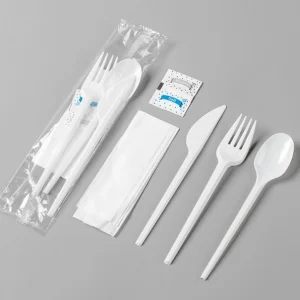
- Eco Disposable Cutlery: The innovation extends beyond straws. There is now a wide array of eco disposable cutlery made from materials like crystallized PLA (CPLA), which has higher heat resistance, or even wood. Wooden cutlery, sourced from sustainable forests, offers a rustic aesthetic and is fully biodegradable.
These alternatives cater to a segment of the market that is actively seeking to reduce its reliance on conventional plastics. Offering a choice between a standard plastic straw and a biodegradable straw can meet the needs of a wider range of customers.
Market Trends for Russia, Europe, and East Asia
The adoption rate and preference for these different types of straws and cutlery can vary significantly by region, influenced by local culture, regulations, and infrastructure.
- Europe (Germany, France, Spain): The European Union has been at the forefront of regulating single-use plastics. There is strong consumer awareness and demand for sustainable alternatives. Paper, PLA, and other biodegradable straws are very common. Businesses in this region must be acutely aware of EU directives and offer compliant products. The infrastructure for industrial composting is also more developed in many parts of Europe, making PLA a viable option.
- East Asia (Japan, South Korea): These markets are known for their high standards of quality and presentation. While there is a growing environmental consciousness, there is also a strong emphasis on product performance. A paper straw that gets soggy quickly might be poorly received. Innovations in durable paper straws or high-quality PLA products are often favored. Japan, with its sophisticated waste sorting and recycling systems, has a strong culture of responsible disposal.
- Russia: The market in Russia is evolving. While cost remains a significant factor for many businesses, there is a growing urban consumer base that is becoming more aware of environmental issues. The demand for eco-friendly options is on the rise, but conventional plastic straws still hold a very large market share. For suppliers, this market represents an opportunity for growth in both traditional and alternative product categories.
For a global supplier, the key to success is flexibility. It requires the ability to produce a wide range of products—from the most cost-effective plastic straw to premium wooden cutlery—and to understand the unique regulatory and consumer landscape of each target market.
Frequently Asked Questions (FAQ)
What is the main material used for plastic straws?
The primary material used for the vast majority of conventional single-use plastic straws is polypropylene (PP). It is a type of thermoplastic polymer chosen for its excellent durability, flexibility, high heat resistance (making it safe for hot drinks), and resistance to chemical corrosion from acids in beverages. Its low cost and efficiency in the extrusion manufacturing process also make it an economically viable choice for high-volume production.
Why is China a major producer of plastic straws?
China’s dominance in manufacturing plastic straws stems from several decades of industrial development. The country has a highly integrated and efficient supply chain, with raw material producers, factories, and logistics providers often located in close proximity within industrial hubs like Yiwu. This creates immense economies of scale. Combined with a skilled workforce, advanced manufacturing infrastructure, and some of the world’s largest ports, Chinese manufacturers can produce and export bulk straws at a speed and cost that is difficult for other nations to match.
How can I ensure the quality of bulk straws from an overseas supplier?
Ensuring quality requires a multi-step vetting process. First, verify the supplier’s certifications, such as ISO 9001 for quality management and food-grade compliance for your target market (e.g., FDA for the US, EU regulations for Europe). Second, inquire in detail about their internal quality control (QC) procedures, from raw material inspection to in-process checks and final product testing. Finally, always request a production sample to evaluate before committing to a large order. A reputable supplier will be transparent about their processes and happy to provide documentation.
Are there eco-friendly alternatives to standard plastic straws?
Yes, the market for eco-friendly alternatives is growing rapidly. Key options include biodegradable straws made from materials like Polylactic Acid (PLA), which is derived from plant starches and is compostable in industrial facilities. Paper straws are another common alternative. Beyond straws, there is a wide range of eco disposable cutlery made from wood, bamboo, or crystallized PLA (CPLA). Many manufacturers now offer these sustainable options alongside their conventional product lines.
What does OEM/ODM mean in the context of straw manufacturing?
OEM and ODM are two models of collaboration with a manufacturer. OEM (Original Equipment Manufacturer) means the supplier produces straws according to your specific, custom design—for example, a unique color, size, or with your logo printed on the wrapper. ODM (Original Design Manufacturer) is when you choose a product from the supplier’s existing catalog of designs and have it branded as your own. Many large-scale manufacturers offer both services, providing flexibility for buyers.
Conclusión
The question “where are plastic straws made” opens a window into the intricate machinery of the 21st-century global economy. The answer, centered largely in the manufacturing powerhouses of China, is not merely a point on a map. It is a story of material science, industrial efficiency, logistical networks, and human ingenuity. For any business involved in the sourcing of disposable goods, from a small café owner to a multinational procurement director, a deep understanding of this landscape is not an academic exercise—it is a strategic necessity.
The journey from a polypropylene pellet in a factory in Yiwu to a finished straw in a customer’s drink involves a chain of decisions, each carrying its own set of risks and opportunities. Choosing the right material, whether it be traditional plastic, a recycled variant, or a biodegradable alternative, requires an attunement to both market demands and regulatory currents. Selecting a manufacturing partner demands a rigorous and empathetic vetting process, one that looks beyond price to assess quality, reliability, and the capacity for communication and collaboration.
As we move forward in 2026, the industry will continue to evolve. The push for sustainability will drive further innovation, while the complexities of global trade will demand ever-greater resilience and foresight from supply chain managers. Ultimately, success in this field depends on recognizing that even the simplest of products is embedded in a complex global system. By navigating that system with knowledge, diligence, and a focus on building strong partnerships, businesses can ensure a stable, high-quality supply that meets the needs of their customers and the challenges of a changing world.
References
Mengte. (n.d.-a). Company overview. Alibaba.com. Retrieved from
Mengte. (n.d.-b). Custom eco-friendly straws & cutlery supplier. MT Sraw. Retrieved from https://www.mtstraw.com/
Geyer, R., Jambeck, J. R., & Law, K. L. (2017). Production, use, and fate of all plastics ever made. Science Advances, 3(7), e1700782. https://doi.org/10.1126/sciadv.1700782
Plastics Europe. (2023). Plastics – the facts 2023. Retrieved from
Rillig, M. C., Kim, S. W., & Kim, T. Y. (2024). The global plastic treaty – a chance to clean up our act. Trends in Ecology & Evolution, 39(2), 97-100.
Shen, L., Worrell, E., & Patel, M. K. (2010). Open-loop recycling: A case study of polyethylene terephthalate. Resources, Conservation and Recycling, 55(1), 34–52.
World Trade Organization. (2024). World trade statistical review 2024. Retrieved from
Yiwu Administration for Industry and Commerce. (n.d.). About Yiwu Market. China Yiwu. Retrieved from
Yuan, Z., Nagirikandalage, P., & Vlosky, R. P. (2021). The U.S. consumer market for biodegradable/compostable-based straws: A discrete choice-based analysis. Forests, 12(11), 1537. https://doi.org/10.3390/f12111537
Zhang, W., & An, M. (2008). Life cycle assessment of polyethylene terephthalate (PET) and high-density polyethylene (HDPE) for beverage packaging in China. Environmental Science & Technology, 42(12), 4583-4588.