




 ES
ES  EN
EN  FR
FR  RU
RU  DE
DE  JA
JA  KO
KO 
Abstract
Determining the appropriate quantity of disposable plates for an event of 50 guests is a multifaceted logistical challenge that extends beyond a simple one-to-one ratio. This analysis examines the variables influencing this calculation, including the event's format, meal complexity, and guest behavior. A baseline formula is proposed, suggesting a multiplier of 1.5 to 3 plates per guest, contingent on the service of appetizers, main courses, and desserts. The inquiry delves into the material science of disposable tableware, contrasting traditional paper and plastic options with modern eco-conscious alternatives like bagasse, bamboo, and biodegradable polymers. The environmental life cycle of these products, from production to disposal, is considered, highlighting the growing importance of sustainable choices in event planning (Chae & An, 2024). The psychological impact of tableware selection on the guest experience is also explored, arguing that the perceived quality of a plate can influence the overall perception of the event. Ultimately, the calculation for how many disposable plates for 50 guests is presented not as a fixed number, but as a dynamic planning process that balances practicality, budget, guest comfort, and ecological responsibility.
Key Takeaways
- Start with a baseline of three plates per person for a multi-course meal.
- Factor in event type and duration; longer events with grazing require more plates.
- Always add a 20% buffer for unexpected drops, seconds, or last-minute guests.
- Consider the environmental impact when choosing between paper, plastic, and eco-friendly options.
- To solve how many disposable plates for 50 guests you need, assess your specific menu first.
- The sturdiness of your plates directly impacts guest comfort and food security.
- For a complete solution, pair your plates with a high-quality cubiertos de plástico desechables.
Table of Contents
- A Foundational Approach: The Basic Plate Calculation
- Refining the Calculation: Critical Event Variables
- The Materiality of the Moment: Choosing the Right Plate
- Beyond the Plate: A Holistic View of Event Tableware
- The Environmental Ethic: Disposable Does Not Mean Detached
- Navigating Global Norms and Regulations
- Case Studies: Applying the Plate Calculation in Practice
- Frequently Asked Questions
- Conclusión
- References
A Foundational Approach: The Basic Plate Calculation
Embarking on the task of hosting any gathering, whether intimate or grand, involves a cascade of decisions. Among the most fundamental, yet often underestimated, is the question of provisions. Specifically, when planning for a group of 50 individuals, a common query arises: how many disposable plates for 50 guests are truly necessary? A superficial glance might suggest a simple one-to-one correspondence—50 guests, 50 plates. This, however, is a profound miscalculation that can lead to significant inconvenience, disrupting the flow of an event and reflecting poorly on the host's foresight.
To approach this question with the seriousness it deserves, we must first establish a foundational principle. The calculation is not merely about counting heads; it is about anticipating actions and accommodating the rhythm of the event. Let us begin by deconstructing the meal itself. A typical event rarely involves a single, monolithic serving. More often, it unfolds in stages: appetizers, a main course, and dessert. Each of these stages presents a new opportunity—and often a new desire—for a clean plate.
The Three-Plate Guideline
A prudent starting point, which we can call the "Three-Plate Guideline," posits that each guest will likely require three plates over the course of the event. Why three?
- The Appetizer Plate: Guests arriving at an event are often greeted with appetizers or small bites. They will take a small plate for this purpose. This plate, having been used for savory, sometimes greasy or saucy foods, is rarely considered suitable for the main course that follows.
- The Main Course Plate: This is the primary, non-negotiable plate. It is typically larger and will be used for the most substantial part of the meal.
- The Dessert Plate: After the main course, a separate, clean plate is almost universally expected for dessert. Placing a slice of cake or a delicate pastry onto a plate still bearing the remnants of a savory meal is an experience few guests would enjoy.
Following this guideline, the initial calculation for 50 guests would be:
50 Guests × 3 Plates/Guest = 150 Plates
This number—150—serves as our initial, unrefined estimate. It represents a solid baseline that accounts for a standard, multi-stage meal. It is from this starting point that we can begin to introduce nuance and adapt the figure to the specific realities of your event.
The "Seconds" and "Mishap" Buffer
Human behavior and simple chance introduce further variables. Some guests may wish to return for a second helping of the main course. Rather than reusing a soiled plate, they will instinctively reach for a fresh one. Furthermore, accidents happen. A plate may be dropped, a child might mishandle their food, or a plate may simply be misplaced.
To account for these common occurrences, a "Buffer Percentage" must be applied to our baseline calculation. A conservative yet realistic buffer is 20%. This provides a cushion for both enthusiastic appetites and minor mishaps.
Let's apply this to our initial figure:
Baseline Plates: 150 Buffer Calculation: 150 × 0.20 = 30 Plates Total with Buffer: 150 + 30 = 180 Plates
So, a more refined answer to the question of how many disposable plates for 50 guests is approximately 180, assuming a standard three-course meal structure. This number may seem high at first, but it is rooted in an empathetic understanding of the guest experience. The goal is to create an atmosphere of abundance and ease, where no guest feels hesitant to take a fresh plate for fear of scarcity. The minor additional cost of extra plates is a small price to pay for the seamless enjoyment of your attendees.
To visualize this initial estimation process, consider the following table which breaks down the calculation based on the meal's complexity.
| Meal Structure | Plates per Guest | Base Count for 50 Guests | Buffer (20%) | Recommended Total |
|---|---|---|---|---|
| Main Course Only | 1.5 | 75 | 15 | 90 |
| Main Course + Dessert | 2.5 | 125 | 25 | 150 |
| Appetizers + Main + Dessert | 3 | 150 | 30 | 180 |
This table provides a clear, at-a-glance framework for your initial order. It demonstrates how the required number shifts dramatically based on the courses you plan to serve. The "Main Course Only" scenario includes a 0.5 addition to account for guests desiring a second helping, a crucial detail even in the simplest meal formats.
Refining the Calculation: Critical Event Variables
The baseline of 180 plates provides a sturdy foundation, but a truly masterful event planner understands that this number is not absolute. It is a starting point to be molded by the unique character of the event. The true art of provisioning lies in understanding the subtle interplay of factors that can influence consumption. Let us now examine these variables in greater detail, moving from a simple calculation to a nuanced strategy. The query of how many disposable plates for 50 guests is not a math problem; it is a human-centered design challenge.
The Nature of the Gathering: Buffet vs. Seated Dinner
The format of your event is perhaps the single most significant factor.
- Buffet-Style Service: A buffet is an invitation to graze. Guests have the freedom to move, mingle, and return to the food line at their leisure. This format inherently encourages the use of multiple plates. A guest might first sample a few salads, then return for hot entrees on a fresh plate, and later still, grab another for dessert. It is also common for people to misplace their plate amidst conversation and simply get a new one. For a buffet, our baseline of 3 plates per guest, plus the 20% buffer (totaling 180 plates), is not just a recommendation; it is a near necessity.
- Seated, Plated Dinner: A formal, seated dinner dramatically alters the calculation. In this scenario, courses are often brought to the guests. If you are using disposable plates in this context, you still need one for each course, but the overall usage is more controlled. There is no opportunity for guests to misplace plates or to spontaneously decide to re-sample the buffet. Here, you could calculate more precisely: (50 guests × number of courses) + a smaller 10% buffer for kitchen-side accidents or a guest needing a replacement. For a three-course meal, this would be (50 × 3) + 15 = 165 plates.
- Cocktail or Appetizer-Only Party: If your event for 50 consists solely of passed hors d'oeuvres or a station of small bites, the dynamic shifts again. The main course plate is eliminated. However, guests may still take several small plates over the course of the evening as they sample different items. They might take one plate for savory items and a new one for sweet bites. A safe estimate here would be 2 to 2.5 plates per person, plus the buffer. For 50 guests, this would mean (50 × 2.5) + 25 = 150 plates.
The Menu's Complexity and "Mess Factor"
Think about the food itself. Is it neat and self-contained, or is it saucy, drippy, or prone to mingling?
- Saucy or "Wet" Dishes: Items like pasta with marinara, curries, stews, or even heavily dressed salads encourage a plate change. No one wants their chocolate lava cake to swim in the remnants of a balsamic vinaigrette. The more distinct and "wet" your menu items are, the more you should lean toward the higher end of your estimate.
- Distinct Flavor Profiles: If you are serving dishes with very different flavor profiles—for instance, spicy Thai skewers followed by a delicate cheese course—guests will be more inclined to seek a fresh plate to avoid flavor contamination. Acknowledging this desire for a "clean palate" is a hallmark of thoughtful hosting.
- Self-Serve Stations: Consider a taco bar or a baked potato bar. A guest will likely fill their plate, find a seat to eat, and then, upon deciding they want a second, differently-configured taco, will feel compelled to start the process with a clean plate. These interactive food stations, while engaging, are heavy on plate usage.
The Event's Duration and Guest Demographics
The length of the party and the nature of your guests also play a crucial role in determining how many disposable plates for 50 guests you will need.
- Duration: A two-hour lunch meeting will see far less plate turnover than a five-hour wedding reception or an all-day open house. The longer guests are present, the more opportunities they have to eat, re-eat, and misplace their tableware. For events lasting over four hours, you should consider increasing your buffer from 20% to as much as 30-40%.
- Adults vs. Children: A party with a significant number of children requires a larger buffer. Children are more prone to dropping plates, mixing inappropriate food combinations that require a do-over, or simply taking a plate to carry a single cookie. If 15 of your 50 guests are children, adding an extra 15-20 plates specifically for them is a wise investment in peace of mind.
- Cultural Context: In some cultures, the concept of communal eating is strong, but the expectation for personal plate hygiene remains high. For international events, particularly in many European and East Asian contexts (relevant to your target markets of Russia, Spain, France, Germany, Japan, and South Korea), providing ample clean plates is a sign of respect and good hosting. Assuming guests will reuse plates can be perceived as stingy or unhygienic.
By thoughtfully considering these variables—event style, menu, duration, and demographics—you move beyond a simple formula and into the realm of strategic planning. You are not just supplying items; you are anticipating needs and designing a seamless experience for your 50 guests.
The Materiality of the Moment: Choosing the Right Plate
Once you have a confident estimate of the quantity, the next crucial decision is the plate's material. This choice is far from trivial; it communicates a great deal about your event's tone, your values, and your concern for the guest experience. The feel of the plate in a guest's hand—its rigidity, its texture, its appearance—contributes to their overall sensory experience. In the world of disposables, a rich variety of options exists, each with its own profile of costs, aesthetics, and environmental implications. This is a domain where a supplier like Mengte Commodities, with its focus on a range of materials from biodegradable to premium plastics, offers the necessary breadth of choice.
Traditional Choices: Paper and Plastic
- Paper Plates: The quintessential disposable plate, paper is lightweight, inexpensive, and widely available. However, not all paper plates are created equal.
- Uncoated Paper: This is the most basic option. It is highly absorbent, making it suitable only for the driest of foods (e.g., sandwiches, cookies, cake). It will quickly become saturated and lose structural integrity with any moisture or grease.
- Coated Paper: A thin layer of plastic (polyethylene) or wax is applied to provide a barrier against grease and liquids. This makes them far more versatile and suitable for a wider range of foods. They represent a compromise between cost and functionality.
- Plastic Plates: Plastic offers a significant step up in rigidity and performance. They are impervious to liquids and oils, making them a reliable choice for any type of cuisine.
- Polystyrene (PS): Often found in the form of lightweight, brittle foam plates or more rigid, clear or colored plates. While effective, polystyrene has faced significant environmental scrutiny due to difficulties in recycling and its persistence in ecosystems (Seewoo, 2024).
- Polypropylene (PP): A more durable and heat-resistant plastic. PP plates are less likely to crack or bend under the weight of food, offering a more secure experience for guests. They often have a higher quality feel and can sometimes be washed and reused in informal settings.
The Ascendancy of Eco-Conscious Alternatives
Responding to growing environmental awareness, the market has seen a surge in innovative, sustainable materials. These options allow hosts to minimize their ecological footprint without sacrificing convenience.
- Bagasse (Sugarcane Fiber): Bagasse is the fibrous pulp that remains after juice is extracted from sugarcane. It is a reclaimed agricultural byproduct that is pressed into plates and containers. These products are sturdy, microwave-safe, and fully biodegradable and compostable in commercial facilities. They have a natural, fibrous texture and a pleasing off-white color.
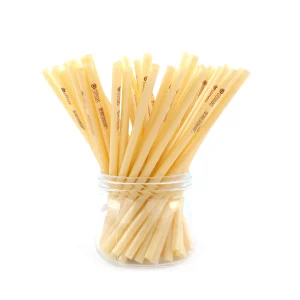
- Bamboo: Bamboo plates are crafted from the sheath of the bamboo plant or from laminated, compressed bamboo. They are elegant, remarkably strong, and lightweight. Bamboo is a rapidly renewable resource, and the resulting plates are often compostable and have a high-end, natural aesthetic that can elevate an event.
- Palm Leaf: Areca palm leaves that have naturally fallen are collected, cleaned, and heat-pressed into shape. Each plate has a unique, beautiful wood-grain pattern. They are incredibly rigid—capable of handling a heavy steak dinner—and are fully biodegradable. They offer a rustic yet sophisticated charm.
- Biodegradable Plastics (PLA): Polylactic Acid (PLA) is a polymer derived from renewable resources like corn starch or sugarcane. It mimics the look and feel of traditional clear plastic but is designed to break down in industrial composting facilities. It is an excellent choice for cold applications, as high heat can cause it to warp. The development of such materials is a key focus in reducing plastic pollution, though their proper disposal is critical to realizing their environmental benefits (Courtene-Jones et al., 2025).
The following table provides a comparative overview to aid in this important decision.
| Material | Durability | Eco-Friendliness | Best For | Aesthetic |
|---|---|---|---|---|
| Uncoated Paper | Low | High (Compostable) | Dry snacks, cake | Basic, casual |
| Coated Paper | Medium | Low (Plastic coating hinders recycling) | General use, light meals | Standard, functional |
| Polystyrene Plastic | Medium | Very Low (Difficult to recycle) | All food types, budget events | Basic plastic |
| Polypropylene Plastic | High | Low (Recyclable in some areas) | Heavy or saucy meals | Sturdy, reliable |
| Bagasse (Sugarcane) | High | Very High (Compostable, renewable) | All food types, hot or cold | Natural, modern |
| Palm Leaf | Very High | Very High (Compostable, reclaimed) | Elegant events, heavy meals | Rustic, unique |
| PLA (Biodegradable Plastic) | Medium | High (Compostable in facilities) | Cold meals, desserts, salads | Clear, like traditional plastic |
When deciding how many disposable plates for 50 guests to purchase, the material choice can also influence quantity. A flimsy paper plate might bend, causing a spill and necessitating a new plate and a new serving of food. Opting for a sturdier material like palm leaf, bagasse, or even a quality premium plastic tableware option can reduce waste from such accidents, tightening the required buffer.
Beyond the Plate: A Holistic View of Event Tableware
A successful event is a symphony of details, and the disposable plate does not perform in isolation. Its selection and quantity are intrinsically linked to the other elements of your tableware. A truly comprehensive plan addresses the entire place setting. Neglecting this holistic view is like planning a road trip by only considering the car's tires while ignoring the engine and the steering wheel. To properly address the question of how many disposable plates for 50 guests, one must also consider the accompanying utensils, cups, and napkins.
Coordinating Cutlery: Forks, Knives, and Spoons
The number of plates directly informs the number of cutlery pieces you will need. The logic follows a similar pattern: what courses are you serving, and what do they require?
- The Fork is King: The fork is the most-used utensil. Even if a knife is not needed, a fork almost always is. For a three-course meal (appetizer, main, dessert), a guest will ideally use three separate forks.
- Calculation: 50 Guests × 3 Courses = 150 forks. Add a 20% buffer for drops or extras, bringing the total to 180 forks. This aligns perfectly with our plate count.
- The Role of the Knife and Spoon: Knives are necessary only if the main course requires cutting (e.g., steak, chicken breast). Spoons are needed for soups, some desserts, or for stirring coffee and tea. You do not need to apply the "3 per guest" rule universally. Instead, count based on the menu.
- Knife Calculation: If the main course requires a knife: 50 Guests × 1 Knife + 20% buffer = 60 knives.
- Spoon Calculation: If serving soup and dessert: 50 Guests × 2 Spoons + 20% buffer = 120 spoons. If only for dessert, the number is 60.
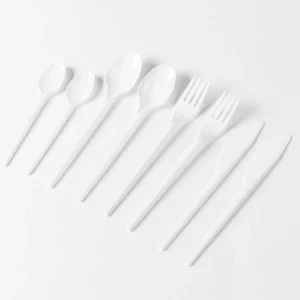
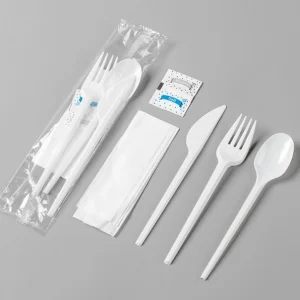
Many suppliers offer pre-packaged sets containing a fork, knife, spoon, and napkin. While convenient, assess if the set's contents match your menu's needs. You might end up with a surplus of knives and a shortage of forks. Purchasing items like eco disposable cutlery in bulk separates allows for more precise, cost-effective planning.
The Question of Cups: Hydration and Celebration
Cups follow a different usage pattern. While a guest might be content to use one plate per course, they will often use one cup for the entire event for a specific type of beverage, but will require different cups for different drinks.
- Water/Soft Drinks: Assume one cup per guest, but with a high buffer. Guests frequently misplace their cups. A 50-70% buffer is not unreasonable. For 50 guests, plan for 75-85 cups for general beverages.
- Hot Beverages (Coffee/Tea): If you are setting up a coffee station, you need dedicated, heat-resistant cups. Assume about 60-70% of your guests will have a hot beverage.
- Calculation: 50 Guests × 0.70 = 35 guests. Add a buffer for second cups, bringing the total to around 50-60 hot cups.
- Alcoholic Beverages: If serving wine or cocktails, you may opt for specialized disposable glassware (e.g., plastic wine glasses or tumblers). The quantity depends entirely on the nature of your bar service.
A guest might use a water cup, a coffee cup, and a wine glass over the course of an evening. The key is to think in categories of beverages, not just in terms of total cups.
Napkins: The Unsung Hero
Napkins are the most forgiving item in terms of planning because they are relatively inexpensive and their overuse is rarely a problem. However, under-provisioning them is a significant inconvenience for guests.
- Cocktail Napkins: For appetizer hour, plan for 2-3 small cocktail napkins per guest. They are used to hold drinks, carry small bites, and for minor dabs. For 50 guests, that's 100-150 cocktail napkins.
- Dinner Napkins: For the main meal, provide at least two larger dinner napkins per guest. One is for the lap, and a second might be needed for a spill or for particularly messy foods. For 50 guests, this means a minimum of 100 dinner napkins.
In total, for a 50-guest event, having around 300 napkins of various sizes is a safe and hospitable bet. The excess is never a waste; they can always be used for future occasions. Planning for the entire suite of tableware ensures that your foresight regarding the plates is not undermined by a shortage of forks or cups.
The Environmental Ethic: Disposable Does Not Mean Detached
The choice to use disposable tableware brings with it a set of ethical and environmental considerations that are becoming increasingly central to social and corporate responsibility. The very convenience that makes these products attractive is born from a "single-use" model that has profound consequences for our planet's ecosystems (Abbott & Sumaila, 2024). A thoughtful host in 2025 does not simply ask, "How many disposable plates for 50 guests?" but also, "What is the legacy of this choice after my guests have gone home?" This inquiry moves us from the realm of simple logistics into a deeper engagement with sustainability.
The Life Cycle of a Plate
Every disposable plate has a story with a beginning, a middle, and an end. Understanding this life cycle is fundamental to making an informed choice.
- Extraction and Production: The journey begins with raw materials. For plastic plates, this is crude oil or natural gas. For paper, it is wood pulp from forests. For alternatives like bagasse or palm leaf, it is agricultural byproduct. Each of these starting points has an associated environmental cost in terms of energy consumption, water usage, and habitat impact. The manufacturing process itself consumes further energy and can release emissions.
- Use: This is the shortest, yet most visible, part of the plate's life. It serves its purpose for a matter of minutes or hours at your event.
- Disposal and Afterlife: This is the most critical and problematic stage. Where does the plate go?
- Landfill: This is the most common fate. In a landfill, even "biodegradable" materials can struggle to break down due to the lack of oxygen and microorganisms. Paper and plastic items can persist for hundreds of years. Plastic waste, in particular, contributes to long-term pollution (Ratnayake, 2024).
- Recycling: Some plastics (like PP) and uncoated paper are recyclable. However, the effectiveness of recycling programs varies dramatically by region. A major challenge is food contamination. A plate smeared with cheese and sauce is often considered a contaminant at a recycling facility and will be diverted to a landfill. This gap between theoretical recyclability and actual recycling rates is a persistent problem (Walker, 2024).
- Composting: This is the ideal end-of-life scenario for materials like bagasse, palm leaf, and PLA. In an industrial composting facility, with the right balance of heat, moisture, and microbes, these materials can break down into nutrient-rich soil within a few months. However, access to such facilities is not universal, and these items will not biodegrade properly in a backyard compost pile or a landfill.
- Environmental Leakage: The worst-case scenario is when disposable items are not disposed of properly and end up in rivers, oceans, and natural landscapes. Here, plastics slowly break down into smaller and smaller fragments known as microplastics, which contaminate water and soil and are ingested by wildlife and humans, with yet-unknown long-term health consequences (Abeynayaka et al., 2024).
Making a Responsible Choice
Given this complex picture, how does one act responsibly?
- Prioritize Certified Compostable Products: When possible, choosing products certified by organizations like the Biodegradable Products Institute (BPI) is a strong step. This ensures the material (like bagasse or PLA) has been tested and is proven to break down in a commercial facility.
- Plan for Proper Disposal: Your responsibility does not end when you buy the plates. If you choose compostable tableware, you must also provide clearly labeled bins for them and have a plan to get them to a commercial composting facility. If you choose recyclable plastics, provide a bin for clean and rinsed recyclables. Educating your guests with simple, clear signage ("Compostable Plates & Food Scraps Here") is a powerful act of stewardship.
- Embrace "Recycled Content": Look for products made from post-consumer recycled materials. This supports the circular economy by creating demand for recycled paper and plastic.
- Question the "Paper vs. Plastic" Dichotomy: The long-standing debate over whether paper or plastic is "better" is overly simplistic. Paper production can be water- and energy-intensive, and plastic-coated paper is a recycling nightmare. Conversely, some plastics are more durable, reducing the need for multiple plates, and are more easily recycled (if clean) than their coated-paper counterparts (Abbott & Sumaila, 2024). The most responsible choice often lies with the newer generation of materials derived from renewable resources and designed for composting.
Choosing an eco-friendly option is a statement. It tells your 50 guests that their enjoyment does not have to come at an undue cost to the environment. It aligns your event, however small, with a global movement toward more sustainable patterns of consumption.
Navigating Global Norms and Regulations
When planning an event with an international guest list, or for those operating businesses that cater to diverse markets like Russia, Spain, France, Germany, Japan, and South Korea, the question of "how many disposable plates for 50 guests" acquires another layer of complexity. This involves navigating a patchwork of legal regulations concerning single-use plastics and being sensitive to deeply ingrained cultural norms around dining and hospitality. What is standard practice in one country may be frowned upon—or even illegal—in another.
The Regulatory Landscape: The EU's Firm Stance
For your European clientele in France, Germany, and Spain, you are operating within the framework of the European Union's Single-Use Plastics Directive. This landmark legislation, fully in effect, has had a profound impact on the disposable tableware market.
- Banned Items: The directive explicitly bans several single-use plastic items for which alternatives are available. This includes plastic cutlery (forks, knives, spoons), plastic plates, and polystyrene food and beverage containers.
- The Implication: You simply cannot, in 2025, plan an event in Paris, Berlin, or Madrid using traditional disposable plastic plates and cutlery. To do so would be to flout the law.
- The Solution: The market has responded vigorously. This is why materials like bamboo, bagasse, palm leaf, and wood have become standard. When advising a client in these regions, the conversation must immediately shift to these compliant alternatives. The choice is not whether to use an eco-friendly option, but which one best suits the event's aesthetic and budget. This regulatory pressure has accelerated innovation and made Europe a leading market for sustainable disposables.
Regulations in Russia, Japan, and South Korea
The regulatory environment in these countries is more varied.
- Russia: Russia has been moving toward stricter regulations on plastics, with ongoing discussions about phasing out certain single-use items. While a full EU-style ban may not be uniformly enforced nationwide, there is strong public and governmental momentum toward reducing plastic waste. Offering and using non-plastic alternatives is seen as modern and responsible.
- Japan: Japan has a highly sophisticated system for waste management and recycling, with citizens meticulously sorting their waste. While not banning plastic plates outright, the culture strongly emphasizes waste reduction and proper disposal. The government has implemented laws promoting plastic resource circulation. Using high-quality, recyclable plastics (and providing clear instructions for their disposal) or elegant alternatives like bamboo would be well-received. A flimsy, low-quality disposable would be seen as out of step with cultural values.
- South Korea: South Korea has been aggressive in its fight against plastic waste, particularly in the food service sector. For example, there are bans on disposable cups for in-store use in cafes. There is immense social and regulatory pressure to reduce single-use items. Opting for compostable or reusable systems is highly encouraged.
Cultural Dining Etiquette and Perceptions
Beyond the law, cultural norms shape expectations.
- Formality in Europe: In France, Germany, and Spain, there is a strong tradition of sitting down for meals. Even at a casual event, the expectation for sturdy, reliable tableware is high. A flimsy plate that could lead to a spill on one's clothing would be a significant faux pas. The robustness of palm leaf or high-quality bagasse plates makes them an excellent fit.
- Aesthetics in Japan: Japanese culture places a high value on presentation and aesthetics (美意識, bi-ishiki). The appearance of the food and the vessel it is served on are part of the dining experience. A plain paper plate would be considered inappropriate for almost any event beyond a children's party. The natural, unique patterns of palm leaf or the clean elegance of bamboo align well with this cultural sensibility.
- Generosity and Abundance: Across all these cultures, hospitality is paramount. The fear of running out of food or supplies is a universal host's anxiety. Our principle of a generous buffer (20% or more) is not just a practical tip; it is a culturally resonant strategy. It signals to guests that they are well cared for and that their comfort is the host's top priority. Answering "how many disposable plates for 50 guests?" with a number that ensures abundance is a way of speaking a universal language of hospitality.
For a business like Mengte Commodities, understanding this international tapestry is key. It means curating a product line that not only includes a variety of materials but also meets the specific legal and cultural demands of these diverse markets.
Case Studies: Applying the Plate Calculation in Practice
Theory is useful, but its true value is revealed in application. To solidify our understanding, let's walk through three distinct scenarios. Each case study represents a different type of event for 50 guests, demonstrating how the variables we have discussed—event type, menu, duration, and cultural context—interact to produce a final, tailored number. This exercise will transform the abstract question of "how many disposable plates for 50 guests?" into a concrete, actionable plan.
Case Study 1: The Corporate Networking Lunch in Frankfurt, Germany
- The Event: A two-hour standing lunch for 50 professionals in a modern office space. The goal is to facilitate networking.
- The Menu: A high-quality buffet featuring a variety of "finger-friendly" but sophisticated items: gourmet sandwiches, a large quinoa salad, chicken satay skewers with peanut sauce, and a selection of small pastries for dessert.
- The Context: Being in Germany, adherence to EU regulations is mandatory. The atmosphere is professional but relaxed. Guests will be standing and mingling, likely holding a plate in one hand and a drink in the other.
- The Analysis:
- Plate Type: The plate must be rigid. A guest cannot risk a flimsy plate buckling while they are shaking hands. A high-quality bagasse or palm leaf plate is ideal. Given the menu, two sizes are needed: a main plate (9-10 inches) and a smaller dessert plate (6-7 inches).
- Course Analysis: Guests will take a main plate first. Due to the mingling nature, some may set their plate down and forget it, requiring a new one if they return to the buffet. For dessert, a fresh plate is non-negotiable.
- Calculation:
- Main Plates: Let's assume most guests take one, but the "lost plate" factor and a few "seconds" for the popular satay skewers will be high. We'll plan for 1.5 main plates per guest. (50 guests × 1.5 = 75 plates).
- Dessert Plates: Nearly everyone will take a pastry or two. Let's plan for 1.1 plates per guest to be safe. (50 guests × 1.1 = 55 plates).
- Total Base Count: 75 + 55 = 130 plates.
- Buffer: The event is short, but the standing format increases the risk of drops. A standard 20% buffer is wise. (130 × 0.20 = 26 plates).
- Final Recommendation:
- Main Plates (9-inch Bagasse): 75 + (26/2) = ~90 plates.
- Dessert Plates (7-inch Bagasse): 55 + (26/2) = ~70 plates.
- Total: 160 plates. This is lower than our initial 180-plate baseline because the event is short and appetizer/main courses are somewhat combined.
Case Study 2: The Family Birthday Party in a Park in Seville, Spain
- The Event: A relaxed, five-hour-long 70th birthday celebration for 50 family and friends, including 10 children, in a public park.
- The Menu: A casual, potluck-style feast. Paella is the centerpiece, supplemented by tortillas de patatas, various tapas, salads, and a large birthday cake.
- The Context: A celebratory, informal, and long-running affair. People will eat, play games, talk, and then eat again. Children will be running around.
- The Analysis:
- Plate Type: Durability is key, but so is cost. A sturdy, coated paper plate might be a good compromise. However, given the paella, a more grease-resistant option like polypropylene or bagasse would prevent sogginess and be much safer.
- Course Analysis: This is a grazer's paradise. A guest might take a plate for some tapas, a new plate for a helping of paella, and a third plate for cake. Children are a wildcard and could use several plates.
- Calculation:
- Plate Usage: The long duration and informal, "grazing" nature of the event pushes our estimate upward. We should return to our baseline of 3 plates per guest. (50 guests × 3 = 150 plates).
- Child Factor: The 10 children will almost certainly use more plates due to spills, mixing foods, and smaller appetites that lead to multiple "trips." Let's add 1 extra plate per child. (10 children × 1 = 10 extra plates).
- Total Base Count: 150 + 10 = 160 plates.
- Buffer: For a long, chaotic, outdoor event, a 20% buffer might not be enough. Let's increase it to 30% to be truly safe. (160 × 0.30 = 48 plates).
- Final Recommendation:
- All-Purpose Plates (9-inch): 160 + 48 = 208 plates. Let's round up to the nearest packaging unit, likely 225. It is far better to have a sleeve of 25 plates left over than to run out two hours before the party ends.
Case Study 3: An Elegant Product Launch Reception in Seoul, South Korea
- The Event: A three-hour evening reception for 50 VIPs, influencers, and media to launch a new luxury cosmetic product.
- The Menu: Passed hors d'oeuvres (catered) and a dessert station. No formal main course. The food is beautifully crafted and visually appealing.
- The Context: Aesthetics are paramount. Everything must look sophisticated and "Instagrammable." The brand image is one of quality and modern luxury. South Korean cultural emphasis on presentation is high.
- The Analysis:
- Plate Type: This event demands a premium plate. A standard paper or plastic plate is out of the question. The unique, elegant look of a black or white palm leaf plate or a high-design, heavy-duty recycled plastic plate would be perfect. Only one size is needed (6-7 inches) as all food items are small.
- Course Analysis: Guests will be served by waiters and will also visit the dessert station. They will take a new plate each time they sample a few different items to keep the experience clean and flavors separate.
- Calculation:
- Plate Usage: In this context, guests will use plates frequently but for small amounts of food. Over three hours, a guest might take a plate for savory canapés, another for sushi bites, and a third for mini desserts. Let's estimate 3.5 plates per person. (50 guests × 3.5 = 175 plates).
- Buffer: This is a controlled, indoor event, so major accidents are less likely. However, the emphasis on pristine presentation means that even a slightly messy plate might be discarded for a fresh one. A 20% buffer remains appropriate. (175 × 0.20 = 35 plates).
- Final Recommendation:
- Small Premium Plates (7-inch Palm Leaf): 175 + 35 = 210 plates. Rounding up to the nearest case pack, perhaps 225 or 250, is prudent. The visual of a plentiful stack of beautiful plates reinforces the sense of luxury and abundance.
These case studies illustrate that the question "how many disposable plates for 50 guests?" has no single answer. The correct number is a conclusion reached through careful analysis of the event's specific circumstances.
Frequently Asked Questions
How many plates are in a typical package?
Disposable plates are most commonly sold in packages of 25, 50, or 100. For larger events or for businesses, buying in bulk cases, which might contain 500 or 1,000 plates (often broken down into smaller sleeves), is far more economical. Always check the package count before purchasing to ensure you are meeting your calculated target.
Is it cheaper to use disposable plates than to rent real ones?
For a small event of 50 guests, using high-quality disposables is almost always cheaper than renting ceramic plates. Rental costs include the plate fee, a delivery fee, and often a cleaning fee. You also bear the financial risk of any broken or lost plates. Disposable plates eliminate all these factors, offering cost certainty and convenience.
What is the most durable type of disposable plate?
Palm leaf plates are widely considered the most durable disposable option, often rivaling the sturdiness of ceramic. They are extremely rigid and can handle heavy, saucy foods and cutting with a knife without issue. High-quality bagasse (sugarcane) and heavy-duty polypropylene (PP) plastic plates are also very strong and reliable choices.
Can you recycle disposable plates?
It depends on the material and local facilities. Uncoated paper plates are often compostable or recyclable if clean. Plastic plates made from #5 plastic (polypropylene) are recyclable in some municipalities, but only if they are rinsed clean of all food residue. Plates with a plastic coating and polystyrene plates are generally not recyclable. Compostable plates (bagasse, PLA) should not go in recycling bins.
How do I properly dispose of compostable plates after my event?
To realize their environmental benefit, certified compostable plates must be sent to an industrial or commercial composting facility. They will not break down properly in a landfill or a backyard compost pile. You should provide a separate, clearly labeled bin for "Compostable Items & Food Scraps." After the event, you can use a local compost collection service or find a drop-off location for commercial composting.
For a party of 50, should I buy two sizes of plates?
Yes, for most events serving a main course and dessert, using two sizes is highly recommended. Use a larger plate (9-10 inches) for the main meal and a smaller plate (6-7 inches) for appetizers and dessert. This prevents guests from loading up on dessert on a large plate, helps with portion control, and feels more organized and elegant.
How does the answer to "how many disposable plates for 50 guests" change for a potluck?
For a potluck, you should plan for even more plates. The variety of dishes encourages guests to sample many different things. A guest might take a small portion of five different dishes, and to avoid mixing flavors, they might make two or three trips with a fresh plate each time. For a 50-person potluck, increasing your estimate to 3.5-4 plates per person plus a buffer is a very safe strategy.
Conclusión
The seemingly simple question of how many disposable plates for 50 guests unravels into a complex and fascinating exercise in event planning. It requires us to be more than mere counters; it asks us to be thoughtful observers of human behavior, discerning critics of material quality, and responsible stewards of our environment. We have moved from a crude one-to-one ratio to a nuanced formula: a baseline of three plates per guest for a standard multi-course meal, adjusted for event type, menu complexity, and duration, and fortified with a generous 20-30% buffer for the beautiful unpredictability of social gatherings.
This calculation is an act of empathy. It is an anticipation of a guest's desire for a fresh plate for dessert, a silent accommodation for a dropped dish, and an unspoken invitation to enjoy a second helping. The choice of material further deepens this narrative, allowing a host to make a statement about aesthetics, quality, and environmental values. In a world grappling with the consequences of single-use consumption, opting for sustainable materials like bagasse, bamboo, or even thoughtfully sourced recycled plastics transforms a simple party provision into a conscious choice (Chae & An, 2024).
Ultimately, the goal is to create an environment of effortless hospitality. When you plan meticulously—when you have an ample supply of sturdy, appropriate plates ready—you are free to focus on what truly matters: the human connection, the shared laughter, and the creation of memories. The plates, having performed their function perfectly, should fade into the background, their presence only noted by the seamless flow of the event they helped make possible.
References
Abbott, J. K., & Sumaila, U. R. (2024). Single-use plastic or paper products? A dilemma that requires societal change. Global Environmental Change, 85, 102821.
Abeynayaka, A., Kojima, F., Miwa, Y., Ito, N., Nihei, Y., Fukunaga, Y., & Itsubo, N. (2024). Understanding and addressing microplastic pollution: Impacts, mitigation, and future perspectives. Journal of Hazardous Materials, 477, 134950.
Chae, Y., & An, Y. J. (2024). Current practices of plastic waste management, environmental impacts, and potential alternatives for reducing pollution and improving management. Heliyon, 10(24), e36869.
Courtene-Jones, W., De, F. F., & Napper, I. E. (2025). A Review of Biodegradable Plastics from Multidisciplinary Perspectives. University of Plymouth.
Ratnayake, A. S. (2024). The world of plastic waste: A review. Cleaner Materials, 11, 100220.
Seewoo, B. J. (2024). Impacts associated with the plastic polymers polycarbonate, polystyrene, polyvinyl chloride, and polybutadiene across their life cycle: A review. Heliyon, 10(12), e32912.
Walker, T. R. (2024). Plastic recycling: A panacea or environmental pollution problem. npj Materials Sustainability, 1(1), 1-3. https://doi.org/10.1038/s44296-024-00024-w