




 FR
FR  EN
EN  ES
ES  RU
RU  DE
DE  JA
JA  KO
KO What Are the Key Factors to Consider When Sourcing Drinking Straws from China?
Importing drinking straws from China can unlock significant cost advantages and a broader product range, but the process demands careful planning. Whether you’re a distributor in Germany, a restaurant chain in Japan, or a retailer in Russia, the fundamentals remain the same. I’ve learned through years of hands-on sourcing that cutting corners in the early stages almost always leads to expensive corrections later. This section breaks down the essential factors you need to evaluate before placing an order.
Step-by-Step Process: From Supplier Identification to Delivery
A structured approach is your best defense against costly surprises. Start by defining your exact specifications. Material, diameter, length, wall thickness, color, and packaging requirements must be documented in writing. In one of my early projects, I failed to specify the Pantone code for a batch of paper straws, assuming the supplier’s “navy blue” matched my client’s brand color. The shipment arrived in a shade closer to royal blue, and the entire order was rejected. That mistake taught me to provide physical color swatches and digital proofs before production begins.
Next, identify potential suppliers. B2B platforms like Alibaba and Made-in-China are good starting points, but they shouldn’t be your only source. Attend virtual trade fairs, request video tours of production lines, and check the supplier’s export history to your target market. Shortlist three to five candidates and request pre-production samples. Test these samples in real-world conditions—hot coffee, iced tea, acidic juices—over extended periods. Only move forward when the samples meet every performance and safety benchmark.
Negotiation should cover pricing, payment terms (typically 30% deposit and 70% before shipment), lead times, and quality inspection rights. I always recommend including a clause that allows third-party inspection before shipment. Once production is complete, arrange freight and prepare all documentation: commercial invoice, packing list, bill of lading, and certificates of origin and compliance. For European buyers, sea freight from Shanghai to Rotterdam takes around 30–40 days; to Japan or Korea, it’s often under two weeks. Factor in customs clearance and last-mile delivery to get a realistic timeline.
Understanding Material Certifications for EU and Asian Markets
Certification requirements vary dramatically by region, and assuming one certificate covers all markets is a dangerous mistake. For the European Union, food contact materials must comply with EU Regulation 10/2011. If you claim biodegradability, you need EN 13432 or OK Compost certification. Germany often demands additional LFGB testing, which sets stricter migration limits than the general EU standard. France and Spain follow EU norms but are increasingly requesting proof of home-compostability, especially for products marketed as “green.”
Japan enforces the Food Sanitation Act, requiring extensive testing for formaldehyde, heavy metals, and overall migration. South Korea’s KFDA certification is similarly rigorous, with particular attention to colorants and additives. Russia requires EAC (Eurasian Conformity) marking under TR CU 005/2011, which covers packaging and food contact items. I’ve seen shipments detained at Russian customs simply because the hygiene certificate was not translated into Russian. A reliable fournisseur de vaisselle jetable should provide up-to-date, verifiable test reports from accredited labs for each target market. If a factory hesitates to share these documents, consider it a red flag.
Evaluating Production Capacity and Lead Times
A supplier’s production capacity directly impacts your ability to meet customer demand. Ask about daily output, number of production lines, and the average order volumes they handle. A factory producing 5 million straws per day is far less likely to delay your 1-million-straw order than one with a daily capacity of 500,000. Lead times in 2026 have stabilized somewhat, but the global shift toward pailles biodégradables means many factories are running near full capacity. Standard PLA straw orders may take 20–25 days, while custom-printed paper straws can extend to 30–45 days.
Always account for Chinese holidays. I recall a client who placed a large order in late January without considering the Chinese New Year shutdown. The factory closed for three weeks, and the shipment was delayed by over a month, causing stockouts in his Spanish retail chain. To mitigate such risks, build buffer stock into your inventory planning and place orders well in advance of peak seasons. Diversifying across two qualified suppliers can also prevent single-point failures.
Ensuring Compliance with Russian, EU, and Japanese Regulations
Navigating the regulatory landscape in 2026 requires precision. The EU’s Single-Use Plastics Directive (SUPD) has fully banned conventional plastic straws, and amendments now restrict certain bio-based plastics unless they meet home-compostability standards. Marking requirements are strict: every package must carry clear disposal instructions and environmental impact labels. Non-compliance can trigger fines up to €100,000 per product line in some member states.
Russia’s TR CU regulations demand specific migration tests and hygienic certificates, often with documentation in Russian. Japan’s Ministry of Health, Labour and Welfare maintains a positive list of permitted additives; a colorant approved in the EU might be restricted in Japan. My advice is to create a compliance checklist for each target country and share it with your supplier before production. At Mengte Commodities, we maintain a database of regulatory requirements for over 20 countries, helping clients avoid customs rejections and legal penalties.
Biodegradable vs. Plastic vs. Paper Straws: Which One Should You Choose for Your Market?
The material you select shapes everything from customer satisfaction to regulatory compliance. In 2026, traditional plastic straws are disappearing from most markets, but the alternatives each have distinct strengths and weaknesses. Understanding these trade-offs is essential for making a profitable, sustainable choice.
Material Showdown: PLA, CPLA, Paper, and Wheat Straw Compared
To help you decide, here’s a side-by-side comparison of the four most common materials used in today’s drinking straws. Each has unique properties that make it suitable for specific applications and markets.
| Material | Raw Material | Biodegradability | Heat Resistance | Mouthfeel | Cost (per 1k pcs) | Best For |
|---|---|---|---|---|---|---|
| PLA | Corn starch | Industrially compostable | Low (softens >50°C) | Smooth, plastic-like | $5–10 | Cold drinks, eco-conscious markets |
| CPLA | Crystallized PLA | Industrially compostable | High (up to 85°C) | Firm, similar to plastic | $10–20 | Hot drinks, premium takeaway |
| Papier | FSC-certified paper | Home/industrially compostable | Low (gets soggy over time) | Papery, can affect taste | $3–8 | Quick-service restaurants, events |
| Wheat Straw | Wheat stalk fibers | Home-compostable | Medium | Natural, fibrous texture | $20–50 | Niche organic markets, premium branding |
Consumer Preferences in Germany, France, Spain, and Japan
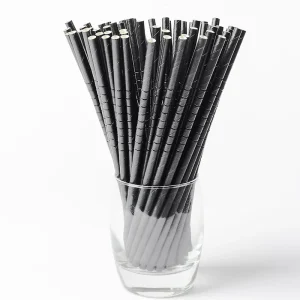
Consumer expectations differ sharply across markets. In Germany, environmental consciousness is deeply embedded. A 2025 survey indicated that 78% of German consumers prefer paper or biodegradable straws even at a higher price. They look for certifications like “Blauer Engel” and home-compostability claims. Functionality is equally important—a straw that collapses in a cold brew is unacceptable. French consumers, by contrast, place high value on aesthetics. Cafés in Paris often select slim, matte-black paper straws that complement their interior design. The straw must perform flawlessly in cocktails and soft drinks alike.
Spain has traditionally been price-sensitive, but the enforcement of the EU SUPD has accelerated the shift toward eco-friendly options. Many Spanish bars now use PLA straws as a cost-effective compromise between price and sustainability. Japan presents a unique set of demands: hygiene and individual wrapping are non-negotiable in many settings. Japanese consumers also appreciate innovation—edible straws made from rice or seaweed are gaining traction in specialty cafés. In South Korea, customization and branding are key drivers. A visually distinctive straw can become part of a café’s Instagram identity, justifying a premium price point.
Cost vs. Performance: Which Material Offers the Best Value?
There is no universal “best” material—only the best fit for your specific market and use case. Paper straws are the cheapest eco-friendly option, but their tendency to soften in liquid limits their application to fast-consumption drinks. PLA straws mimic plastic in look and feel but fail in hot beverages. CPLA bridges this gap with excellent heat resistance, though at a higher cost. Wheat straw offers a unique, natural aesthetic but is expensive and less uniform in diameter.
For high-volume, cost-sensitive markets like Spain, PLA often delivers the best balance. In Germany, where both eco-credentials and performance matter, many businesses opt for thick, high-quality paper straws or CPLA for hot drinks. In Japan and South Korea, the added cost of CPLA or customized paper straws can be offset by enhanced brand perception and customer loyalty. I worked with a French distributor who initially imported cheap, thin paper straws. Customer complaints about sogginess were frequent. After switching to a slightly thicker, FSC-certified paper straw, satisfaction scores rose sharply, and the modest cost increase was more than covered by repeat business growth.
Environmental Regulations Driving Change in 2026
2026 marks a regulatory tipping point. The EU’s Single-Use Plastics Directive is fully in force, with member states actively fining non-compliant businesses. France has gone further, banning even some industrially compostable plastics if they are not home-compostable. Germany’s Packaging Act imposes extended producer responsibility fees, meaning importers pay for the end-of-life management of their products. These measures effectively eliminate conventional plastic straws from the European market.
In Asia, Japan’s Plastic Resource Circulation Act encourages voluntary reduction, though it stops short of an outright ban. South Korea’s deposit scheme for disposable cups may soon extend to straws. Russia, while slower to legislate, is seeing a surge in consumer demand for sustainable products, particularly among younger urban demographics. For importers, the message is clear: investing in compostable and biodegradable alternatives is no longer optional. It’s a prerequisite for market access and long-term competitiveness.
What Are the Top Mistakes to Avoid When Importing Straws from China?
Even experienced importers can stumble when sourcing from China. Over the years, I’ve witnessed—and sometimes personally made—errors that cost time, money, and reputation. Here are four mistakes you should actively avoid.
Mistake #1: Not Verifying Factory Certifications (FDA, LFGB, BPI)
Certifications are your legal shield in the destination market. I recall a client who ordered a container of PLA straws for the US market, relying on an FDA certificate the supplier had provided during initial discussions. By the time the shipment arrived, the certificate had expired, and customs held the goods for three weeks. The client incurred demurrage charges and lost a key retail placement. Always request digital copies of all relevant certifications before production and verify them directly on the issuing body’s website. For BPI compostability, check the online directory. For LFGB, request the full test report from an accredited lab like SGS or TÜV. A trustworthy supplier will share these documents without hesitation.
Mistake #2: Underestimating Shipping Costs and Customs Duties
The FOB price is only part of the total cost picture. In 2026, a 20-foot container from Shanghai to Rotterdam costs approximately $3,500–$4,500, while to Tokyo it’s around $1,200–$1,800. Air freight is significantly higher and only viable for urgent, small-volume orders. Customs duties vary: the EU applies a 6.5% tariff on plastic straws, though many biodegradable straws qualify for reduced rates under environmental tariff schemes. Japan’s tariffs are generally low, but the 10% consumption tax applies. Russia’s duty rates can be unpredictable, making a local customs broker invaluable.
One Spanish client I advised had calculated his margin solely on FOB price. After adding sea freight, 21% VAT, customs duties, and warehousing, his actual profit was cut by more than half. We now provide every new client with a landed cost simulation that includes all hidden expenses—freight, insurance, duties, VAT, port handling, and local delivery. This transparency prevents unpleasant surprises and allows accurate pricing strategies.
Mistake #3: Ignoring Cultural and Language Barriers in Negotiation
Business culture in China values relationships and indirect communication. Aggressive price haggling or confrontational emails can sour negotiations quickly. Language misunderstandings are another common pitfall. I’ve seen an order go wrong because the buyer used the term “biodegradable” without specifying the standard, and the supplier delivered industrially compostable straws when the buyer needed home-compostable ones. Always use precise, simple English and confirm every detail in writing. Visual aids like annotated photos and technical drawings reduce ambiguity. If your requirements are complex, consider working with a bilingual sourcing agent or a supplier that offers multilingual account management. Mengte Commodities, for example, assigns dedicated account managers fluent in English, Spanish, and Japanese to bridge communication gaps.
Mistake #4: Ordering Without Testing Samples First
Skipping the sample stage is gambling with your inventory. A Japanese client once ordered 500,000 paper straws without testing samples because he was under time pressure. The straws arrived with a faint chemical odor that rendered them unsellable in his quality-conscious market. The entire batch was destroyed, costing him tens of thousands of dollars. Always request pre-production samples and, ideally, a production sample pulled from the actual batch before shipment. Test them in the intended beverages at various temperatures. Check for off-tastes, color bleeding, swelling, and structural integrity. Only approve the shipment when you are fully satisfied with every aspect.
How Much Does It Cost to Source Drinking Straws from China in 2026?
Cost transparency is essential for building a sustainable importing business. Prices have shifted in 2026 due to raw material stability and evolving demand patterns. This section provides a realistic overview of what you can expect to pay—and where hidden costs lurk.
Price Ranges: From Budget Plastic to Premium Biodegradable Straws
While conventional plastic straws are increasingly restricted, they remain in production for markets where they are still legal. However, the focus here is on the alternatives that dominate international trade. Based on typical FOB China prices for a standard 6x210mm straw, per 1,000 pieces, here are the current ranges:
- Conventional plastic (polypropylene): $2.00 – $4.00
- PLA (clear, cold-use): $5.00 – $9.00
- CPLA (white, hot-use): $10.00 – $18.00
- Paper (single-wall, plain): $3.50 – $7.00
- Paper (triple-wall, custom print): $8.00 – $15.00
- Wheat straw: $25.00 – $40.00
Volume discounts of 10–20% are common for orders exceeding 1 million pieces. Customization—such as individual wrapping, branded printing, or special colors—adds $1–$3 per 1,000 pieces. Raw material costs for PLA and paper have been relatively stable, but energy price fluctuations in China can affect production expenses, so always confirm pricing within 30 days of order placement.
Hidden Costs Breakdown: Freight, Tariffs, and Warehousing in Europe and Asia
To calculate your true landed cost, you must account for several additional items. Sea freight for a 20GP container to Europe averages $3,800; to Japan or Korea, $1,500. Less-than-container-load (LCL) shipments cost more per cubic meter but are viable for smaller orders. Insurance typically adds 0.3–0.5% of the cargo value. Customs duties range from 0% on many paper and PLA straws under EU environmental tariff codes to 6.5% on conventional plastics. Japan’s duties are 0–3.2%, while Russia applies 5–15% depending on material classification.
VAT is another major factor: 19–21% in EU countries, 10% in Japan and Korea, and 20% in Russia. Although businesses can often recover VAT, it impacts cash flow. Port handling, customs clearance, and local delivery add $500–$1,500 per container. Don’t forget palletization costs and labeling compliance—Germany, for instance, requires specific recycling logos on packaging. Failing to include these can lead to fines or repackaging expenses. I always recommend building a detailed cost model before committing to an order.
ROI Case Study: How a Spanish Distributor Saved 30% by Sourcing from China
Let me share a concrete example. A Spanish distributor of food service supplies was purchasing paper straws from a European manufacturer at €12.50 per 1,000 pieces (approximately $13.50). His annual volume was 5 million straws. We analyzed his supply chain and proposed sourcing from Mengte Commodities in China. The FOB price for a comparable FSC-certified paper straw was $6.50 per 1,000. After adding sea freight ($0.80 per 1,000), customs duties (0% under the EU’s environmental tariff for paper straws), and local logistics ($0.70 per 1,000), his landed cost came to $8.00 per 1,000—a 40% reduction from his previous expense.
Even after accounting for slightly higher inventory holding costs due to longer lead times, his net savings were 30%. Furthermore, the Chinese supplier offered custom printing at a fraction of the European cost, enabling him to launch a private-label line that boosted his margins by an additional 15%. This case demonstrates that, with proper management, sourcing from China remains highly profitable in 2026.
What Are the 2026 Trends Shaping the Disposable Straw Industry?
The disposable straw market is evolving faster than ever. Staying ahead of trends is crucial for importers who want to differentiate their offerings and comply with emerging regulations. Here are four developments you should watch closely.
The Rise of Home-Compostable and Edible Straws
Industrial composting facilities are not universally available, which limits the end-of-life promise of PLA straws. In response, manufacturers are developing home-compostable alternatives. Materials like PHA (polyhydroxyalkanoate) and advanced PLA blends can break down in a backyard compost bin, meeting the OK Compost HOME standard. Several Chinese suppliers, including Mengte Commodities, now offer home-compostable straws that appeal to environmentally stringent markets like Germany and France.
Edible straws represent an even more radical innovation. Made from rice flour, tapioca, or seaweed, these straws can be consumed after use or will rapidly biodegrade. They are particularly popular in South Korea and Japan, where novelty and zero-waste concepts resonate with consumers. Challenges remain: shorter shelf life, higher production costs, and potential allergen risks. Nonetheless, in 2026, edible straws are moving from niche gimmick to a viable premium segment.
New EU Single-Use Plastics Directive: What Importers Must Know
The EU SUPD, originally adopted in 2019, has been amended with full effect in 2026. Key provisions for straw importers include: a total ban on conventional plastic straws and oxo-degradable plastics; a requirement that biodegradable plastics must be certified as home-compostable or marine biodegradable under new EU standards to be exempt from the ban; mandatory labeling on all single-use products indicating environmental impact and proper disposal; and Extended Producer Responsibility (EPR) fees that make importers financially responsible for waste management.
Penalties for non-compliance can reach €100,000 per product line in some jurisdictions. It is no longer enough to simply claim a product is “biodegradable.” You must possess the specific certifications that match the 2026 EU definitions. Working with a supplier that stays current with these regulatory shifts is essential. At Mengte, we have proactively tested our entire straw portfolio against the updated standards to ensure our clients face no market access issues.
Customization and Private Labeling: A Growing Demand in Japan and South Korea
In Japan and South Korea, generic products rarely satisfy market expectations. Businesses seek straws that reinforce their brand identity. This includes custom colors matched to Pantone references, printed logos using food-safe inks, unique lengths, and bespoke packaging such as branded paper sleeves or biodegradable pouches. I recently collaborated with a Korean dessert chain that wanted pink CPLA straws featuring their mascot in soy-based ink. The project required multiple sampling rounds to perfect the color and print registration. The final product became a signature element of their brand experience, heavily featured in social media posts and justifying a premium price.
For importers, offering customization is a powerful differentiator. It builds customer loyalty and creates barriers to switching suppliers. However, customization demands precise communication and a supplier with strong R&D and printing capabilities. Always budget extra time for sampling and approval when pursuing private-label projects.
Sustainability as a Competitive Advantage in Russia and Europe
Sustainability has evolved from a compliance burden to a marketing asset. In Russia, eco-awareness is rising among the urban middle class. Restaurants that advertise “100% biodegradable straws” attract environmentally conscious diners and can command higher average checks. In Europe, the trend is even more pronounced. A 2026 Eurobarometer survey found that 64% of EU citizens are willing to pay more for products with a lower environmental impact. By sourcing certified biodegradable straws and communicating that choice transparently, businesses strengthen their brand, build trust, and differentiate themselves in crowded markets. The key is to back all claims with verifiable certifications—greenwashing is quickly exposed and can permanently damage a brand’s reputation.
What Tools and Resources Can Help You Source Straws from China Effectively?
Equipping yourself with the right tools and knowledge can dramatically reduce sourcing risks. Below are practical resources that I recommend to every importer, whether you’re placing your first order or optimizing an established supply chain.
Top B2B Platforms for Finding Verified Chinese Suppliers (Alibaba, Made-in-China)
Alibaba.com remains the largest B2B platform, but it requires careful navigation. Focus on Gold Suppliers with Trade Assurance and on-site verification badges. Check how long the supplier has been active on the platform and read recent buyer reviews with a critical eye. Made-in-China.com is a solid alternative, often featuring manufacturers with fewer intermediary layers. Global Sources is useful for identifying suppliers that also exhibit at major trade fairs. However, platform verification is not foolproof. I’ve encountered Gold Suppliers whose certifications were outdated or even fabricated. Always conduct independent verification: request the factory’s business license and cross-check it on China’s National Enterprise Credit Information Publicity System. Better yet, commission a third-party audit before committing to large orders.
Essential Quality Checklists for Straw Inspection
A standardized inspection checklist ensures consistency and catches defects before shipment. Whether you inspect personally or hire a third party, cover these points:
- Dimensions: length, diameter, wall thickness (tolerance ±0.1mm for premium straws)
- Color consistency: no visible variation under D65 lighting
- Odor: no plastic, chemical, or musty smell
- Visual defects: no cracks, bubbles, or deformities
- Strength: straw should not collapse under normal suction pressure
- Water resistance (paper): no disintegration for at least 2 hours in cold liquid
- Heat resistance (CPLA): no deformation at 80°C for 30 minutes
- Print quality (customized): sharpness, adhesion, and certification of food-safe ink
- Packaging: correct quantity per pack, proper sealing, labels match order specifications
A detailed inspection report with photographs provides objective evidence and can be used to negotiate with the supplier if issues arise.
Key Certifications and Testing Labs You Should Know
Familiarity with certifications and testing labs streamlines the sourcing process. Essential certifications include FDA (US food contact safety), LFGB (German food contact, stricter than EU general), EU 10/2011 (overall migration limits), EN 13432 (industrial compostability), OK Compost HOME (home compostability), BPI (compostability for North America), FSC (sustainable paper sourcing), and JIS Z 1702 (Japanese packaging standards). Reputable testing labs that can provide these certifications include SGS, Intertek, TÜV Rheinland, and Eurofins. Many Chinese suppliers can coordinate testing through these labs, but you should receive the original reports directly from the lab whenever possible to ensure authenticity.
Free Download: Sourcing Straws from China – A Buyer’s Toolkit (Mengte’s 2026 Edition)
To help importers navigate the complexities of international sourcing, we at Mengte Commodities have compiled a comprehensive Buyer’s Toolkit for 2026. This free resource includes a regulatory cheat sheet covering the EU, Russia, Japan, and South Korea; a customizable Excel cost calculator for landed cost estimation; a printable sample inspection checklist; a directory of verified testing labs in China; and practical tips for negotiating with Chinese suppliers. Whether you are a startup or an established distributor, these tools will save you time and help you avoid the common pitfalls discussed in this article.
Ready to put these insights into action? As a leading fournisseur de vaisselle jetable , Mengte Commodities offers a full range of pailles biodégradables , paper straws, and customizable options tailored to your market’s regulatory and consumer demands. With over a decade of experience and a deep commitment to compliance, we make importing from China straightforward and risk-free. Visit our website to browse our product catalog, request samples, or schedule a free consultation with our sourcing specialists. Let’s build a sustainable, profitable supply chain together.
References and Further Reading
- European Commission – Single-Use Plastics Directive
- EU Regulation 10/2011 on Food Contact Materials
- U.S. FDA – Food Contact Substances
- Biodegradable Products Institute (BPI) – Certified Products Directory
- TÜV Rheinland – Testing and Certification Services
- SGS – Inspection, Testing, Certification
- Intertek – Total Quality Assurance
- Japan Ministry of Health, Labour and Welfare – Food Safety