




 JA
JA  EN
EN  FR
FR  ES
ES  RU
RU  DE
DE  KO
KO 
Abstract
The global shift towards sustainability has fundamentally reshaped the criteria for evaluating disposable tableware, compelling procurement professionals to look beyond mere cost and functionality. In 2025, the central question for businesses in Europe and Asia is not just about sourcing cutlery, but about identifying partners who make high quality cutlery that aligns with rigorous environmental and ethical standards. This analysis examines the critical factors that define a superior manufacturer in the contemporary market. It investigates the materials science behind leading eco-friendly options like Crystallized Polylactic Acid (CPLA) and recycled plastics, contextualizing their benefits within current regulatory frameworks. Furthermore, it explores the significance of manufacturing certifications, supply chain transparency, and design innovation as pillars of quality. The objective is to provide a comprehensive framework for B2B buyers to vet potential suppliers, ensuring that their sourcing decisions support brand integrity, consumer satisfaction, and corporate responsibility in an increasingly discerning global landscape. This involves a nuanced understanding of both the tangible product attributes and the intangible value of a manufacturer’s commitment to excellence and sustainability.
Key Takeaways
- Prioritize suppliers with certified materials like CPLA or rPET for compliance and sustainability.
- Verify international certifications such as BRC, ISO 9001, and Sedex for quality assurance.
- Evaluate a manufacturer’s design innovation and customization capabilities for brand differentiation.
- Assess supply chain transparency to mitigate risks and ensure ethical sourcing practices.
- The search for who makes high quality cutlery must balance cost with long-term value.
- Consider the complete lifecycle, from raw material to disposal, for true eco-friendliness.
- Request product samples to test for durability, heat resistance, and user comfort.
Table of Contents
- 1. The Foundational Element: A Deep Dive into Material Science and Sustainability
- 2. The Mark of Excellence: Manufacturing Processes and International Compliance
- 3. The Unseen Network: Supply Chain Integrity and Ethical Sourcing
- 4. The User’s Experience: Design, Functionality, and Haptic Sensibility
- 5. The Collaborative Edge: Vetting a Supplier’s Partnership Potential
- Frequently Asked Questions (FAQ)
- 結論
- References
1. The Foundational Element: A Deep Dive into Material Science and Sustainability
The quest to identify who makes high quality cutlery begins not with the factory, but with the very molecules that constitute the fork, spoon, and knife. The substance of an object speaks volumes about its origins, its intended purpose, and its ultimate fate. For a procurement manager in Hamburg, Seoul, or Paris, understanding the material is the first and most profound step in vetting a supplier. In 2025, this understanding must extend beyond simple labels like “biodegradable” into the nuanced world of polymer science and lifecycle analysis. The choice of material is a statement of values, reflecting a company’s commitment to environmental stewardship and consumer well-being.
The Rise of Crystallized Polylactic Acid (CPLA)
Polylactic Acid (PLA) represents a significant step away from petroleum-based plastics. Derived from renewable resources like corn starch or sugarcane, it offers a plant-based origin story that resonates with eco-conscious consumers. However, standard PLA has limitations, particularly its relatively low heat tolerance, which can lead to deformation when used with hot foods or beverages. This is where the genius of material engineering becomes apparent.
Imagine the molecular structure of standard PLA as a disorganized crowd. The polymer chains are amorphous, lacking a defined structure, which makes them susceptible to heat. The process of creating CPLA involves subjecting the PLA resin to a specific heating and cooling cycle. This encourages the polymer chains to arrange themselves into highly ordered, crystalline structures—much like soldiers forming neat ranks. This crystallization dramatically increases the material’s thermal stability, allowing CPLA cutlery to withstand temperatures up to 90°C (194°F). This innovation transforms a promising bioplastic into a truly viable and reliable option for the demanding food service industry. A supplier who specializes in CPLA demonstrates a commitment to advanced processing and a deeper understanding of material performance. They are not merely extruding plastic; they are engineering a solution.
Recycled PET (rPET): A Circular Economy in Practice
While bioplastics offer a path from renewable resources, another powerful narrative in sustainability is circularity. Recycled Polyethylene Terephthalate (rPET) embodies this principle. It takes post-consumer waste, primarily beverage bottles, and through a sophisticated process of sorting, cleaning, and remelting, transforms it into new, food-safe products. Sourcing recycled plastic tableware is a direct investment in the circular economy. It reduces the demand for virgin petroleum, diverts waste from landfills and oceans, and lowers the overall carbon footprint of the product.
A manufacturer who makes high quality cutlery from rPET must demonstrate impeccable traceability. Where did the source material come from? What was the cleaning process? Do they possess certifications like the Global Recycled Standard (GRS) that verify the recycled content and the chain of custody? These questions are not peripheral; they are central to the integrity of the final product. A supplier offering rPET products without this documentation is offering a story without evidence, a risk that discerning businesses cannot afford.
Comparative Analysis of Eco-Friendly Cutlery Materials
| Material | Primary Feedstock | Heat Tolerance | End-of-Life Option | Key Benefit | Main Consideration |
|---|---|---|---|---|---|
| CPLA | Corn Starch, Sugarcane | High (up to 90°C) | Industrial Composting | High performance for hot foods; renewable source | Requires industrial composting facility for breakdown |
| Wood (Birch) | FSC-Certified Forests | Very High | Commercial & Home Composting; Biodegradable | Fully natural and compostable; rustic aesthetic | Can have a slight woody taste; potential for splintering in low-quality versions |
| rPET | Post-Consumer Plastics | Moderate (up to 70°C) | Recyclable | Reduces plastic waste; lower carbon footprint than virgin plastic | Not biodegradable; requires robust recycling infrastructure |
| Bagasse | Sugarcane Pulp | High | Commercial & Home Composting; Biodegradable | Utilizes agricultural waste; excellent for hot/cold use | Can have lower rigidity compared to CPLA or wood |
| PHA | Canola Oil, Microorganisms | Moderate to High | Marine & Soil Biodegradable; Home Composting | Broadest range of biodegradable environments | Currently higher cost and less available at scale |
The End-of-Life Question: Biodegradability vs. Compostability
The terms “biodegradable” and “compostable” are often used interchangeably, yet they describe distinct processes with different implications. A manufacturer of eco 使い捨てカトラリー must be precise in their language and transparent about their products’ end-of-life requirements.
Biodegradation is a natural process where microorganisms break down material into natural elements. However, the term itself has no time limit. A product could take centuries to biodegrade. Compostability, on the other hand, is a more specific and regulated claim. For a product to be certified compostable (under standards like EN 13432 in Europe or ASTM D6400 in the US), it must break down in a commercial composting facility within a specific timeframe (typically 90-180 days), leaving no toxic residues.
Consider the practical difference. A CPLA fork is commercially compostable. If it ends up in a correctly managed industrial compost pile, it will become nutrient-rich soil. If it ends up in a landfill, deprived of oxygen, it will degrade very slowly, much like other organic matter. Therefore, a supplier’s responsibility extends to educating their B2B clients on the proper disposal infrastructure needed to realize the material’s environmental promise. This educational component is a hallmark of a true partner and a key indicator for anyone asking who makes high quality cutlery.
2. The Mark of Excellence: Manufacturing Processes and International Compliance
If material science is the soul of high-quality cutlery, then the manufacturing process is its body—the tangible form that determines its strength, safety, and consistency. A state-of-the-art facility is a theater of precision, where raw materials are transformed through carefully controlled processes into finished goods that are both beautiful and reliable. For a B2B buyer, peering into this process through the lens of international standards and certifications is the most effective way to gauge a supplier’s competence and commitment to quality.
From Resin to Cutlery: The Precision of Injection Molding
The most common method for producing plastic and bioplastic cutlery is injection molding. Think of it as a highly advanced version of a pastry chef’s piping bag.
- Melting: Raw material pellets (CPLA, rPET, or PS) are fed into a heated barrel, where they are melted into a homogenous liquid at a precise temperature.
- Injection: This molten material is then injected under high pressure into a custom-machined steel mold. The mold is the negative space of the cutlery set, and its design determines the final shape, thickness, and texture of the pieces.
- Cooling & Ejection: The mold is cooled, causing the material to solidify into its final form. The mold then opens, and the finished cutlery is ejected.
The quality of the final product is determined at every stage. Is the temperature of the melt consistent? Is the injection pressure optimized to prevent air bubbles or weak spots? Is the mold itself engineered to produce a smooth, flash-free finish? A superior manufacturer invests in modern, computer-controlled injection molding machines and high-quality steel molds. They understand that a fraction of a degree in temperature or a slight variation in pressure can be the difference between a fork that snaps and one that performs flawlessly.
The Alphabet of Trust: Navigating Key Certifications
Certifications are not mere paperwork; they are the universal language of quality and safety in global trade. They provide third-party verification that a manufacturer adheres to a set of rigorous standards. When evaluating a potential supplier, these certifications should be considered non-negotiable.
| Certification | Area of Focus | What It Means for a Cutlery Buyer |
|---|---|---|
| ISO 9001:2015 | Quality Management Systems | The supplier has a systematic approach to quality, ensuring consistency, process control, and continuous improvement. |
| BRCGS | Global Standard for Packaging Materials | Guarantees the safety, legality, and quality of the packaging materials, which includes disposable cutlery. Crucial for food contact items. |
| SMETA / BSCI | Social & Ethical Audits | Verifies that the manufacturer adheres to ethical labor practices, ensuring no forced or child labor and providing safe working conditions. |
| FSC | Forest Stewardship Council | For wooden cutlery, this certifies that the wood comes from responsibly managed forests that provide environmental, social, and economic benefits. |
| EN 13432 / ASTM D6400 | Compostability Standards | For bioplastics like CPLA, this certifies that the product will break down in an industrial composting facility within a set timeframe. |
A supplier who proactively provides these certifications demonstrates transparency and a long-term commitment to global best practices. They are not waiting to be asked; they have already integrated these standards into the core of their operations. This proactive stance is a powerful signal to any business seeking a reliable source for premium plastic tableware.
Quality Control: Beyond the Final Inspection
The search for who makes high quality cutlery should lead you to a partner who views quality control not as a final step, but as a continuous process woven into the fabric of production. This involves multiple checkpoints:
- Raw Material Inspection: Every batch of incoming resin (CPLA, rPET, etc.) should be tested for purity, moisture content, and melt flow index to ensure it meets specifications.
- In-Process Monitoring: During the injection molding run, automated systems and human operators should constantly check for defects such as short shots (incomplete parts), flash (excess material on the edges), or warping.
- Finished Product Testing: Random samples from each production batch should undergo a battery of tests. This might include a strength test (how much force does it take to break a fork tine?), a heat resistance test (does the cutlery deform in hot water?), and a dimensional analysis (does it match the design specifications exactly?).
Imagine you are sourcing cutlery for an airline. The failure of a single fork at 30,000 feet not only creates a negative customer experience but can also become a safety concern. A manufacturer with a robust, multi-stage QC process understands these stakes. They are not just selling cutlery; they are selling peace of mind.
3. The Unseen Network: Supply Chain Integrity and Ethical Sourcing
A piece of cutlery does not simply appear in a box. It is the culmination of a long and complex journey, a chain of events that stretches from a cornfield in Iowa, a forest in Finland, or a recycling facility in Germany, all the way to a manufacturing plant in Asia and finally to a distributor’s warehouse. The integrity of this chain is as vital as the strength of the cutlery itself. For procurement professionals in 2025, evaluating a supplier’s supply chain is an exercise in risk management, ethical verification, and strategic foresight. The question of who makes high quality cutlery is inextricably linked to the question of how it is made and where its components originate.
Traceability: The Story of a Spoon
True transparency means being able to trace a product back to its source. A top-tier manufacturer should be able to provide a clear and verifiable path for their raw materials.
- For CPLA, this means identifying the supplier of the PLA resin and, ideally, knowing the origin of the biomass (e.g., non-GMO corn, Bonsucro-certified sugarcane).
- For 木製カトラリー, this means providing the Forest Stewardship Council (FSC) chain-of-custody certificate number, proving the wood is from a responsibly managed source. This is especially important for products like innovative wooden beverage stirrers, where sustainability is a key selling point.
- For recycled plastic tableware, this involves documentation from suppliers certified under the Global Recycled Standard (GRS), which authenticates the recycled content and tracks it through the supply chain.
Why is this forensic level of detail so important? It protects your business from greenwashing—the practice of making misleading claims about a product’s environmental benefits. As noted in a review of sustainable packaging, consumer and regulatory scrutiny of such claims is intensifying (Versino et al., 2023). A verifiable supply chain is your best defense and a powerful marketing tool. It allows you to tell your customers a genuine story of sustainability, backed by facts.
Ethical Production: The Human Element
The conditions under which products are made are a reflection of a company’s values. A supply chain tainted by unethical labor practices is a significant liability, posing risks to brand reputation and potentially leading to legal challenges. Leading global brands have learned this lesson the hard way.
This is why social compliance audits are not just a “nice-to-have” but a fundamental requirement. Audits like SMETA (Sedex Members Ethical Trade Audit) or BSCI (Business Social Compliance Initiative) provide an independent assessment of a manufacturer’s labor standards, health and safety, environmental practices, and business ethics.
When you partner with a supplier who is SMETA or BSCI compliant, you are gaining assurance that:
- Workers are treated with respect and paid fair wages.
- Working hours are not excessive.
- The factory environment is safe and hygienic.
- There is no child or forced labor in their operations or in their immediate supply chain.
Think of this as a due diligence process for the human side of production. A manufacturer who invests in these audits and openly shares their results is demonstrating a commitment to corporate social responsibility that goes beyond their own factory walls. They understand that in a connected world, their reputation is intertwined with yours.
Resilience and Redundancy: Weathering the Storm
The past few years have taught us that global supply chains can be fragile. Geopolitical events, natural disasters, and pandemics can disrupt the flow of goods, leading to stockouts and broken promises to customers. A key, though often overlooked, aspect of a high-quality supplier is the resilience of their supply chain.
When vetting a potential partner, consider asking these questions:
- Supplier Diversification: Do they source their raw materials from multiple suppliers and multiple geographic regions? A single-source dependency is a significant vulnerability.
- Inventory Strategy: What is their policy on holding safety stock of both raw materials and finished goods? This buffer can absorb short-term disruptions.
- Logistical Expertise: Do they have an experienced logistics team that can navigate the complexities of international shipping, customs, and documentation? Can they offer different shipping options (FOB, CIF, DDP) to suit your business needs?
A manufacturer with a resilient supply chain is a strategic partner who helps you anticipate and mitigate risks. They are not just focused on fulfilling the next order but on ensuring a continuous and reliable supply for years to come. This long-term perspective is a defining characteristic of a supplier who truly understands the meaning of quality.
4. The User’s Experience: Design, Functionality, and Haptic Sensibility
We have explored the materials and the manufacturing, but the ultimate test of cutlery comes at the moment of use. It is a deeply personal and sensory experience. Does the fork feel balanced in the hand? Do the tines pierce a piece of lettuce without snapping? Does the spoon’s bowl feel smooth against the lips? These seemingly small details of design and functionality are what separate merely adequate cutlery from a truly premium product. A manufacturer who makes high quality cutlery is, in essence, an architect of the dining experience.
Ergonomics and Haptics: The Feeling of Quality
Haptics, the science of touch, plays a profound role in our perception of quality. A flimsy, lightweight fork feels cheap and unreliable, regardless of its material composition. A heavy, rigid, and well-balanced piece of cutlery, by contrast, communicates substance and care.
A superior manufacturer obsesses over these details:
- Weight and Balance: The cutlery should have a satisfying heft, with the center of balance located comfortably in the hand. This is particularly noticeable in items designed to be part of durable and elegant disposable cutlery sets.
- Structural Integrity: The neck of the fork—the area where the handle meets the tines—is a common failure point. Quality design reinforces this area. The tines themselves should be stiff enough to handle firm foods without bending or breaking.
- Surface Finish: The mold used in production must be flawlessly polished. Any imperfections in the mold will be transferred to the cutlery, resulting in a rough or uneven texture. A smooth, glossy finish not only feels better but is also more hygienic.
- Edge Quality: The edges of the cutlery should be smooth and free of “flash” (thin, sharp slivers of excess plastic left over from the molding process). This requires precise mold engineering and a rigorous quality control process.
Imagine you are serving dessert at a high-end catered event. The experience of a guest’s spoon cracking while breaking into a crème brûlée reflects poorly not just on the spoon, but on the caterer, the event, and the host. The haptic and functional quality of disposable tableware is a direct extension of your brand’s commitment to excellence.
Design Innovation: Beyond the Standard Form
For many years, disposable cutlery was a purely utilitarian object, with little thought given to its aesthetic form. That era is over. Today, design is a key differentiator, a way for food service businesses, airlines, and event planners to enhance their brand identity.
A forward-thinking manufacturer is not just a producer; they are a design partner. They understand that the shape of a spoon or the curve of a knife handle can complement a specific cuisine or event theme. Look for a supplier who:
- Offers a Range of Designs: Do they have multiple lines of cutlery, from classic and elegant to modern and minimalist?
- Invests in Customization: Can they create a custom mold for your brand? This could involve a unique shape, an embossed logo, or a specific Pantone-matched color. While this involves a higher initial investment, it offers unparalleled brand exclusivity.
- Understands Trends: Are they experimenting with new textures, finishes (e.g., a matte look), and forms that align with contemporary culinary and design trends?
The ability to offer unique designs shows that a manufacturer is attuned to the market and has the technical capability to translate creative ideas into physical products. They are not simply reacting to demand; they are helping their clients create it. This collaborative approach to design is a hallmark of a top-tier supplier.
The Complete Package: Thinking About Presentation
The cutlery itself is only part of the story. How it is presented to the end-user is also a part of the experience. A quality-conscious manufacturer extends their design thinking to the packaging.
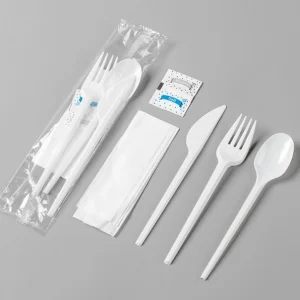
- Wrapped Sets: For hygiene and convenience, cutlery is often offered in wrapped sets (e.g., a fork, knife, spoon, and napkin in a sealed polybag or paper wrap). The quality of the wrapping material and the neatness of the seal contribute to the overall impression.
- Dispenser Boxes: For bulk applications, well-designed dispenser boxes can improve hygiene and efficiency in a cafeteria or quick-service restaurant setting.
- Retail Packaging: For products sold directly to consumers, attractive and informative packaging is essential.
By considering the entire user journey, from opening the package to the last bite of food, a manufacturer demonstrates a holistic understanding of quality. They recognize that their responsibility does not end when the cutlery leaves the factory but extends to the final moment of use. This empathetic, user-centered approach is a clear sign that you are dealing with a company that truly cares about the products they create.
5. The Collaborative Edge: Vetting a Supplier’s Partnership Potential
Sourcing is not a simple transaction; it is the beginning of a relationship. The final, and perhaps most human, factor in identifying who makes high quality cutlery is assessing a supplier’s potential as a long-term partner. A great supplier does more than just ship boxes. They communicate clearly, solve problems proactively, and invest in their clients’ success. They function as an extension of your own procurement and product development teams, providing expertise and support that goes far beyond the item price.
Communication and Responsiveness: The Foundation of Trust
In international trade, clear and timely communication is invaluable. Misunderstandings due to language barriers or slow response times can lead to costly errors and delays. When evaluating a potential supplier, pay close attention to the quality of your interactions.
- Clarity and Proficiency: Does their sales and support team communicate fluently in your business language? Can they explain complex technical details (like the difference between PLA and CPLA) clearly and concisely?
- Response Time: When you send an inquiry or a request for a quote, how quickly do they respond? A responsive team signals an efficient and customer-focused organization.
- Proactive Updates: A great partner doesn’t wait for you to ask for an update on your order. They provide proactive information about production milestones, shipping schedules, and any potential delays.
Think of the communication style as a window into the company’s culture. An organization that communicates with transparency, professionalism, and a sense of urgency is likely to apply the same principles to its manufacturing and quality control processes.
Customization and Flexibility: A Tailored Solution
Every business has unique needs. Your requirements for cutlery may differ based on your customer base, your brand positioning, and your operational constraints. A “one-size-fits-all” approach rarely leads to an optimal solution. A truly valuable manufacturing partner demonstrates flexibility and a willingness to tailor their offerings.
This can manifest in several ways:
- Product Customization: As discussed earlier, this includes custom designs, colors, and logos. But it can also involve developing cutlery with specific performance characteristics, such as extra-heavy weight for tougher foods or a unique shape for a specific type of container.
- Packaging Solutions: Can they create custom-packed kits that include other items your business needs, such as salt, pepper, or a wet wipe? Can they design packaging that fits your specific storage or dispensing systems?
- Logistical Flexibility: Are they willing to work with your preferred freight forwarder? Can they accommodate specific labeling or palletizing requirements for your warehouse?
A supplier who is willing to engage in these conversations and invest the effort to find a tailored solution is not just a vendor; they are a collaborator. They are demonstrating that they value your business enough to adapt their processes to meet your needs.
Problem-Solving and Long-Term Vision
No business relationship is without its challenges. A container may get delayed in customs, a production run may have a minor issue, or market conditions may change unexpectedly. The true measure of a supplier is not whether problems occur, but how they respond when they do.
Look for a partner who:
- Takes Ownership: When an issue arises, do they take responsibility and focus on finding a solution, or do they make excuses and blame others?
- Offers Creative Solutions: Do they come to you with a plan to resolve the issue? For example, if a sea shipment is delayed, can they offer a partial air shipment to prevent a stockout?
- Engages in Continuous Improvement: Do they conduct a root cause analysis after a problem to ensure it doesn’t happen again? Do they actively solicit your feedback to improve their products and services?
A supplier with a problem-solving mindset and a long-term vision understands that their success is tied to yours. They see each order not as a single transaction but as another step in a mutually beneficial partnership. This strategic alignment is the ultimate indicator of a high-quality supplier and the final answer to the critical question of who you should trust to produce your company’s tableware.
Frequently Asked Questions (FAQ)
1. What is the main difference between CPLA and regular PLA cutlery? CPLA stands for Crystallized Polylactic Acid. While both are derived from plant-based resources like corn starch, CPLA undergoes an additional annealing process that crystallizes the polymer structure. This makes CPLA significantly more heat-resistant (up to 90°C or 194°F) compared to standard PLA, which can deform around 60°C (140°F). This makes CPLA suitable for hot foods, soups, and beverages.
2. Are “biodegradable” and “compostable” the same thing for disposable cutlery? No, they are not the same. Biodegradable simply means a material can be broken down by microorganisms over time, but this process can take many years. Compostable is a certified standard (like EN 13432 in Europe) meaning the product will break down into natural elements in a commercial composting facility within a specific timeframe (usually 90-180 days), leaving no toxic residue. When sourcing eco disposable cutlery, look for compostability certifications for a verifiable environmental benefit.
3. Why are certifications like BRCGS and SMETA important when choosing a cutlery supplier? BRCGS (Brand Reputation Compliance Global Standards) for Packaging Materials ensures the product is manufactured to be safe for food contact, meeting legal and quality requirements. SMETA (Sedex Members Ethical Trade Audit) verifies the manufacturer’s ethical labor practices. Together, they provide third-party assurance of product safety and corporate social responsibility, protecting your brand from quality issues and reputational damage.
4. Can recycled plastic tableware be food-safe? Yes, high-quality recycled plastic tableware, typically made from rPET (recycled polyethylene terephthalate), can be perfectly food-safe. The key is to source from a manufacturer who uses a sophisticated cleaning and re-pelletizing process and can provide certifications like the Global Recycled Standard (GRS). This ensures the post-consumer material is properly sanitized and traceable, meeting stringent safety standards for food contact.
5. How can I test the quality of cutlery samples from a potential supplier? First, perform a visual and tactile inspection for smoothness, weight, and absence of sharp edges (flash). Next, conduct a simple strength test by trying to bend the tines of a fork or the neck of a spoon; it should be rigid and resilient. Finally, perform a heat test by placing the cutlery in hot water (around 85°C for CPLA) for a minute to see if it deforms or softens. These simple tests provide a good initial assessment of durability and performance.
6. What is the advantage of using wooden cutlery over bioplastic options? Wooden cutlery, typically made from birch, offers a distinct aesthetic and is fully compostable in both industrial and home settings. Unlike CPLA, which requires an industrial facility, wood breaks down more readily in various natural environments. It also comes from a renewable resource, and sourcing from suppliers with FSC (Forest Stewardship Council) certification ensures it originates from responsibly managed forests.
7. Is it expensive to get custom-designed or custom-colored cutlery? There is an initial investment for creating a new mold for a custom design or for color matching a specific Pantone shade. This tooling cost can be significant. However, for large volume orders, the per-piece cost increase may be minimal. Many businesses find the value in brand differentiation and exclusivity to be well worth the initial investment, as it creates a unique product that competitors cannot easily replicate.
結論
The process of determining who makes high quality cutlery in 2025 is a multifaceted inquiry that transcends the product itself, touching upon the realms of material science, ethical philosophy, and strategic partnership. It is a journey that begins with a deep appreciation for the substance of the object—whether it be the engineered resilience of CPLA, the circular promise of rPET, or the natural integrity of wood. It demands a critical eye for the rigors of manufacturing, where international certifications like BRCGS and ISO 9001 serve as the language of trust and safety.
Furthermore, this pursuit requires us to look beyond the factory gates to the entire supply chain, ensuring that every link is forged with ethical labor and environmental responsibility. The final judgment rests in the user’s hand, in the haptic sensation of a well-balanced fork and the flawless performance of a spoon, reminding us that functionality and design are the ultimate expressions of quality. Ultimately, selecting a supplier is not a simple procurement decision; it is the formation of a partnership. The ideal manufacturer is a collaborator who communicates with clarity, adapts to unique needs, and shares a long-term vision for success. By embracing this holistic and discerning approach, businesses can source disposable tableware that not only meets their functional requirements but also authentically reflects their commitment to excellence and a more sustainable future.
References
Djekić, I. (2025). Sustainable perspectives of disposable tableware: A systematic review. Sustainability, 17(4), 1434. https://www.mdpi.com/2071-1050/17/4/1434
Dybka-Stępień, K., Antolak, H., Kmiotek, M., Piechota, D., & Koziróg, A. (2021). Disposable food packaging and serving materials—Trends and biodegradability. Polymers, 13(20), 3606. https://doi.org/10.3390/polym13203606
Hernández-Varela, J. D., & Medina, D. I. (2023). Revalorization of coffee residues: Advances in the development of eco-friendly biobased potential food packaging. Polymers, 15(13), 2823. https://doi.org/10.3390/polym15132823
Ma, J. (2023). Bio-based alternatives to plastic drinking straws: are they more environmentally benign and consumer preferred?. Circular Economy, 2(1), 28. https://doi.org/10.1007/s44246-023-00062-4
Mengte Commodities Co., Ltd. (2025). An expert’s guide for 2025: The 7 materials defining our future. Yiwu Mengte Commodities Co., Ltd. https://www.mtstraw.com/an-experts-guide-for-2025-what-is-the-meaning-of-drinking-straws-the-7-materials-defining-our-future/
Pålsson, H. (2023). Current state and research directions for disposable versus reusable packaging: A systematic literature review of comparative studies. Packaging Technology and Science, 36(6), 391-409. https://doi.org/10.1002/pts.2722
Versino, F., Ortega, F., Monroy, Y., Rivero, S., López, O. V., & García, M. A. (2023). Sustainable and bio-based food packaging: A review on past and current design innovations. Foods, 12(5), 1057. https://doi.org/10.3390/foods12051057