




 KO
KO  EN
EN  FR
FR  ES
ES  RU
RU  DE
DE  JA
JA Abstract
The development of the plastic straw represents a significant chapter in the history of material culture, convenience, and unintended environmental consequences. While rudimentary drinking tubes have existed for millennia, the modern, single-use plastic straw emerged in the mid-20th century, its proliferation inextricably linked to the post-war boom in plastics manufacturing and the rise of fast-food culture. An inquiry into its origins reveals that the commercialization of polypropylene straws occurred primarily during the 1960s, building upon earlier innovations in paper and flexible straw design. This widespread adoption was driven by low production costs, durability, and superior hygiene compared to its predecessors. By the early 21st century, the plastic straw had transformed from a symbol of modern convenience into a focal point of global anti-pollution campaigns. As of 2026, legislative pressures, shifting consumer ethics, and innovations in material science are compelling a decisive pivot towards sustainable alternatives like biodegradable straws and reusable options, reshaping the entire disposable tableware industry.
Key Takeaways
- The question of when were plastic straws invented points to their commercial rise in the 1960s.
- The fast-food industry’s expansion was a primary catalyst for the plastic straw’s global dominance.
- Polypropylene’s low cost, durability, and heat resistance made it the ideal material for mass production.
- Public awareness of ocean plastic pollution has directly led to widespread bans and regulations.
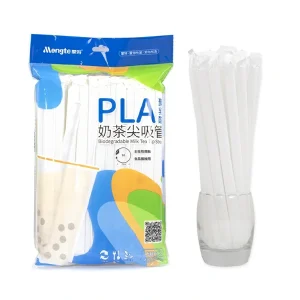
- Businesses are now actively seeking eco-friendly alternatives like PLA and paper straws.
- The future of the industry lies in sustainable materials and reusable drinking implements.
- Sourcing high-quality, certified eco disposable cutlery is now a key business strategy.
Table of Contents
- The Pre-Plastic Era: A 5,000-Year-Old Thirst for Convenience
- The Birth of the Modern Plastic Straw: A Mid-20th Century Story
- The 60-Year Reign: How Plastic Straws Conquered the World
- The Science of the Plastic Straw: Polypropylene and Its Properties
- The Environmental Reckoning: A Plastic Problem of Global Proportions
- The 2026 Pivot: Three Key Drivers for the Shift to Eco-Alternatives
- Navigating the Post-Plastic Landscape: The Future of Drinking Straws
- Frequently Asked Questions (FAQ)
- 결론
- References
The Pre-Plastic Era: A 5,000-Year-Old Thirst for Convenience
To truly appreciate the context in which the plastic straw appeared, we must first journey back in time, long before plastics were even conceived. The human desire for a tool to sip liquids is not a modern phenomenon; it is a practice with roots stretching back to the dawn of civilization. Thinking about this history helps us understand the fundamental function the straw performs, a function that has remained unchanged for millennia, even as the materials used have evolved dramatically.
Ancient Origins: Sumerian Reeds and Golden Tubes
The earliest known evidence of drinking straws comes from the ancient Sumerians, one of the world’s first civilizations, located in Mesopotamia. Archaeologists excavating a Sumerian tomb dated to around 3,000 B.C. discovered a remarkable artifact: a long, slender tube made of gold and inlaid with the precious blue stone lapis lazuli (Woolley, 1934). Found within a container that likely held a type of beer, its purpose was immediately clear. The Sumerians brewed a thick, unfiltered beer with solids that would settle at the bottom. The straw allowed the drinker to consume the liquid from above the sediment, a simple yet elegant solution to a practical problem. Similar, less ornate straws made from reeds were likely common, though their organic nature means few have survived the passage of time. These early examples demonstrate that from the very beginning, straws were tools of refinement, separating the desirable from the undesirable.
The Rye Grass Straw: An Agrarian Staple
For the thousands of years that followed, the most common form of drinking straw was entirely natural. In many agrarian societies, a hollow-stemmed plant, most notably rye grass, served as the go-to implement for sipping. The very word “straw” in English is derived from this agricultural origin. A farmer could simply pluck a stalk of rye, trim it to size, and have a disposable drinking tube. It was organic, ubiquitous in many parts of the world, and cost nothing.
However, the rye grass straw had significant drawbacks. It was fragile, prone to breaking, and would often become soggy, imparting a grassy, earthy flavor to the beverage. Imagine trying to enjoy a cool glass of lemonade on a warm day, only to have your straw disintegrate and leave behind a pulpy residue. This sensory imperfection was a persistent issue, one that set the stage for a crucial 19th-century innovation. The rye straw was a product of its environment, a temporary solution that worked well enough but was far from perfect.
Marvin Stone’s Paper Innovation: The Sanitary Revolution
The first major leap away from natural straws occurred in the late 19th century, driven by one man’s dissatisfaction with the grassy taste of his mint julep. Marvin C. Stone, an American inventor, found the experience of using a rye grass straw so unpleasant that he decided to create a better alternative. His first prototype, conceived in 1888, was simple: he wound a strip of paper around a pencil, glued it together, and removed the pencil, creating a sturdy paper tube (U.S. Patent 375,962, 1888).
Stone’s invention was not just about taste; it was about hygiene and durability. At a time when public health and sanitation were becoming major societal concerns, the idea of a clean, single-use paper straw held immense appeal. Unlike rye grass, it did not get soggy quickly or impart a flavor. Stone refined his design, using paraffin wax to coat the paper, making it waterproof and more robust. He patented his machine for manufacturing these spiral-wound paper straws, and by the 1890s, his company, the Stone Straw Company, was producing them in massive quantities. The paper straw represented a paradigm shift. It was the first purpose-built, manufactured drinking straw, and it dominated the market for over half a century, laying the commercial and conceptual groundwork for its eventual plastic successor.
The Birth of the Modern Plastic Straw: A Mid-20th Century Story
The transition from paper to plastic was not an overnight event. It was the culmination of multiple streams of innovation in material science, manufacturing technology, and consumer culture that converged in the decades following World War II. Understanding this period is central to answering the question: when were plastic straws invented? The answer is less a single date and more a process of development and market adoption.
The Post-War Plastics Boom: A Material in Search of a Purpose
World War II accelerated the development of synthetic polymers for military applications, from nylon in parachutes to Plexiglas in aircraft canopies. When the war ended, chemical companies like DuPont and Dow found themselves with immense manufacturing capacity for these new “wonder materials.” The post-war era became a period of intense innovation as these companies sought consumer applications for their plastics. Polyethylene, polystyrene, and polyvinyl chloride (PVC) began appearing in everything from kitchenware (Tupperware) to children’s toys (the Slinky) and vinyl records.
Plastic was marketed as the material of the future: clean, durable, colorful, and cheap. It symbolized a new age of prosperity and convenience, a break from the austerity of the war years. This cultural embrace of plastics created the perfect environment for a plastic version of the drinking straw to emerge. The public was primed to see plastic as an improvement over older materials like paper.
Joseph B. Friedman and the Flexible Straw: A Father’s Ingenuity
Before the plastic straw itself came a crucial design improvement to the paper straw. In the 1930s, another American inventor, Joseph B. Friedman, observed his young daughter struggling to drink a milkshake through a straight paper straw. She was too small to comfortably reach the tall glass. Friedman, ever the inventor, took a screw, inserted it into the paper straw, and wrapped dental floss around the outside, creating corrugations. This simple modification allowed the straw to bend without breaking the flow of liquid (U.S. Patent 2,094,268, 1937).
He patented his invention and created the Flex-Straw Company to commercialize it. Its first and most important market was not restaurants but hospitals. The flexible straw was a revolutionary product for patients who were bedridden, allowing them to drink liquids without needing to sit up. This innovation highlighted a key aspect of the straw’s utility: its ability to solve problems of access. While Friedman’s initial invention was for paper straws, the concept of a flexible, bendable neck would become a defining feature of the later plastic straw, adding another layer of convenience.
The Leap to Plastic: When Were Plastic Straws Invented and Commercialized?
The precise moment of invention for the plastic straw is difficult to pinpoint to a single person or day, as it emerged from a gradual process of industrial evolution. However, the widespread commercial production and market adoption of the 플라스틱 빨대 began in earnest during the 1960s. This timing is directly tied to advancements in polymer science, specifically the refinement of polypropylene.
While other plastics existed, polypropylene, first polymerized in 1954 by Giulio Natta, proved to be the ideal material. It had a higher melting point than polyethylene, meaning it would not soften in hot drinks. It was more rigid than many other cheap plastics, so it would not collapse under suction. Crucially, it was inexpensive to produce in vast quantities through a process called extrusion.
In this process, small pellets of polypropylene resin are melted down and forced through a die—a shaped opening—to form a continuous tube. This tube is then cooled, pulled, and cut to length at incredible speeds. Machines could churn out thousands of straws per minute. Companies that had been making paper straws, like the Maryland Cup Corporation (which later acquired Friedman’s Flex-Straw Company), saw the immense potential. They, along with other plastics manufacturers, began retooling their factories in the 1960s to produce plastic straws. They were more durable than paper, completely waterproof, endlessly reusable in theory (though marketed as disposable), and cheaper to make. The question of when were plastic straws invented is best answered by looking at this decade of industrial transition, where the technology, the material, and the market finally aligned.
The 60-Year Reign: How Plastic Straws Conquered the World
The period from the 1960s to the early 2020s marked the undisputed reign of the plastic straw. Its journey from a novel alternative to a globally ubiquitous object was astonishingly rapid. This dominance was not accidental; it was propelled by powerful economic and cultural forces that made the plastic straw the default choice for beverage consumption across the planet.
The Fast-Food Symbiosis: McDonald’s and the Drive-Thru Culture
One cannot overstate the role of the fast-food industry in the proliferation of the plastic straw. As chains like McDonald’s, Burger King, and Wendy’s expanded aggressively across the United States and then the world from the 1960s onward, they built their business model on speed, consistency, and convenience. The plastic straw was a perfect fit for this model.
The rise of the drive-thru window was particularly significant. For a customer eating in their car, a cup, a lid, and a straw were not just convenient; they were necessary to prevent spills. A paper straw might have gotten soggy before the meal was finished, leading to a poor customer experience. The plastic straw, however, was indestructible. It could withstand the ice-cold carbonation of a soda for hours. It was hygienic, individually wrapped, and incredibly cheap, allowing restaurants to provide them for free with every drink. As fast food became a global cultural phenomenon, it took the plastic straw with it, introducing it to billions of consumers in Europe, Asia, and beyond. Businesses could order bulk straws for a fraction of a cent each, making them an economically invisible part of the transaction.
| Feature | Rye Grass Straw (Pre-1888) | Paper Straw (c. 1888-1960s) | Plastic Straw (c. 1960s-2020s) |
|---|---|---|---|
| Material | Natural rye grass stalks | Wax-coated paper | Polypropylene |
| Durability | Very low; breaks easily | Low; becomes soggy | Very high; waterproof and strong |
| Flavor Impact | High; imparts a grassy taste | Low; can have a slight paper taste | None; inert material |
| Hygiene | Variable; natural material | Good; manufactured and disposable | Excellent; manufactured, often wrapped |
| Cost | Virtually free | Low | Extremely low |
| Reusability | Not reusable | Not reusable | Technically reusable, but marketed as single-use |
The Manufacturing Marvel: Economics of Mass Production
The economics of the plastic straw were simply unbeatable. The extrusion process was highly efficient and automated, requiring minimal human labor. The raw material, polypropylene resin, is a byproduct of petroleum refining, making it abundant and inexpensive, though its price is tied to the volatile oil market. The combination of low material cost and high-speed, automated manufacturing meant that the per-unit cost of a plastic straw approached zero.
This economic reality created a powerful incentive for businesses of all types—restaurants, cafes, movie theaters, airlines, hospitals—to choose plastic over any other option. For a business managing tight margins, the cost savings, multiplied by millions of drinks served, were substantial. This efficiency in production also meant that manufacturers could easily scale up to meet the exploding global demand, creating a self-reinforcing cycle of production and consumption. The plastic straw was not just a product; it was a marvel of modern industrial efficiency.
Cultural Ubiquity: From Milkshakes to Hospital Beds
By the 1980s, the plastic straw had become so common that it was virtually invisible. It was an expected part of any cold beverage service. It appeared in school cafeterias, office breakrooms, and vending machines. The bendy straw, a direct descendant of Friedman’s invention, became a staple for children’s drinks. Cocktail bars used small, thin “stir straws” for mixed drinks. Hospitals continued to rely on them for patients with limited mobility.
The straw became embedded in our cultural rituals: sipping a thick milkshake, poking the straw through the foil lid of a juice box, or enjoying a soda at the movies. Its presence was assumed, its function taken for granted. This ubiquity is a testament to its successful design and economics. However, it also meant that society as a whole failed to consider the cumulative impact of using and discarding billions of these items every single day. The very disposability that made the plastic straw so convenient was the seed of its eventual environmental downfall.
The Science of the Plastic Straw: Polypropylene and Its Properties
To grasp the full story of the plastic straw, we must look beyond its history and delve into the material science that made it possible. The choice of polypropylene was not arbitrary; it was a deliberate engineering decision based on a unique combination of chemical and physical properties. Understanding this material is key to understanding both its success and its problematic environmental legacy.
Understanding Polymers: The Building Blocks of Plastic
At its core, a plastic is a type of material known as a polymer. You can think of a polymer as a very long chain molecule, made up of repeating smaller units, called monomers, linked together. Imagine a chain made of thousands of paper clips; each paper clip is a monomer, and the entire chain is the polymer. The specific type of monomer and the way the chains are arranged determine the properties of the plastic.
Polypropylene (PP) is made from the monomer propylene, a simple hydrocarbon molecule (C₃H₆). Through a chemical process called polymerization, billions of these propylene monomers are linked together to form long, stable chains. Manufacturers can control the length of these chains and the way they crystallize to fine-tune the properties of the final material, making it more rigid, more flexible, or more heat-resistant. This versatility is a hallmark of modern plastics.
Why Polypropylene? A Study in Durability, Cost, and Temperature Resistance
For a disposable item like a drinking straw, several material properties are paramount. The material must be cheap, strong enough not to collapse, safe for contact with food, and able to withstand a range of temperatures. Polypropylene excels in all these areas.
- Low Cost: Propylene is a readily available byproduct of the oil and gas industry. The polymerization process is well-established and efficient, making polypropylene one of the least expensive plastics to produce.
- Chemical Resistance: Polypropylene is what chemists call “non-polar.” This makes it highly resistant to acids and bases found in soft drinks, juices, and coffee. It does not corrode or leach chemicals into the beverage, which is why it is considered food-safe.
- Semi-Rigid and Fatigue Resistant: PP strikes a good balance between stiffness and flexibility. It is rigid enough to poke through a lid and not collapse under suction but flexible enough not to be brittle. This property, known as fatigue resistance, is also why it is used for things like the plastic hinges on a Tic-Tac container lid.
- High Melting Point: Compared to other commodity plastics like polyethylene (used in plastic bags), polypropylene has a relatively high melting point of around 160°C (320°F). This means a polypropylene straw will not soften or deform even in a hot cup of coffee or tea, a significant advantage over many other plastics and a clear improvement over wax-coated paper.
These properties made polypropylene the overwhelmingly logical choice for manufacturers. It was the perfect material for the job, engineered for performance and mass production.
| Material | Primary Component | Biodegradability | Key Advantage | Key Disadvantage |
|---|---|---|---|---|
| PLA (Polylactic Acid) | Corn starch, sugarcane | Industrially compostable | Plant-based; similar feel to plastic | Requires specific industrial composting conditions |
| Paper | Wood pulp | Readily biodegradable | Renewable resource; widely available | Low durability; can become soggy quickly |
| PHA (Polyhydroxyalkanoate) | Microorganism fermentation | Marine and soil biodegradable | Can degrade in natural environments | Higher production cost |
| Metal (Stainless Steel) | Steel alloy | Not applicable (reusable) | Extremely durable; long lifespan | High initial cost; requires cleaning |
| Glass | Silica | Not applicable (reusable) | Non-porous; easy to clean; no flavor | Fragile; potential safety hazard |
| Bamboo | Natural bamboo | Readily biodegradable (reusable form) | Fast-growing renewable resource | Can retain flavors; requires cleaning |
The Lifecycle of a Polypropylene Straw: From Pellet to Pollution
The very properties that make polypropylene an excellent material for straws also make it a persistent environmental pollutant. Its lifecycle is a linear path from extraction to disposal, with significant consequences at each stage.
- Extraction and Production: The process begins with the extraction of fossil fuels (oil or natural gas). The propylene monomer is derived from these raw materials, and the polymerization process is energy-intensive, contributing to greenhouse gas emissions.
- Use: The straw is used, on average, for about 20 minutes. Its purpose is fleeting, a brief moment of convenience.
- Disposal and Persistence: After use, the straw is discarded. Herein lies the problem. Polypropylene is not biodegradable. It does not rot or decompose like paper or wood. Instead, it is incredibly durable. Sunlight will eventually break it down, but not in a biological sense. The UV radiation causes the long polymer chains to become brittle and fragment into smaller and smaller pieces. This process is called photodegradation.
- Microplastic Formation: A plastic straw does not disappear; it just becomes countless microscopic particles known as microplastics. These tiny fragments, less than 5 millimeters in size, are the true legacy of the plastic straw. They are light enough to be carried by wind and water, contaminating soil, rivers, and ultimately, the world’s oceans. Their chemical inertness means they will persist in the environment for hundreds, perhaps thousands, of years (Andrady, 2011). This long, persistent afterlife is the unintended consequence of a material designed for durability.
The Environmental Reckoning: A Plastic Problem of Global Proportions
For decades, the convenience of the plastic straw went largely unquestioned. Its environmental cost was hidden, accumulating silently in landfills and oceans. The turning point came in the 2010s, when a confluence of scientific research, powerful imagery, and public awakening thrust the issue of plastic pollution into the global spotlight. The humble plastic straw, due to its ubiquity and perceived non-necessity, became the poster child for a much larger problem.
The “Viral Turtle” Video: A Catalyst for Global Consciousness
In 2015, a video uploaded to YouTube by marine biologist Christine Figgener had a seismic impact on public perception. The eight-minute video showed Figgener and her research team in Costa Rica painfully removing a 10-centimeter-long plastic straw that had become lodged in the nostril of an olive ridley sea turtle. The turtle’s evident pain and the graphic nature of the removal were visceral and heartbreaking.
The video went viral, accumulating tens of millions of views. It did what years of scientific reports and data could not: it created an immediate, emotional connection to the abstract problem of ocean plastic. For many people, this was the first time they had seen the direct, harmful impact of a single piece of plastic on a living creature. The turtle became a symbol of innocent wildlife suffering due to human consumption habits. The “Straw Wars” or the “anti-straw movement” had its galvanizing moment, and the plastic straw was cast as the villain. This single event catalyzed a global conversation and mobilized a generation of activists, consumers, and policymakers.
The Sobering Statistics: Ocean Pollution and Microplastics in 2026
The turtle video was an emotional touchstone, but it was backed by a growing mountain of alarming scientific data. As of 2026, the scale of the plastic pollution crisis is well-documented. Scientists estimate that millions of metric tons of plastic enter the oceans each year (Jambeck et al., 2015). While straws are only a fraction of this total weight, their small size and lightweight nature make them one of the most commonly found items during beach cleanups.
The more insidious threat is microplastics. These particles are ingested by marine life at all levels of the food chain, from tiny plankton to giant whales. The plastic fragments can cause internal injuries, block digestive tracts, and lead to starvation. Furthermore, plastics can act like sponges, absorbing other toxic pollutants from the water, such as pesticides and industrial chemicals. When an organism ingests the plastic, it also ingests these concentrated toxins, which can then accumulate up the food chain, a process known as biomagnification. Research has confirmed the presence of microplastics in hundreds of species, including those consumed by humans, such as fish, shellfish, and even sea salt.
Beyond the Oceans: Impact on Terrestrial Ecosystems and Human Health
While the oceans have been the primary focus, the impact of plastic pollution is not limited to marine environments. Microplastics are now found in soils, freshwater lakes, and rivers around the world. They can affect soil structure, water retention, and the health of essential organisms like earthworms. They are even found in the air we breathe and the tap water we drink.
The potential effects on human health are a subject of intense and ongoing research in 2026. Studies have detected microplastics in human lungs, blood, and placentas (Leslie et al., 2022). The long-term consequences of this exposure are not yet fully understood, but concerns revolve around the potential for physical damage to tissues, inflammatory responses, and exposure to the chemical additives in plastics, some of which are known endocrine disruptors. The plastic straw, once a symbol of hygiene, has become implicated in a global environmental health crisis, forcing a profound re-evaluation of its place in our society. The solution for many has been a shift toward products like recycled plastic tableware and other sustainable options.
The 2026 Pivot: Three Key Drivers for the Shift to Eco-Alternatives
The environmental reckoning of the late 2010s and early 2020s has culminated in a decisive global pivot away from single-use plastics. By 2026, the landscape for disposable items like straws has been fundamentally transformed. This shift is not the result of a single factor but is driven by a powerful synergy of legislative action, consumer demand, and technological innovation.
Driver 1: Legislative Action and Corporate Responsibility
Governments around the world have responded to the plastic crisis with a wave of regulations. The European Union has been a leader in this regard, with its Single-Use Plastics Directive (Directive (EU) 2019/904) effectively banning items like plastic straws, cutlery, and plates across all member states. This has had a massive ripple effect, forcing international companies to redesign their products and packaging for the significant European market.
Following the EU’s lead, numerous countries and municipalities from Canada to India to South Korea have enacted their own bans or restrictions. In Japan, while an outright ban has not been implemented, the government strongly promotes reduction and recycling, pushing businesses toward alternatives. In markets like Russia and Germany, consumer-facing businesses are under increasing pressure to demonstrate environmental responsibility.
This top-down legal pressure has compelled large corporations to act. Companies like Starbucks, McDonald’s, and hotel chains, which were once the biggest distributors of plastic straws, have publicly committed to phasing them out. They have invested heavily in redesigning their beverage lids (e.g., the “sippy cup” lid) and sourcing alternative straws, recognizing that corporate responsibility is now a critical component of brand reputation.
Driver 2: Consumer Consciousness and Market Demand for Sustainability
The legislative push is mirrored by a powerful bottom-up movement from consumers. The awareness sparked by events like the viral turtle video has matured into a sophisticated consumer ethic centered on sustainability. A growing segment of the global population, particularly younger generations, actively seeks out brands and products that align with their environmental values.
In 2026, “Is it sustainable?” is a standard question for many consumers. This shift in mindset has created a robust market for eco-friendly products. People are willing to pay a premium for items made from recycled materials or to adopt new habits, such as carrying reusable coffee cups and straws. This consumer demand sends a clear signal to the market: sustainability is no longer a niche interest but a core business driver. Businesses that ignore this trend risk being perceived as outdated and irresponsible, potentially losing customers to more forward-thinking competitors. The demand for eco disposable cutlery and other green products has never been higher.
Driver 3: Innovation in Material Science and Manufacturing
The combined pressure from regulators and consumers has ignited a renaissance in material science and product design. The challenge of replacing the plastic straw has spurred incredible innovation. Entrepreneurs and established companies are investing billions in developing and scaling up production of viable alternatives.
This innovation is happening on two main fronts:
- Better Disposables: Scientists are creating new materials that mimic the functionality of plastic but have a much better environmental profile. Polylactic acid (PLA), a bioplastic made from plant starches, has become a popular choice. Other materials like polyhydroxyalkanoates (PHA), which can biodegrade in marine environments, are gaining traction. There is also significant innovation in paper straw technology, with new manufacturing techniques and coatings that make them far more durable than their predecessors.
- Reusable Systems: The other major area of innovation is in promoting reusability. High-quality reusable straws made from stainless steel, glass, silicone, and bamboo are now widely available. Companies are also experimenting with reusable cup programs and other circular economy models that aim to eliminate single-use items altogether.
This wave of innovation ensures that viable, cost-effective alternatives to the plastic straw are now available at scale. Finding a reliable provider of these modern solutions, such as a supplier of 생분해성 빨대, is a key step for any business adapting to this new reality.
Navigating the Post-Plastic Landscape: The Future of Drinking Straws
As we stand in 2026, the era of the plastic straw’s unchallenged dominance is over. The future is a more diverse and complex landscape of materials and habits. Navigating this new world requires a more thoughtful approach from both consumers and businesses, focused on making informed choices based on lifecycle assessments and intended use.
The Rise of Biodegradable Straws: PLA, PHA, and Sugarcane
For situations where disposability is still necessary, a new generation of biodegradable straws has come to the forefront. These materials are designed to break down under specific environmental conditions, unlike traditional plastics.
- PLA (Polylactic Acid): Derived from fermented plant starch (usually from corn or sugarcane), PLA feels very similar to traditional plastic. It is rigid, clear, and performs well with cold liquids. However, its “biodegradability” comes with a major caveat: it only breaks down in industrial composting facilities where high temperatures can be maintained. If a PLA straw ends up in the ocean or a landfill, it will persist for a very long time, much like a conventional plastic straw.
- PHA (Polyhydroxyalkanoate): Often hailed as a more promising bioplastic, PHA is made through a process of bacterial fermentation. Its key advantage is that it can biodegrade in a wider range of environments, including soil and marine settings (Noda & Roy, 2014). This makes it a more robust solution for the inevitable leakage of disposables into the environment. However, PHA is currently more expensive to produce than PLA.
- Paper and Plant Fibers: Paper straws have made a major comeback, with significant improvements in durability. Other plant-based materials, such as straws made from wheat stalks, avocado pits, or sugarcane fiber (bagasse), offer excellent biodegradable options that repurpose agricultural waste products.
Reusability as a Paradigm: Metal, Glass, Silicone, and Bamboo
Perhaps the most sustainable shift is the move away from a disposable mindset altogether. The rise of the reusable straw represents a fundamental change in consumer behavior.
- Stainless Steel: Highly durable, easy to clean, and virtually indestructible, metal straws are a popular choice for home use and for people to carry with them. They often come with a cleaning brush.
- Glass: Borosilicate glass straws offer a very clean, taste-free sipping experience and the advantage of being transparent, so you can see they are clean. Their primary drawback is their fragility.
- Silicone: Soft, flexible, and safe for children, silicone straws are a great option for those who dislike the rigidity of metal or glass. They are durable and dishwasher-safe.
- Bamboo: As a fast-growing, renewable grass, bamboo can be fashioned into simple, elegant reusable straws. They have a natural aesthetic but require proper drying to prevent mold and can sometimes retain flavors.
The choice of a reusable straw often comes down to personal preference, but the collective adoption of this habit significantly reduces waste.
Challenges and Considerations: “Greenwashing” and Lifecycle Assessments
The transition to new materials is not without its challenges. One of the biggest issues is “greenwashing,” where companies make misleading claims about a product’s environmental benefits. A business might market a product as “eco-friendly” or “biodegradable” without providing the context that it requires a specific type of industrial facility to break down.
A true assessment of a straw’s environmental impact requires a full Lifecycle Assessment (LCA). An LCA examines the entire life of a product, from the extraction of raw materials and the energy used in manufacturing to its transportation, use, and final disposal or decomposition. For example, a reusable steel straw has a high initial carbon footprint due to the energy required for mining and manufacturing, but this impact is spread out over hundreds or thousands of uses, making its per-use impact extremely low (Ciacci et al., 2020). Conversely, a paper straw has a lower manufacturing footprint but is used only once. Understanding these trade-offs is crucial for making genuinely sustainable choices.
The Role of Suppliers: Sourcing Quality Eco Disposable Cutlery
For businesses like restaurants, cafes, and hospitals, navigating this new landscape is a complex procurement challenge. The choice is no longer simple. They must now consider material performance, cost, compliance with local regulations, and the authentic sustainability credentials of the product. The long history of straws shows a constant search for better solutions, a search that continues today.
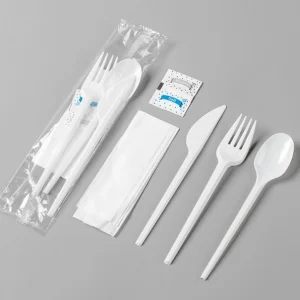
In this environment, the role of the supplier becomes paramount. A reliable supplier is not just a vendor but a partner who can provide certified, high-quality products. They can offer a range of options, from industrially compostable PLA straws for a closed-loop system (like a stadium with its own composting facility) to durable paper straws for general use. They can provide documentation certifying the material’s claims, helping businesses avoid the pitfalls of greenwashing. For many, the goal is to source a complete line of premium plastic tableware alternatives, ensuring a consistent and responsible approach across all disposable items.
Frequently Asked Questions (FAQ)
Who actually invented the first plastic straw?
There is no single credited inventor for the plastic straw in the way Marvin Stone is credited with the paper straw. Its development was an evolutionary process within the plastics industry during the 1950s and 1960s. Companies adapted existing plastic extrusion technology to create a more durable and cheaper alternative to the then-dominant paper straw.
Why did plastic straws become so popular?
Their popularity surged due to a combination of factors. They were significantly more durable than paper straws, which would get soggy. They were extremely cheap to mass-produce, making them an affordable option for the booming fast-food industry. Their hygienic, single-use nature also appealed to a culture increasingly focused on convenience and sanitation.
Are biodegradable straws really better for the environment?
It depends on the material and the disposal conditions. PLA straws, for example, are only “better” if they are sent to an industrial composting facility. If they end up in the ocean, they behave much like regular plastic. Materials like PHA or paper, which can biodegrade in natural environments, generally have a better environmental profile for single-use items. The most sustainable option is often a reusable straw.
What is the best alternative to a plastic straw?
The “best” alternative depends on the context. For an individual, a reusable straw made of stainless steel, glass, or silicone is the most sustainable choice as it minimizes waste. For a high-volume business like a smoothie shop, a durable, wide-diameter paper or PHA straw might be the most practical and environmentally responsible disposable option.
How can my business transition away from plastic straws?
The first step is to question if a straw is needed at all; offering them only upon request can drastically reduce consumption. The next step is to source alternatives. Partner with a reputable supplier that can provide certified compostable or biodegradable straws (like PLA or paper) and explain the proper disposal requirements. For dine-in service, consider offering reusable straws as part of your tableware.
What are the main regulations against single-use plastics in 2026?
As of 2026, the most significant regulation is the EU’s Single-Use Plastics Directive, which bans plastic straws, cutlery, and other items across its member states. Many other countries, including Canada, the UK, India, and South Korea, have similar national or regional bans. The trend is strongly toward expanding these regulations globally.
Is recycled plastic tableware a viable solution?
Recycled plastic tableware can be a part of the solution as it promotes a circular economy by using existing plastic waste instead of virgin materials. However, challenges remain. Not all plastics can be easily recycled into food-grade products, and the recycling process itself requires energy. While it is a better alternative to single-use virgin plastic, it is often seen as a transitional step toward more fully biodegradable materials or reusable systems.
결론
The story of the plastic straw is a compelling microcosm of our society’s complex relationship with convenience, technology, and the environment. From its emergence in the 1960s as a symbol of modern efficiency to its status in the 2020s as an emblem of environmental harm, its journey has been both rapid and profound. The inquiry into when were plastic straws invented reveals a specific moment of industrial convergence, where post-war material science met the demands of a fast-paced consumer culture.
For sixty years, its low cost, durability, and functional superiority allowed it to become an unquestioned part of daily life. Yet, the very permanence that made it so effective is what led to its downfall, as these disposable items accumulated in our ecosystems for centuries. The global pivot we are witnessing in 2026 is a testament to a collective awakening. Driven by legislative mandates, consumer ethics, and remarkable innovation, we are moving into a new era defined by conscious choices. The future is not one single straw but a diverse portfolio of solutions—reusable implements, truly biodegradable materials, and, perhaps most importantly, a renewed habit of asking whether a straw is needed at all. The legacy of the plastic straw will be a lasting lesson in the unintended consequences of our inventions and our capacity to change course when faced with a global challenge.
References
Andrady, A. L. (2011). Microplastics in the marine environment. Marine Pollution Bulletin, 62(8), 1596-1605.
Ciacci, L., Gionfra, T., & Vassura, I. (2020). Life cycle assessment of reusable and single-use drinking straws. The International Journal of Life Cycle Assessment, 25(8), 1545-1557.
European Parliament and Council of the European Union. (2019). Directive (EU) 2019/904 of the European Parliament and of the Council of 5 June 2019 on the reduction of the impact of certain plastic products on the environment. Official Journal of the European Union.
Friedman, J. B. (1937). U.S. Patent No. 2,094,268. U.S. Patent and Trademark Office.
Jambeck, J. R., Geyer, R., Wilcox, C., Siegler, T. R., Perryman, M., Andrady, A., Narayan, R., & Law, K. L. (2015). Plastic waste inputs from land into the ocean. Science, 347(6223), 768-771. https://doi.org/10.1126/science.1260352
Leslie, H. A., van Velzen, M. J. M., Brandsma, S. H., Vethaak, A. D., Garcia-Vallejo, J. J., & Lamoree, M. H. (2022). Discovery and quantification of plastic particle pollution in human blood. Environment International, 163, 107199.
Noda, I., & Roy, R. (2014). Polyhydroxyalkanoate (PHA) plastics. In K. O. O’Donnell, A. I. El-Boraey, S. K. Pasricha, & N. S. H. A. El-Saied (Eds.), Encyclopedia of Polymeric Nanomaterials. Springer.
Stone, M. C. (1888). U.S. Patent No. 375,962. U.S. Patent and Trademark Office.
Woolley, C. L. (1934). Ur Excavations, Vol. II: The Royal Cemetery. Publications of the Joint Expedition of the British Museum and of the Museum of the University of Pennsylvania to Mesopotamia. mtstraw.com