




 EN
EN  FR
FR  ES
ES  RU
RU  DE
DE  JA
JA  KO
KO Abstract
The use of plastic utensils in culinary applications presents a complex question regarding consumer safety. An examination of the issue reveals that a utensil’s safety is not an intrinsic quality but is contingent upon its material composition, the conditions of its use, and its physical integrity over time. This analysis explores the common polymers employed in the manufacturing of cooking spoons, such as nylon, silicone, and polypropylene, evaluating their respective thermal and chemical stabilities. The primary safety concern revolves around the phenomenon of chemical leaching, where constituents of the plastic, including monomers, oligomers, and additives like bisphenols and phthalates, migrate into food. This process is significantly accelerated by high temperatures, prolonged contact time, and the chemical nature of the food itself, particularly its fat and acid content. Furthermore, physical degradation of the utensil through wear and tear exacerbates the potential for both chemical migration and microbial contamination. A definitive answer to the question are plastic cooking spoons safe for cooking? requires a nuanced understanding, balancing their convenience and utility against the material science and the principles of prudent kitchen practice.
Key Takeaways
- Check the resin code and temperature limit before using any plastic utensil.
- Avoid resting plastic spoons in hot pans to prevent melting and leaching.
- Discard any plastic cooking spoon that is scratched, melted, or discolored.
- A nuanced approach helps determine if plastic cooking spoons are safe for cooking.
- Consider using alternatives like wood or stainless steel for high-heat tasks.
- Wash plastic utensils carefully, avoiding abrasive pads that cause damage.
- Limit contact time between hot, fatty, or acidic foods and plastic spoons.
Table of Contents
- Truth #1: A Universe in a Utensil Drawer – Understanding Plastic Types
- Truth #2: The Slow Migration – How Chemicals Leach into Your Food
- Truth #3: The Unspoken Limit – Temperature’s Defining Role in Safety
- Truth #4: A Spoon’s Story – The Importance of Wear, Tear, and Replacement
- Truth #5: Beyond the Spoon – Cultivating Safe Kitchen Practices and Exploring Alternatives
- Frequently Asked Questions (FAQ)
- Conclusion
- References
Truth #1: A Universe in a Utensil Drawer – Understanding Plastic Types
When we reach into a kitchen drawer, our hands close around a plastic spoon, we are holding a product of remarkable chemical engineering. Yet, this familiarity often breeds a certain disregard for the object’s nature. It is not merely “plastic”; it is a specific polymer, chosen from a vast catalog for its particular properties. The journey to understanding whether plastic cooking spoons are safe for cooking begins with an appreciation for this material diversity. To treat all plastic utensils as a monolith is to misunderstand the very foundation of the safety question. Each type of plastic possesses a unique chemical structure, a distinct thermal tolerance, and a different profile of potential risks. The first truth, therefore, is that we must become material detectives in our own kitchens, learning to distinguish between the different polymers that we invite to interact with our food.
Decoding the Symbols: A Guide to Resin Identification Codes
Many of us have noticed the small triangle with a number inside, typically found on the bottom of plastic products. This is the Resin Identification Code (RIC). It is not, as is commonly believed, a sign that the item is recyclable, but rather a code to help recycling facilities sort materials. For the discerning home cook, this code offers a first clue about the nature of the utensil in hand. While not all cooking utensils are marked, those that are provide valuable information.
| Code | Plastic Name | Common Uses & Kitchen Relevance |
|---|---|---|
| 1 | PETE/PET | Water bottles, food jars. Not used for cooking utensils due to very low heat tolerance. |
| 2 | HDPE | Milk jugs, cutting boards. Tough and safe, but low heat tolerance makes it unsuitable for cooking. |
| 3 | PVC | Cling wrap, pipes. Rarely used for utensils. Contains phthalates; should be avoided for food contact during heating. |
| 4 | LDPE | Squeezable bottles, plastic bags. Very low melting point; not for cooking. |
| 5 | PP | Polypropylene. Yogurt containers, some microwave-safe containers, and some low-temperature utensils like sturdy ice scoops. It has moderate heat resistance. |
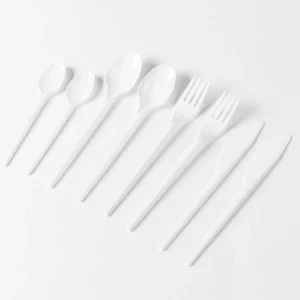
| 6 | PS | Polystyrene. Disposable cups, cutlery. Brittle, very low melting point. Leaches styrene when heated. Unsuitable for cooking. |
| 7 | OTHER | Includes Polycarbonate (PC), Nylon (Polyamide, PA), Silicone, and others. This is the most common category for cooking utensils. Requires further identification. |
As the table illustrates, the most common and robust cooking utensils fall under code #7, a catch-all category that includes the workhorses of the kitchen: nylon and silicone. This makes a simple number check insufficient; we must learn to identify the materials by their properties and manufacturer labels.
The Workhorses: Nylon, Silicone, and Polypropylene
The majority of the black or colored plastic spoons designed for stovetop use are made from a type of polyamide, most commonly Nylon 6,6. This material was chosen for a reason. It exhibits high mechanical strength, meaning it feels rigid and sturdy. It has a relatively high melting point, typically rated for continuous use up to around 180-200°C (356-392°F). This makes it seemingly perfect for stirring a pot of simmering sauce or sautéing vegetables. Its surface is smooth, making it a friend to non-stick cookware, a quality that contributed immensely to its popularity.
Silicone utensils represent a different branch of polymer chemistry. They are not classic plastics derived from crude oil but are based on silicon, a component of sand. Kitchen-grade silicone is exceptionally stable and boasts a much higher heat resistance than nylon, often rated for temperatures up to 315°C (600°F). It is flexible, completely inert, and does not react with food or produce any hazardous fumes. Its rubbery texture and rainbow of available colors distinguish it visually from the harder, more rigid nylon.
Polypropylene (PP), marked with a #5, occasionally appears in utensils designed for cooking. Its heat deflection temperature is significantly lower than that of nylon, typically around 100-120°C (212-248°F). This makes it suitable for stirring a pot of boiling pasta but dangerously unsuited for a hot frying pan. It is more commonly found in food storage containers and some forms of premium plastic tableware where high heat is not a factor. Understanding these differences is the first step in using each tool as it was intended.
The Problematic Plastics: What to Keep Away from Heat
Just as we recognize the appropriate tools for the job, we must also recognize the materials to avoid. Polystyrene (PS, #6), often found in flimsy disposable cutlery or foam cups, should never be used for cooking. When heated, it can soften and leach styrene, a chemical that has been classified as a possible human carcinogen by the International Agency for Research on Cancer (IARC, 2018).
Another material of concern, historically found in the #7 category, is polycarbonate (PC). Polycarbonate’s claim to infamy is its association with Bisphenol A (BPA), a chemical used in its production. BPA is a known endocrine disruptor, meaning it can interfere with the body’s hormonal systems. While most rigid, clear water bottles have moved away from BPA, and it was never a primary material for cooking spoons, its legacy serves as a powerful reminder that the invisible components of plastic can have tangible biological effects. The widespread consumer demand for “BPA-free” products demonstrates a growing public awareness that the composition of our kitchen tools matters deeply.
Truth #2: The Slow Migration – How Chemicals Leach into Your Food
The second truth we must confront is a subtle and often invisible process: chemical leaching. A plastic spoon does not have to melt or catch fire to become a source of contamination. The very act of placing it in contact with food, especially under certain conditions, can cause a microscopic transfer of material. This migration of chemical compounds from a utensil into a meal is the central concern for food safety experts. Answering if plastic cooking spoons are safe for cooking hinges on understanding and minimizing this migration. It is a quiet, slow process, a chemical conversation between the utensil and the food, and the primary factors that dictate its intensity are heat, time, and the chemistry of the food itself.
The Nature of Leaching: An Unwanted Transfer
Imagine a polymer as a vast, tangled net made of incredibly long molecular chains. In a perfect polymer, these chains are all that exist. In reality, the net contains other things. There might be short, broken pieces of chain (called oligomers), leftover single links that never got joined (monomers), and chemicals added to give the plastic specific properties, like colorants or plasticizers (such as phthalates).
Leaching, or migration, is the process by which these smaller, more mobile molecules escape from the plastic matrix and dissolve into a surrounding medium, which in our case, is food. The plastic itself does not dissolve, but it releases some of its unbound or loosely bound constituents. The amount and type of chemicals that leach depend entirely on the specific plastic, its quality of manufacture, and the conditions of use. A high-quality, food-grade plastic is designed and tested to keep this migration to an absolute minimum under normal conditions (EFSA, 2022).
The Suspects: Oligomers, Phthalates, and Other Additives
When it comes to nylon (polyamide) utensils, the primary concern is not additives like BPA, but the migration of its own building blocks: monomers and oligomers. A significant study by the German Federal Institute for Risk Assessment (BfR) found that nylon cooking utensils, particularly when new, could release polyamide oligomers into food at levels exceeding the specific migration limit of 5 mg/kg of food (BfR, 2019). These oligomers are not considered highly toxic, but their long-term health effects are not well understood, and their presence in food above regulated limits is undesirable. The risk was found to be highest during the first few uses and when the utensil was exposed to high heat for extended periods.
Phthalates are a class of chemicals used to make plastics more flexible and durable. They are not chemically bound to the polymer chains and can leach out relatively easily. They are common in PVC (#3) but are not typically used in the hard nylon or silicone of cooking spoons. However, they are prevalent in the wider environment and in other plastic products, and like BPA, they are known endocrine disruptors. Their notoriety has led to stricter regulations and a shift towards phthalate-free materials in many food-contact applications.
The color of a utensil also matters. The pigments used to create black, red, or blue spoons are another class of additives. In black nylon utensils, the pigment is often carbon black. While food-grade carbon black is considered safe, there have been concerns about contamination with polycyclic aromatic hydrocarbons (PAHs) in lower-quality, non-food-grade versions. This underscores the importance of purchasing utensils from reputable manufacturers who certify their products as food-safe.
| Factor | Impact on Chemical Leaching | Explanation |
|---|---|---|
| Temperature | High Impact: Exponential Increase | Heat provides the energy for molecules to break free from the plastic matrix and increases the solubility of chemicals in food. |
| Contact Time | High Impact: Linear Increase | The longer the plastic is in contact with food, the more time there is for chemicals to migrate. A quick stir is different from hours of simmering. |
| Food Chemistry | Medium Impact: Varies by Food | Fatty, oily, or highly acidic foods can act as solvents, accelerating the breakdown of the plastic surface and the leaching of certain chemicals. |
| Utensil Age/Condition | High Impact: Increases with Damage | Scratches, cuts, and melting create more surface area and expose deeper layers of the plastic, increasing the potential for migration. |
The Accelerants: Heat, Fat, and Acidity
Thinking about the factors in the table above provides a practical guide. Heat is the most powerful accelerant. The relationship is not linear; a small increase in temperature can cause a large increase in migration rates. This is why the difference between boiling water (100°C) and hot oil (180°C+) is so significant.
The chemical composition of your meal also plays a role. Fatty or oily foods can be particularly effective at pulling certain chemicals out of plastic, a principle of “like dissolves like.” An acidic tomato sauce might also have a slightly corrosive effect on the plastic surface over long periods. This is why risk assessments often test migration using food simulants that mimic aqueous, fatty, and acidic food types.
The state of the utensil itself is a critical variable. A brand-new spoon might have more surface residues from manufacturing, leading to higher initial leaching, which often decreases after a few uses and washes. Conversely, a very old, scratched, and faded spoon has a compromised surface integrity, potentially leading to increased and unpredictable leaching as the polymer structure breaks down.
Truth #3: The Unspoken Limit – Temperature’s Defining Role in Safety
The third truth is arguably the most practical and the most frequently violated in home kitchens. The safety of a plastic cooking spoon is inextricably linked to temperature. Every plastic has a thermal limit, a point at which its structure begins to fail. This is not just about the dramatic event of a spoon melting into a puddle; it is about the more subtle, invisible changes that happen as it approaches that limit. Respecting this boundary is not optional; it is the single most effective action a cook can take to ensure their plastic utensils remain safe. The question, are plastic cooking spoons safe for cooking?, can often be answered by asking another: at what temperature?
More Than Just a Melting Point: Heat Deflection Temperature
When a manufacturer states that a nylon spoon is “heat resistant to 200°C (392°F),” what does that truly mean? It does not mean you can hold it in a 200°C flame without consequence. This number typically refers to the Heat Deflection Temperature (HDT) or a similar metric. This is the temperature at which the plastic, under a specific load, begins to deform. It is a measure of structural integrity, not a guarantee of chemical stability.
Long before a spoon visibly melts, rising temperatures cause its polymer chains to vibrate more energetically. This increased molecular motion makes it easier for the oligomers and monomers discussed earlier to escape. The plastic may not look different, but at a microscopic level, it is becoming less stable and more generous with its chemical constituents. The stated temperature limit should be seen as an absolute maximum, a “do not exceed” warning, rather than a comfortable operating temperature. The safest practice is to maintain a significant buffer, keeping the utensil’s temperature well below its rated limit.
The Stovetop’s True Heat: Sautéing, Frying, and Boiling
To apply this knowledge, a cook must become aware of the real temperatures they are creating. Many people are surprised to learn how hot their pans can get.
- Boiling Water: The temperature of boiling water is fixed at 100°C (212°F) at sea level. Stirring a pot of soup or pasta with a nylon spoon is a very low-risk activity, as this temperature is well within the spoon’s tolerance.
- Simmering Sauces: Most water-based sauces will simmer at temperatures just below boiling, making them similarly safe.
- Sautéing and Frying: This is where the danger lies. The temperature of cooking oil is not fixed. A gentle sauté might take place at 150°C (300°F). A more vigorous stir-fry can easily push the oil to 180-200°C (356-392°F). Deep frying requires temperatures of 175-190°C (350-375°F). Suddenly, the 200°C limit of a standard nylon spoon does not seem so generous. It is very easy to exceed it, especially in an unattended pan. The “sizzle” we listen for is the sound of water flashing into steam, a process that happens far above 100°C.
Using a plastic utensil to stir-fry in a hot wok or to flip a steak in a searing hot cast-iron skillet is pushing the material to its absolute limit, or beyond. The plastic might not melt instantly, but the thermal stress vastly increases the rate of chemical migration into the oil that coats your food.
The Common Mistake: The Resting Spoon
Perhaps the most common and perilous mistake is leaving a plastic spoon to rest against the edge of a hot pan. While the food in the center might be at 150°C, the metal of the pan itself, especially on a gas or electric coil stove, can be significantly hotter. It can easily surpass 250°C (482°F) or more in the areas not in direct contact with food.
When a nylon spoon is left resting on that hot metal lip, the point of contact experiences a concentrated dose of extreme heat. This is where you see the tell-tale signs of damage: a small, shiny, melted notch; a frayed, brittle edge. That visible damage is a red flag, a clear indication that the plastic has undergone thermal decomposition. At that spot, the polymer chains have broken down, and a cocktail of chemicals, including potentially harmful ones, has been created and possibly released. Every time you see a spoon with that signature melted spot, you are looking at a history of misuse and a utensil that is no longer fit for purpose. This single, common habit is responsible for much of the risk associated with plastic kitchen tools.
Truth #4: A Spoon’s Story – The Importance of Wear, Tear, and Replacement
The fourth truth requires us to see our kitchen utensils not as permanent fixtures but as tools with a finite lifespan. A plastic spoon has a story, and its physical appearance tells that story. Every scratch, every stain, and every melted spot is a chapter in its history of use and abuse. Recognizing when a spoon’s story has come to an end is a fundamental aspect of kitchen hygiene and chemical safety. A worn-out utensil is not a sign of a well-loved kitchen; it is a potential hazard that has overstayed its welcome. The ongoing debate about whether plastic cooking spoons are safe for cooking must include a discussion of their entire life cycle, from new to discarded.
Reading the Signs: Visible Damage as a Warning
The degradation of a plastic spoon is not always a subtle, microscopic affair. Often, the evidence is plain to see, if we only take a moment to look.
- Melting and Deformation: As discussed, any sign of melting is an immediate disqualification. A spoon that has changed shape, developed a notch from resting on a pan, or has a tip that has become soft and frayed has been heated beyond its point of stability. The chemical bonds have been irrevocably broken, and its continued use is a gamble.
- Scratches and Gouges: Non-stick pans are safe for plastic, but what about other things? Using a spoon to scrape hardened food from a pot, knocking it against other metal utensils in the drawer, or cleaning it with an abrasive scouring pad can create a network of fine scratches. These are not merely cosmetic imperfections.
- Discoloration: A white spoon that has been permanently stained orange by tomato sauce or yellow by turmeric is showing signs of its history. While this staining itself is not necessarily dangerous, it indicates that the plastic is porous enough to absorb pigments from food. It is reasonable to question what else it might be absorbing or, conversely, what it might be releasing. Significant fading or color change can also be a sign of UV or chemical degradation of the polymer.
- Brittleness: A spoon that feels more brittle than it used to, or one that develops small cracks, is showing signs of polymer aging. The long polymer chains that give the plastic its strength are breaking down, making the material weaker and more likely to shed small particles into food.
The Unseen Dangers of a Damaged Surface
The problem with a scratched surface extends beyond aesthetics. From a chemical perspective, these scratches and pits dramatically increase the spoon’s surface area. More surface area means more contact between the plastic and the food, which can lead to an increased rate of chemical migration. The scratches cut through the original, more stable surface layer, exposing the bulk material underneath, which may be more prone to leaching.
From a microbiological perspective, these tiny canyons are a paradise for bacteria. A smooth, non-porous surface is easy to clean. A scratched, pitted surface is not. Bacteria from raw meat or other sources can become lodged in these crevices, surviving washing and potentially cross-contaminating the next meal you prepare. Studies have shown that worn plastic surfaces can harbor bacterial biofilms that are highly resistant to cleaning (Møretrø & Langsrud, 2017). This introduces a completely different, yet equally serious, health risk.
A Proactive Approach: The Wisdom of Replacement
Given these risks, the most sensible approach is a proactive one. Do not wait for a spoon to fail spectacularly. Instead, learn to recognize the early signs of wear and adopt a regular inspection and replacement schedule. How often should you replace a plastic spoon? There is no single answer, as it depends on the quality of the utensil, how frequently it is used, and for what tasks.
A good rule of thumb is to inspect your most-used utensils monthly. Hold them under a good light. Look for the fine scratches, the loss of gloss, the tell-tale discoloration. Be especially critical of the spoon’s tip and edges, the parts that see the most action.
Think of it like this: a professional chef keeps their knives sharp because a sharp knife is a safe knife. In the same spirit, a mindful home cook should ensure their plastic utensils are in good condition because a sound utensil is a safe utensil. Investing a few dollars in a new nylon spoon every year or two is a small price to pay for peace of mind and for removing a potential source of both chemical and microbial contamination from your kitchen. This proactive mindset is a cornerstone of a truly safe and well-managed culinary environment, where choices extend to a variety of kitchenware, from spoons to eco disposable cutlery.
Truth #5: Beyond the Spoon – Cultivating Safe Kitchen Practices and Exploring Alternatives
The final truth broadens our perspective. The safety of a plastic spoon does not exist in a vacuum; it is embedded within a larger system of kitchen habits, consumer choices, and regulatory frameworks. To fully address the question are plastic cooking spoons safe for cooking?, we must look beyond the single utensil and consider the entire context of its use. This involves adopting best practices, being open to a range of material alternatives, and understanding the labels that are meant to protect us. It is about cultivating a holistic sense of kitchen awareness, where the choice of a spoon is as thoughtful as the choice of ingredients.
The Golden Rules: Best Practices for Using Plastic
If you choose to use plastic utensils, using them safely is a matter of following a few simple but firm rules, derived from the principles we have established.
- Right Tool, Right Job: Use plastic and silicone for stirring, folding, and serving. Do not use them for high-temperature frying, deep-frying, or tasks that require scraping a pan. Use them with non-stick cookware to protect the pan’s surface.
- No Resting: Never leave a plastic utensil resting in a hot pan, on the stovetop, or in contact with a heating element. Place it on a dedicated spoon rest between stirs.
- Mind the Time: Limit the contact time between the plastic utensil and hot food, especially foods that are fatty or acidic. Use it to stir, then remove it. Do not leave a plastic spoon sitting in a pot of simmering sauce for hours.
- Wash with Care: Clean utensils promptly after use. While many are dishwasher-safe (check the label), hand washing with a soft sponge and mild soap is gentler and can extend the utensil’s life. Avoid abrasive scouring pads at all costs.
- Inspect Regularly: As established, make a habit of regularly inspecting your tools for any signs of damage. At the first sign of melting, deep scratches, or brittleness, discard the utensil.
The Wider World of Utensils: Wood, Bamboo, and Stainless Steel
Plastic’s popularity stems from its low cost and its compatibility with non-stick pans, but it is far from the only option. An informed cook has a variety of tools and chooses the best one for the task.
- Wood and Bamboo: These materials are ancient, beautiful, and effective. They are gentle on all cookware, do not conduct heat, and will not leach chemicals into your food. Their primary drawback is their porous nature. If not cleaned and dried properly, they can absorb moisture and odors and potentially harbor bacteria. They should be hand-washed and periodically treated with food-grade mineral oil to keep them in good condition. They will not melt, but they can char or burn if left on a hot surface.
- Stainless Steel: For durability, hygiene, and chemical stability, nothing beats stainless steel. It is non-reactive, can withstand any cooking temperature, and is easy to clean and sanitize. Its main disadvantage is that it can easily scratch and damage the delicate surfaces of non-stick and enameled cast-iron cookware. It also conducts heat, so a metal spoon left in a hot pot will quickly become too hot to handle. It is the ideal choice for use with cast iron, carbon steel, and stainless steel pans.
The ideal utensil drawer does not contain only one material. It contains a collection: a silicone spatula for scraping bowls, a nylon spoon for stirring in a non-stick pot, a wooden spoon for a long-simmering stew, and a stainless steel turner for a cast-iron skillet.
Understanding Labels: “Food-Safe” and “BPA-Free”
When you purchase a new kitchen utensil, you are placing your trust in the manufacturer and the regulatory systems that oversee them. Labels like “Food-Safe” or “BPA-Free” are part of this system of trust. In the United States, the Food and Drug Administration (FDA) regulates food contact materials. In Europe, the European Food Safety Authority (EFSA) plays a similar role.
A “Food-Safe” designation means that the manufacturer certifies that the material is suitable for contact with food and that any potential chemical migration falls below the strict limits set by these regulatory bodies. “BPA-Free” is a more specific marketing term that has become popular due to consumer concern. While it assures you that this specific chemical is not present, it does not tell you what it has been replaced with (in some cases, with similar chemicals like BPS or BPF) or provide information about other potential leachates like oligomers.
Therefore, while these labels are a helpful starting point, they are not a substitute for the safe practices outlined above. The ultimate responsibility for safety rests with the end-user—the cook who decides what temperature to use, how long to leave the spoon in the pot, and when it is time for a replacement. It is this combination of informed purchasing from reputable suppliers of kitchen goods and mindful practice that forms the complete answer to our question.
Frequently Asked Questions (FAQ)
Are black plastic cooking spoons more dangerous than other colors?
The concern with black plastic utensils often relates to the use of “carbon black” as a pigment and the potential for recycled plastic from non-food-grade sources (like electronics casings) to enter the supply chain. Low-quality carbon black can contain impurities like polycyclic aromatic hydrocarbons (PAHs), which are carcinogenic. However, when you purchase from a reputable brand that certifies its products as food-safe, they are required to use food-grade pigments and virgin plastic. In this context, a black spoon is no more dangerous than a red or white one. The greater danger is always purchasing un-certified, low-cost utensils from unknown sources.
Can I put my plastic cooking spoons in the dishwasher?
Most high-quality nylon and silicone spoons are labeled as dishwasher-safe. The high heat of a dishwasher’s drying cycle can stress the plastic over time, potentially making it more brittle. Abrasive dishwasher detergents can also dull the finish and contribute to surface degradation. While occasional dishwasher use is convenient, for maximum lifespan, gentle hand-washing is preferable. Always check for a “dishwasher-safe” symbol on the utensil.
What is the main difference between silicone and plastic (nylon) spoons?
The primary differences are material origin, heat resistance, and flexibility. Nylon is a petroleum-based plastic (a polyamide) that is rigid and has a high, but limited, heat resistance (around 200°C/400°F). Silicone is a synthetic polymer based on silicon and oxygen, which is flexible, more rubbery, and has a much higher heat resistance (often up to 315°C/600°F). Silicone is generally considered more inert and less likely to leach chemicals.
How can I tell if my old plastic spoon is safe to use?
You cannot tell with 100% certainty through visual inspection alone, but you can spot definite signs of danger. If the spoon has any melted spots, deep scratches, a frayed or brittle texture, or significant discoloration, it is no longer safe and should be discarded immediately. When in doubt, it is always safer to replace it. A new, food-grade utensil is a very inexpensive form of safety assurance.
If my spoon melts a little bit in my food, do I have to throw the food away?
Yes. If you can see that a piece of the spoon has melted, broken off, or left a visible residue in your food, you should discard the meal. The melted material has undergone thermal decomposition, creating new and unpredictable chemical compounds. Furthermore, you may have ingested small plastic particles. The risk may be small from a single incident, but it is not a risk worth taking.
Why are plastic utensils so popular if they have these potential risks?
Their popularity is a combination of several factors: they are inexpensive to produce and purchase; they are lightweight; and, most importantly, they do not scratch the delicate surfaces of non-stick cookware, which became extremely popular at the same time. For many, these benefits of convenience and equipment protection have historically outweighed the less-visible chemical risks.
Is there a truly 100% safe plastic for cooking?
High-quality, food-grade silicone is likely the closest thing to a “perfectly safe” polymer for cooking applications. Its chemical backbone is very stable, its heat resistance is exceptionally high, and it is not known to leach harmful chemicals under normal (or even extreme) cooking conditions. However, even with silicone, it is wise to purchase from reputable brands to ensure it is 100% food-grade silicone without cheaper plastic fillers.
Conclusion
The question of whether plastic cooking spoons are safe for cooking does not yield a simple yes or no. Instead, it unfolds into a more profound inquiry about materials, conditions, and practices. We have seen that safety is not an inherent property of a spoon but a dynamic state governed by our choices. The type of plastic, the temperature of the pan, the duration of contact, and the physical condition of the utensil all conspire to determine the level of risk.
A nylon spoon, used correctly—for a brief stir in a pot of simmering soup, well below its thermal limit, and kept in pristine condition—is a tool of negligible risk. That same spoon, left to rest on the edge of a searing hot pan, its surface scratched and worn, becomes a potential vector for unwanted chemicals. The responsibility, therefore, shifts from the object to the user.
By learning to read the language of plastics, by respecting the non-negotiable laws of temperature, and by recognizing the finite lifespan of our tools, we empower ourselves. We move from being passive consumers to being mindful custodians of our own health. The ultimate lesson is one of awareness. A safe kitchen is not one that is devoid of plastic, but one where every tool, regardless of its material, is understood, respected, and used with wisdom and care.
References
BfR (German Federal Institute for Risk Assessment). (2019). Kitchen utensils made of polyamide can release oligomers into hot food. BfR Opinion No. 036/2019.
European Food Safety Authority (EFSA). (2022). Food contact materials.
International Agency for Research on Cancer (IARC). (2018). IARC Monographs on the Evaluation of Carcinogenic Risks to Humans, Volume 121: Styrene. World Health Organization.
Møretrø, T., & Langsrud, S. (2017). Residential-kitchen surfaces and food-handling practices as sources of cross-contamination. Journal of Food Protection, 80(11), 1868-1875.
National Institute of Environmental Health Sciences (NIEHS). (n.d.). Bisphenol A (BPA). https://www.niehs.nih.gov/health/topics/agents/sya-bpa/index.cfm
Rochester, J. R. (2013). Bisphenol A and human health: A review of the literature. Reproductive Toxicology, 42, 132–155.
U.S. Food & Drug Administration (FDA). (2022). Food contact materials.
Wang, L., & Wu, Q. (2018). Migration of polyamide 6,6 oligomers from kitchen utensils to food. Food Control, 85, 280-286.
Zimmermann, L., Dierkes, G., Polte, T., Turski, A., & Völker, C. (2021). Are we exposed to microplastics from food contact materials? A review. Science of The Total Environment, 785, 147344.